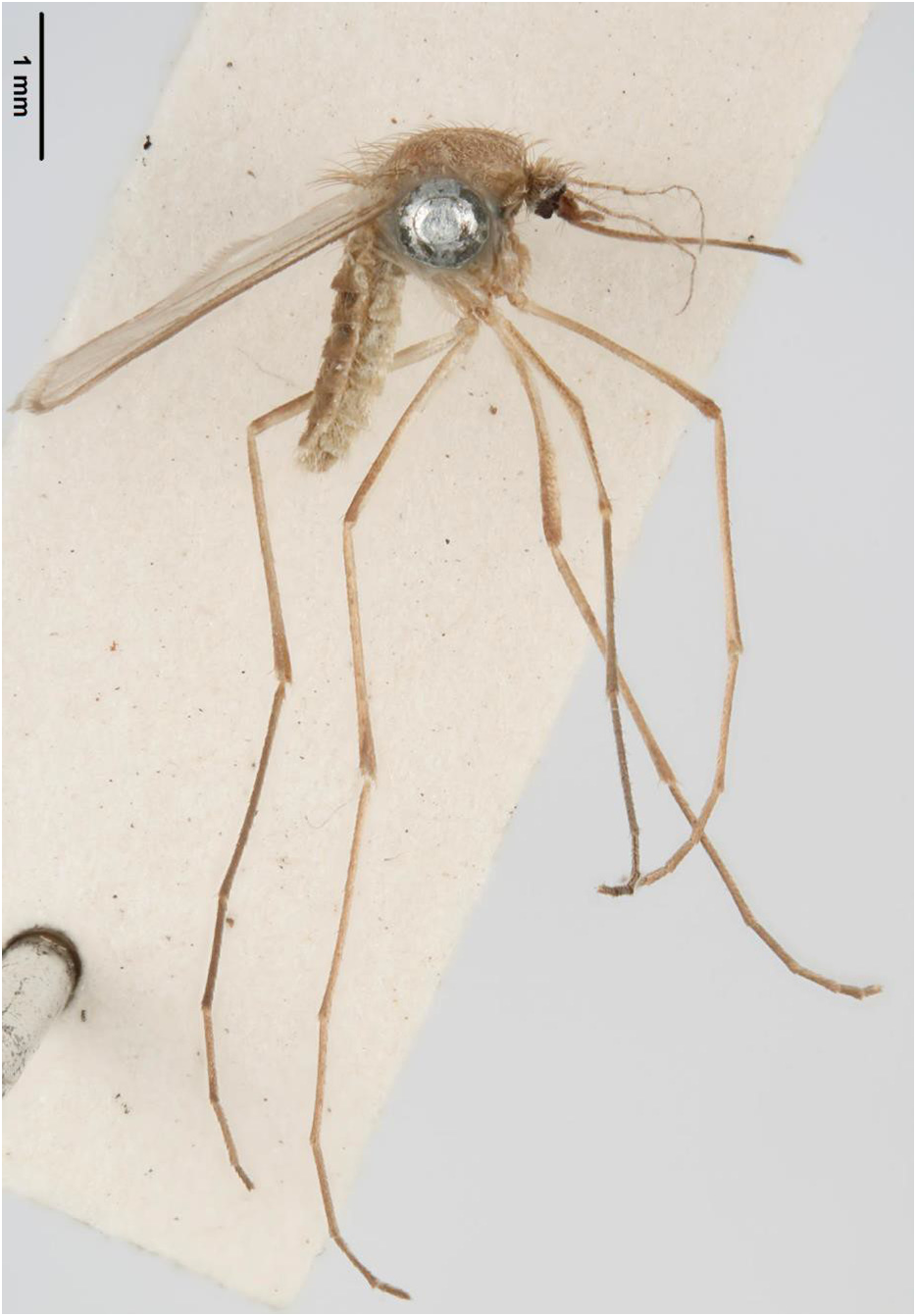
Deskripsieng
Ace- 2 marker molecular results revealed that all samples contained Cx. pipiens, and some points also included Cx. torrentium. Cx. torrentium specimens were identified from only seven collection points (Posof, Galler, Gümüşhane, Ispir Bayburt road, Savsat Artvin, Karakoy, and Sarp). Distribution preferences of Cx. pipiens complex and Cx. torrentium in habitat types of CORINE level 1 were significantly different (Chi-square = 14.692, df = 3, p = 0.002). Although Cx. torrentium is preferred in Agricultural and Forest, seminatural areas, Cx. pipiens complex preferred all habitat types (Agriculture, Artificial, Forest and seminatural, water bodies). Significant differences were found in level 2 habitat type distribution for Cx. pipiens complex and Cx. torrentium (Chi-square = 19.994, df = 8, p = 0.01). Although complex species and Cx. torrentium mainly occurred in the heterogeneous agricultural areas in 2014 and 2015, complex species were found in all level-classified areas except mine, dump and construction sites, and maritime wetland areas. In level 3, complex species mainly occurred in fruit trees and berry plantation areas, and Cx. torrentium mainly occurred in complex cultivation pattern areas. Statistical analysis showed significant differences (Chi-square = 34.020, df = 14 p = 0.002) in CORINE level 3. According to the CQ 11 marker results, Cx. pipiens pipiens and Cx. pipiens molestus biotypes were found in the study areas. Cx. pipiens pipiens include two haplotypes, and Cx. pipiens molestus has one haplotype. The distribution pattern showed significant differences whole 3 CORINE level. Cx. pipiens pipiens haplotype 1 and 2 and Cx. pipiens molestus were mainly found in agricultural areas for CORINE level 1, but significant differences were found at whole four level 1 habitat types (Chi-square = 26.158, df = 3, p = 0.000). In level 2, Cx. pipiens pipiens haplotype 1 and Cx. pipiens molestus were found mainly in heterogeneous agricultural areas, while Cx. pipiens pipiens haplotype 2 distribution patterns were the same with three habitat types (heterogeneous agricultural areas, arable land, and urban fabric). Although proportional differences were found in the distribution pattern in whole level 2 areas, there were no significant differences (Chi-square = 11.171, df = 7, p = 0.131). In level 3, there are no significant differences between the preferences of the area while differences were found in the distribution in the level three areas (Chi-square = 10.867, df = 12, p = 0.540).
Sumber: Distribution and molecular differentiation of Culex pipiens complex species in the Middle and Eastern Black Sea Regions of Turkey
Distribusieng
Distribution. This species is cosmopolitan (Azari-Hamidian et al. 2019). In the Middle East and North Africa, it has been recorded in Algeria, Egypt, Iran, Iraq, Israel, Jordan, Kuwait, Lebanon, Libya, Morocco, Palestine, Qatar, Saudi Arabia, Syria, Tunisia, Turkey, United Arab Emirates and Yemen (Edwards 1914; Knight 1953 b; Lewis 1956; Mattingly & Knight 1956; Abdel-Malek 1960; White 1980; Büttiker 1981; Harbach 1985, 1988; Wills et al. 1985; Harbach et al. 1989; Al-Houty 1989, 1997; Minář 1991; Salit et al. 1994; van Harten & Wagener 1994; Al-Khalili et al. 2000; Alten et al. 2000; Brunhes et al. 2000; Miller et al. 2002; Knio et al. 2005; Al-Ali et al. 2008; Rueda et al. 2008; Alahmed et al. 2009; Wegner 2009; Kheir et al. 2010; Al Ahmad et al. 2011; Alahmed 2012; Mutebi et al. 2012; Al Ahmed et al. 2013; Ammar et al. 2013; Sulesco et al. 2013; Al Ashry et al. 2014; Kardousha 2015, 2016; Mahyoub et al. 2015; Hassan et al. 2016; Tantely et al. 2016; Lemine et al. 2017; Shaalan et al. 2017; Tabbabi et al. 2017; Trari et al. 2017; Aqeehal et al. 2019; Azari-Hamidian et al. 2019; Alkhayat et al. 2020; Merdić et al. 2020; Farag et al. 2021; Schaffner et al. 2021; Simsaa et al. 2021; Wilkerson et al. 2021; Khalefa et al. 2022). It was recorded for the first time in Saudi Arabia by Mattingly & Knight (1956).
Sumber: An overview of the mosquitoes of Saudi Arabia (Diptera: Culicidae), with updated keys to the adult females
Distribusieng
Distribution. NWR: AP *, Komi, KP, LP, MP, NAR *, NP, PP, RK, SPb, VP. Adjacent countries: Norway, Sweden, Finland, Estonia, Latvia, Lithuania and Belarus. Europe (ranging northward to the UK, Belgium, the Netherlands and Denmark); the Holarctic (except Polar regions); more locally in the Ethiopian, Neotropical and Australian regions.
Sumber: Northernmost records of mosquito species (Diptera: Culicidae) in northwestern Russia
Deskripsieng
(Fig. 4 H) Published sources: Remm (1957: 157), Burtin (2014: 39), Kirik et al. (2021: 11, as Cx. (Cux.) pipiens / torrentium).
Sumber: Rediscovering the mosquito fauna (Diptera: Culicidae) of Estonia: an annotated checklist with distribution maps and DNA evidence
Deskripsideu
C. cinereus, abdomine annulis fuscis octo. Fn. svec. 1116. Fl. lapp. 363. 364. Blank. ins. t. 15. f. A-D. Reaum. ins. 4. t. 43, 44. Swamm. quart. t. 23. bibl. t. 31. f. 4 - 8. t. 32. f. 1 - 5. Joblot. micr. 1. pp. 2. t. 13. f. A. B. C. D. E. H. I. L. Kalm. itin. 2. p. 268. Musqueto � s.
Sumber: Systema Naturae per regna tria naturae: secundum classes, ordines, genera, species, cum characteribus, differentiis, synonymis, locis
Deskripsideu
Mas antennis plumosis vix pungit aut sugit sanguinem. Larva in Aquis; Pupa bicornis reversa; Insectum pipiens, pungens: in Indiis magis venenata. Anseres allicit, pullos Gallinarum nutrit Lapponum calamitas felicissima.
Sumber: Systema Naturae per regna tria naturae: secundum classes, ordines, genera, species, cum characteribus, differentiis, synonymis, locis