
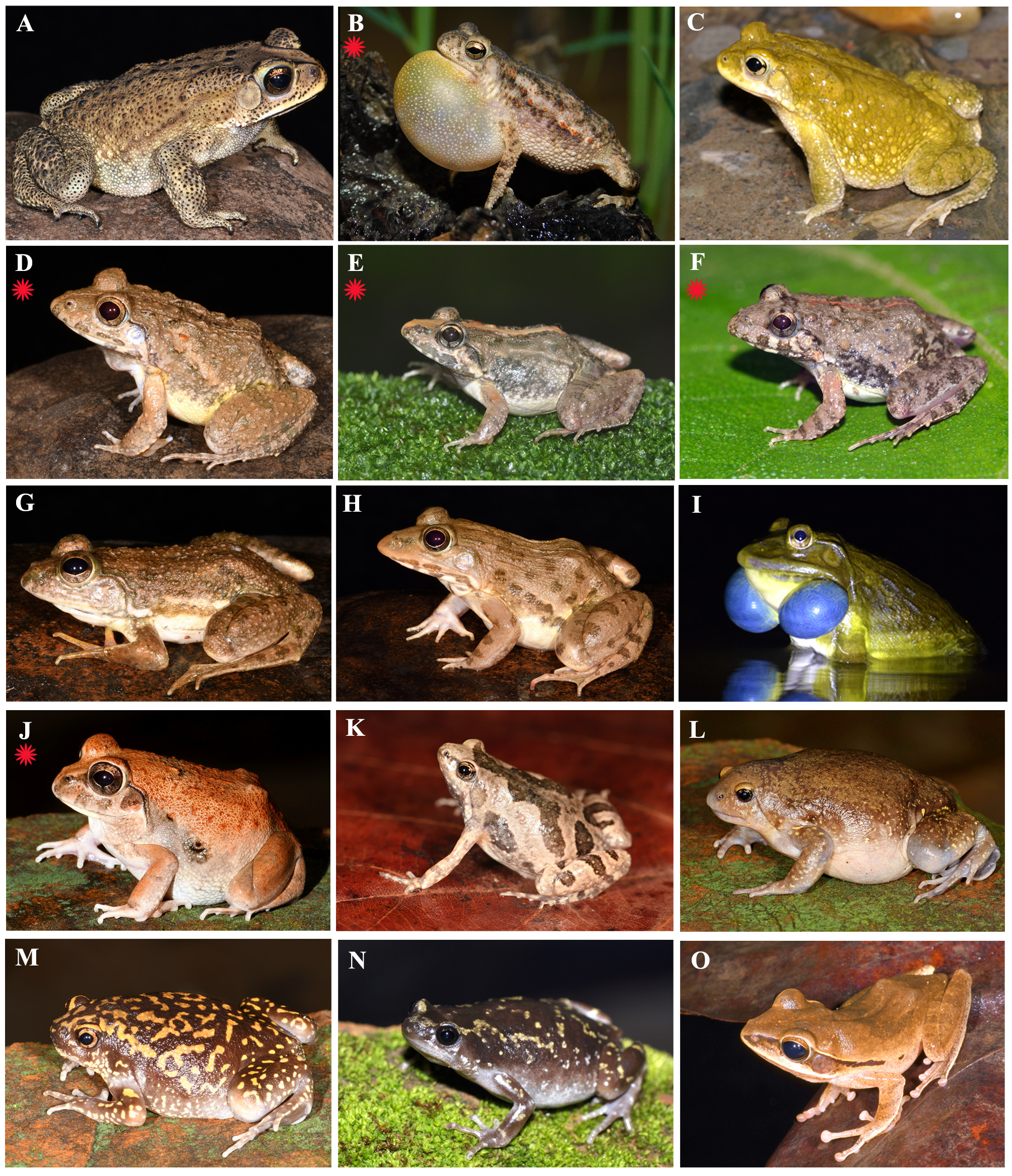
(Figure 4 B) Specimens examined: two males (WIIAD 224 & WIIAD 236) and one female (WII AD 241). Morphological characters: Adult males SVL 23.7 – 26 mm (n = 2) and female SVL 31.9 mm; body small; head slightly wider than long (see table 3); distinct parietal ridges on head; snout obtuse from lateral view; pupil round; tympanum round, more than ½ the diameter of eye; dorsal skin rough with series of cornified warts on lateral sides; fingers relative length I = II <IV <III, finger tips rounded and without discs; relative length of toes 1 <2 <3 <5 <4, inner metatarsal tubercle elongated and distinct. Calling males had single subgular and highly distensible vocal sac. Coloration in life: Dorsum olive brown to fawn color with dark brown irregular spots. Prominent orange tipped warts on the lateral sides of body; iris golden; hind limbs cross-barred with dark brown color; throat and vocal sac is orange to dark yellowish (calling males); ventral side of body pale white. Bioacoustics: We measured 30 advertisement calls from three males. They were observed calling from the edge of ponds and puddles between 23: 30 – 02: 00 hours in July at air temperature between 28.7 – 29.8 ° C. All calling males produced single type pulsatile advertisement calls at mostly regular intervals. The mean call duration was 229.77 ± 30.24 ms (172 – 280 ms) which was longest among its congeners and mean pulse rate was 31.76 ± 1.89 pulses / s (28.69 – 34.48 pulses / s) with mean 7.6 ± 0.72 (6 – 9) pulses per call. The mean dominant frequency was 3514.2 ± 201.26 Hz (3230 – 3746.8 Hz).
Sumber: Identification of anuran species diversity of the Panna Tiger Reserve, Central India, using an integrated approach