Biologi & Ekologieng
Hosts. Known only from the family Hemiramphidae: black-barred halfbeak, Hemiramphus far (Forsskål, 1775) (Bruce 1986; Gopalakrishnan et al. 2010; Ravichandran et al. 2011; Trilles et al. 2011; Rameshkumar et al. 2014 b; Vijayakumar et al. 2014), with one record from the yellowtip halfbeak, Hemiramphus marginatus (Forsskål, 1775) (Sethi et al. 2013). There are also unconfirmed records from a Sardinella species (Bruce 1986) and from a belonid host (Monod 1971).
Sumber: A taxonomic review of the fish parasitic isopod family Cymothoidae Leach, 1818 (Crustacea: Isopoda: Cymothooidea) of India
Deskripsieng
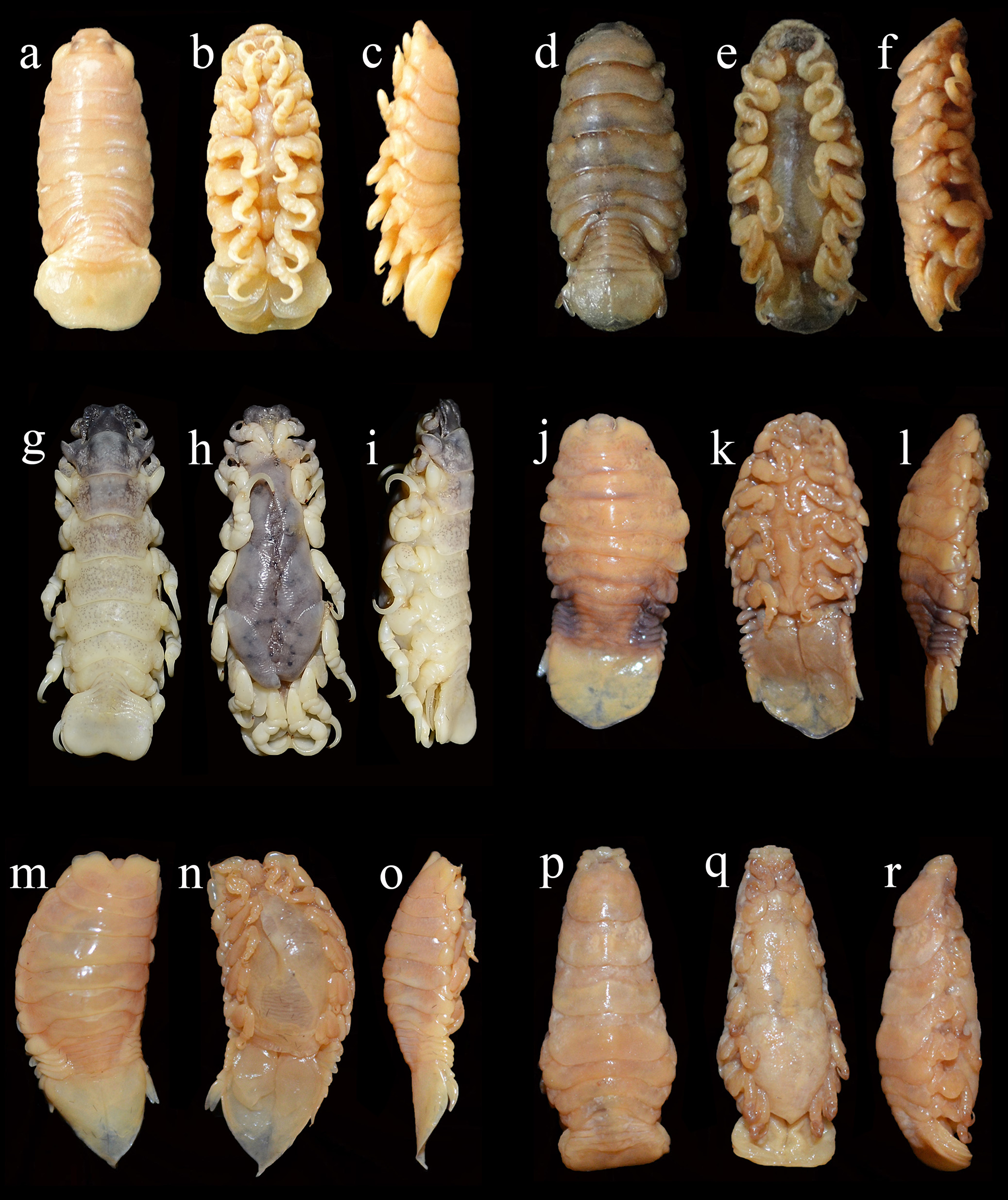
Description female. Body weakly twisted, 1.7 times as long as greatest width, dorsal surfaces smooth, widest at pereonites 4 and 5, most narrow at pereonite 1, lateral margins slightly convex. Cephalon 0.6 times longer than wide, visible from dorsal view, ovate. Eyes oval with distinct margins; eye 0.4 times width of cephalon, 0.3 times length of cephalon. Pereonite 1 smooth, anterior border indented, anterolateral angle narrowly rounded, posterior margins of pereonites smooth and straight. Coxae 2 and 3 narrow; 4 – 7 produced and with rounded point, not extending past pereonite margin. Pereonite 1 longest, pereonites increase in width from 1 – 3; pereonites 4 – 7 decreasing in width progressively, pereonite 7 widely recessed. Pleon with pleonite 1 largely concealed by pereonite 7, slightly visible in dorsal view; pleonites posterior margin smooth, mostly concave; pleonite 2 partially overlapped by pereonite 7; pleonite 5 widest, with posterolateral angles narrowly rounded, posterior margin straight. Pleotelson 0.7 times as long as anterior width, dorsal surface smooth, lateral margins weakly convex, posterior margin evenly rounded. Antennula stouter than antenna, composed of 8 articles; article 3 longest; articles 1 – 3 slightly wider than others; apex of article 8 curved with many terminal aesthetascs. Antenna with 9 articles, decreasing gradually in width, articles 5 – 8 with few terminal aesthetascs. Molar process present, mandible palp 3 segmented, without setae. Maxillula with 4 terminal recurved apical spines. Maxilla lateral lobe with 2 recurved robust spines; mesial lobe with 2 large recurved robust spines. Maxilliped article 3 with 3 large terminal recurved spines and small spine on proximomedial surface. Pereopods 1 – 7 without spines. Pereopod 1 short, robust; pereopods 2 – 6 subequal; pereopod 7 longer than others. Exopodite of pleopods 1 – 5 without seta. Pleopod 2 without appendix masculina. Pleopod 1 with narrow peduncle and undeveloped lateral lobes; pleopods 2 – 5, peduncles with well-developed lateral lobe; endopods of pleopods 3 and 4 with the well-developed proximomedial lobe. Endopod of pleopod 5 with large proximomedial lobe. Uropod half-length of pleotelson, rami long; rami not extending beyond pleotelson; rami taper gradually. Exopod about 1.5 longer than endopod, apically rounded, lateral margin weakly convex, mesial margin straight, terminating without setae. Male. Body was not twisted 2.65 – 2.77 times as long as wide. Rostrum folded back; eye small, distinct width 0.35 – 0.45 width of the cephalon. Pereonites 4 – 7 decreasing gradually in width; pereonite 1 longer than others; pereonites 2 – 6 subequal, pereonite 7 shortest. Pleonites subequal in width, pleotelson shield-shaped, anterolateral margin slightly indented. Antennula, antenna, mouthparts and pereopods essentially similar to those of female. Pleon slightly wider than pereonite 7. Pleopods differ from female in having longer peduncles on pleopods 1 and 2, and endopods of pleopods 3 – 5 with proximomedial lobe but not folded. Pleotelson as long as wide, uropods longer than female, exopod proportionally longer, about 1 – 1.5 times length of endopod; both rami with bluntly rounded apices. Colour. Mothocya plagulophora is the only species of the genus showing a colour pattern of dark bands along the posterior margins of the pleonites and posterior pereonites. Size. Ovig. females 25 – 29 mm; non ovig. females 22 – 27 mm.