
Distribusi
Breeding regions are OR. Breeding subregions are Luzon group (n Philippines).
Sumber: IOC World Bird List, v
Family Picidae · Order Piciformes
Data diperbarui secara berkala dari berbagai sumber observasi biodiversitas.
Belum ada data lokasi untuk Mulleripicus funebris
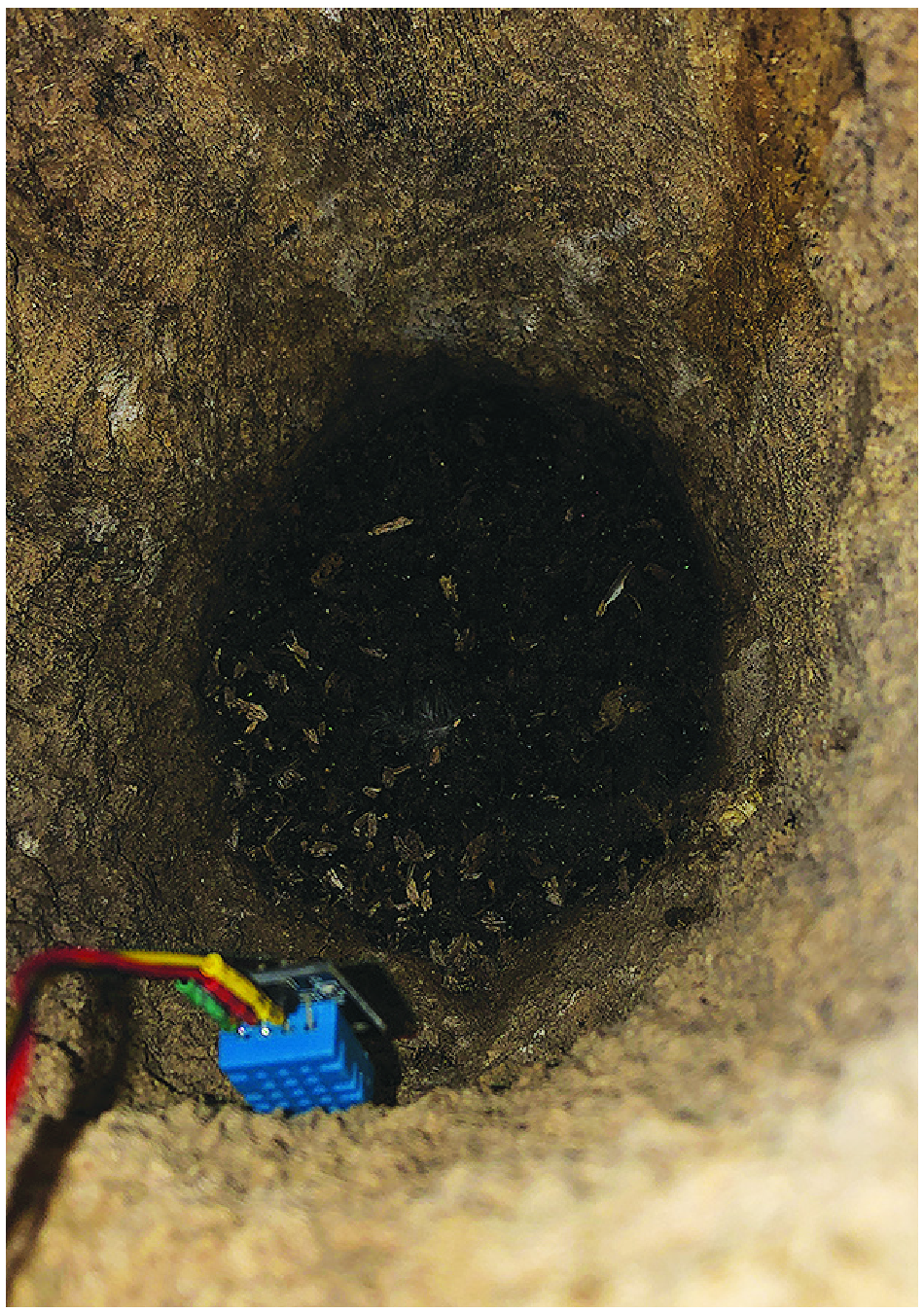
Foto: Gicaraya, Vince Angelo G.;Española, Carmela P.
Otoritas penamaan: (Valenciennes, 1826) (1826)
Status taksonomi: ACCEPTED
Status konservasi (IUCN): NT Hampir Terancam
Total Catatan di Indonesia
0
Provinsi Ditemukan
0
dari 38 provinsi
Catatan Pertama
0
tahun pertama tercatat
Tren Tahunan
+0%
N/A
Northern Sooty Woodpecker (Mulleripicus funebris) termasuk dalam famili Picidae, ordo Piciformes, kelas Aves. Berdasarkan data yang terhimpun, spesies ini telah tercatat sebanyak 5 kali di Indonesia, tersebar di 0 provinsi. Catatan pertama tercatat pada tahun 1916.
Data distribusi ini mencerminkan akumulasi dari berbagai kegiatan survei, penelitian, dan kontribusi citizen science. Pola distribusi yang tercatat mungkin tidak sepenuhnya menggambarkan persebaran alami spesies, karena dipengaruhi oleh intensitas pengamatan di masing-masing wilayah.
Catatan deskriptif tentang Mulleripicus funebris dari sumber literatur primer (via GBIF).
Breeding regions are OR. Breeding subregions are Luzon group (n Philippines).
Sumber: IOC World Bird List, v
BEHAVIOURAL OBSERVATIONS Nest Excavation At the time of discovery, a male northern sooty woodpecker was excavating a hole estimated to be 5 - 10 cm deep: implying that excavation may have started just 2 - 3 days prior to discovery. After 40 minutes of excavation, the male switched roles with the female. The female then excavated for at least 10 minutes before leaving. On 10 March 2022, almost 3 ⁄ 4 of the woodpecker’s body could now fit into the cavity with the tail protruding at a sharp angle, indicating the ongoing vertical deepening of the nest. On 18 May 2022, both the male and female fully entered the nest on separate occasions and excavated from the inside. We observed the process of nest excavation for a total of 20.72 hours on six different days from 23 February to 18 March 2022. Excavation sessions lasted between 9 to 72 minutes before one of the pair left and the other took over the duty. We noted that the excavating individual usually called once or twice before switching roles with its partner. Both members of the nesting pair contributed to nest building: the male however, excavated the cavity seven times longer in a day (4.97 hours) compared to the female (0.67 hours) (Fig. 2). Diurnal Incubation / Brooding Observations from 11 - 12, 15 & 17 April 2022 (16.02 hours), revealed that both parents contribute to diurnal incubation / brooding as evident from the observed prolonged stays of the adults inside the cavity. During a full day observation (06: 00 - 18: 00) on 11 April, we recorded that the male stayed inside the cavity for 4.12 hours whereas the female for 3.42 hours. On 14 April, at 18: 31, the male was last seen entering the cavity and may have been the one incubating during the night, as is the case with most woodpecker species (Winkler & Christie, 2020). Nestling Provisioning and Nest Sanitation On 4 - 5 May 2022 (16.92 hours), we observed two nestlings peeking from the cavity opening (Fig. 3). The nestlings were black and fully feathered with a slightly whitish breast area. They have short, sturdy, yellowish white bills, and whitish lores, auriculars, and supercilia. During this time, both adult woodpeckers were actively delivering food to the nestlings. Food delivery was done through regurgitation while the adult was perched at the rim of the cavity. On 5 May (06: 00 - 18: 00), we recorded 11 feeding instances; five were done by the male and six by the female. Per feeding event, we observed both adult parents fully entering the cavity and exiting 2 - 3 minutes later with a faecal sac in the bill. We recorded eight instances of faecal sac removal; five were done by the female and three by the male (Fig. 2). On 14 May at 05: 45, the nest was already inactive. We posit that the woodpeckers fledged between 6 and 13 May. During this time, we also noted a pair of green racquet-tail parrots Prioniturus luconensis inspecting the empty cavity nest for approximately 20 minutes.
Jumlah catatan observasi Mulleripicus funebris di Indonesia per tahun
Data tren temporal belum tersedia
Mulleripicus funebris
Foto: Gicaraya, Vince Angelo G.;Española, Carmela P.
Mulleripicus funebris
Foto: Gicaraya, Vince Angelo G.;Española, Carmela P.
Mulleripicus funebris
Foto: Gicaraya, Vince Angelo G.;Española, Carmela P.
| Nama | Bahasa | Sumber |
|---|---|---|
| Kuzey Filipin Ağaçkakanı | tur | Catalogue of Life |
| Luzonspecht | Jerman | Catalogue of Life |
| Northern Sooty Woodpecker | Inggris | Catalogue of Life |
| Northern Sooty-Woodpecker | Inggris | The Clements Checklist |
| Philippinen-Specht | Jerman | Catalogue of Life |
| Philippinenspecht | Jerman | Catalogue of Life |
| Pic en deuil | Prancis | Catalogue of Life |
| Picatroncos filipino | Spanyol | Catalogue of Life |
| Picatroncos filipino norteño |
Northern Sooty Woodpecker (Mulleripicus funebris) memiliki catatan terbatas di Indonesia. Data distribusi yang tercatat masih sangat sedikit, dan diperlukan survei lapangan tambahan untuk memetakan persebarannya secara lengkap.
Catatan pertama Northern Sooty Woodpecker (Mulleripicus funebris) di Indonesia tercatat pada tahun 1916. Hingga kini terdapat 5 catatan dari 0 provinsi, yang dihimpun dari survei lapangan, koleksi museum, dan platform citizen science.
Menurut IUCN Red List, Northern Sooty Woodpecker (Mulleripicus funebris) berstatus "Hampir Terancam" (kode NT). Status ini mencerminkan tingkat risiko kepunahan global spesies, bukan khusus Indonesia.
Mulleripicus funebris diklasifikasikan sebagai berikut: Kingdom Animalia, Phylum Chordata, Class Aves, Order Piciformes, Family Picidae, Genus Mulleripicus. Spesies ini dideskripsikan oleh (Valenciennes, 1826).
Sumber: First description of the breeding biology and behaviour of the near threatened northern sooty woodpecker Mulleripicus funebris (Valenciennes 1826) (Piciformes: Picidae) in Luzon Island, Philippines
Nest Tree and Cavity A pair of northern sooty woodpecker was found taking turns excavating a cavity in the trunk of a Kupang Parkia timoriana (DC.) Merr. snag on 23 February 2022. The nest tree was situated at a forest edge surrounded by several large-girthed trees (≈ 2.5 - 4.0 m) and was approximately 5 m from a road. The nest tree has a girth at breast height of 181 cm. The cavity was excavated 16.4 m from the ground with a girth at nest height of 109 cm. The cavity entrance (Fig. 1 a) had opening dimensions (L x W) of 9.0 x 8.0 cm; horizontal depth (measured from the opening rim to the wall of the cavity) of 18 cm; vertical depth (measured from the ceiling to the cavity floor) of 44 cm; and depth (measured from the opening rim to the cavity floor) of 37 cm. Aside from fine wood chips and several down feathers, no other materials were found lining the nest (Fig. 1 b).
Sumber: First description of the breeding biology and behaviour of the near threatened northern sooty woodpecker Mulleripicus funebris (Valenciennes 1826) (Piciformes: Picidae) in Luzon Island, Philippines
| Spanyol |
| Catalogue of Life |
| Picchio fuligginoso | Italia | Catalogue of Life |
| Picchio fuligginoso settentrionale | Italia | Catalogue of Life |
| Severni čađavi detlić | srp | Catalogue of Life |
| Sodfarvet Myrespætte | - | Catalogue of Life |
| Sooty Woodpecker | Inggris | Colaboraciones Americanas Sobre Aves |
| Treurspecht | Belanda | Catalogue of Life |
| Zwarte Treurspecht | Belanda | Catalogue of Life |
| datel sazový | ces | Catalogue of Life |
| filipiini suurrähn | est | Catalogue of Life |
| filipininis pilkasis genys | lit | Catalogue of Life |
| filipinska žuna | hrv | Catalogue of Life |