
Distribusieng
Eastcoast Gvt.: Deli (Karsch); Bengkalis. Pakanbaroe. Oct. 25. 1925. Fulmek leg. Westcoast Res.: Mt. Ophir distr. (Ris).
Sumber: A Synopsis of the Odonata (Dragonflies) of Sumatra
Family Libellulidae · Order Odonata
Data diperbarui secara berkala dari berbagai sumber observasi biodiversitas.
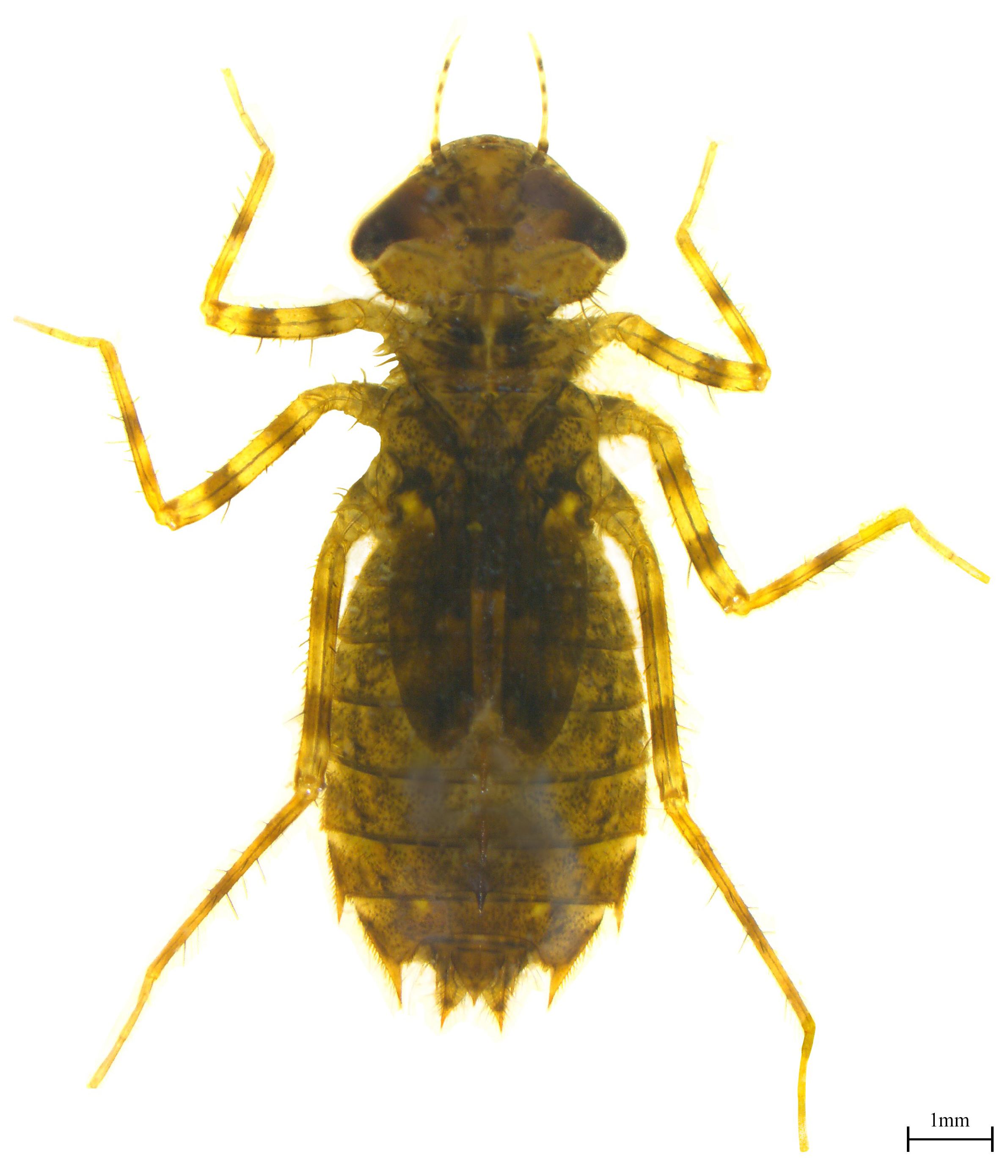
Foto: Ngiam, Robin W. J.;Chan, Juliana P. S.;Khoo, Max D. Y.;Kong, Eunice Y. L.;Low, Bing Wen
Otoritas penamaan: (Brauer, 1878) (1878)
Status taksonomi: ACCEPTED
Status konservasi (IUCN): LC Risiko Rendah
Total Catatan di Indonesia
0
Provinsi Ditemukan
0
dari 38 provinsi
Catatan Pertama
0
tahun pertama tercatat
Tren Tahunan
-0%
-45.0% vs 2025
Pixie (Brachygonia oculata) termasuk dalam famili Libellulidae, ordo Odonata, kelas Insecta. Berdasarkan data yang terhimpun, spesies ini telah tercatat sebanyak 227 kali di Indonesia, tersebar di 6 provinsi. Catatan pertama tercatat pada tahun 1910.
Kalimantan Tengah merupakan provinsi dengan catatan observasi terbanyak untuk spesies ini, dengan 92 catatan (40.5% dari total). Data distribusi ini mencerminkan akumulasi dari berbagai kegiatan survei, penelitian, dan kontribusi citizen science. Pola distribusi yang tercatat mungkin tidak sepenuhnya menggambarkan persebaran alami spesies, karena dipengaruhi oleh intensitas pengamatan di masing-masing wilayah.
Tren observasi tahunan Brachygonia oculata menunjukkan penurunan signifikan (-45%) pada periode terakhir dibanding tahun sebelumnya, dengan catatan pertama pada tahun 1910.
Catatan deskriptif tentang Brachygonia oculata dari sumber literatur primer (via GBIF).
Eastcoast Gvt.: Deli (Karsch); Bengkalis. Pakanbaroe. Oct. 25. 1925. Fulmek leg. Westcoast Res.: Mt. Ophir distr. (Ris).
Sumber: A Synopsis of the Odonata (Dragonflies) of Sumatra
Habitat In Singapore B. oculata is found exclusively in the western part of the island within a restricted area. One population is found at a shady young secondary forest swampy pool while the other is in a more open pond at a mosaic of forest and scrubland habitats (Fig. 5). The tiny larva inhabits a substrate of submerged tangled leaves, twigs and branches. Throughout Sundaland, the species inhabits a wide range of alluvial forest, peat swamp forest and other forested marshy areas (Orr 2003), and can thrive in secondary and disturbed forests (Dow 2009).
Sumber: Description of the larva of Brachygonia oculata (Brauer, 1878) (Odonata Libellulidae) with notes on rearing technique
General: Very small, overall dark brown with long dark banded legs. Head with prominent bulging eyes and dark banded antennae. Abdomen oviform (Fig. 1). Head: Wider than long, somewhat pentangular. Eyes sloping rearwards. Long setae present on the posterior portion of occiput especially along occipital corner. A tuft of fine black setae on the postfrons centrally. Antennae sevensegmented with dark bands. Labium scoop-shaped (Fig. 2 A). Prementum triangular (Fig. 2 B and 4 A). A row of six long primary premental setae and four short secondary premental setae on either side of prementum. 12 to 14 short bristle-like setae present along the distal margin of prementum. Ligula pointed. Labial palps sub-triangular (Fig. 2 B). Eight long palpal setae along dorsal rim. Moveable hook slender and as long as palpal setae. Six palpal crenations, each with one long palpal seta and one or two shorter setae. 10 to 12 setae along proximal margin of labial palp. Thorax: Prothorax narrow with short bristle-like setae along posterior margin. Sparse short bristle spiny setae on pterothorax. Wings sheaths parallel, dark, extending onto S 6. Legs with distinctive dark bands on femur and tibia. Short spines throughout entire legs. Tarsus three segmented with sharp pretarsal claws. Abdomen: Abdomen oviform with dark mottled markings. Dorsal spines recurved, small from S 2 to S 5, becoming strongly prominent from S 6 to S 8 (Figs. 3 A and 4 B). Very small lateral spines from S 3 to S 7. Sharp protuberant lateral spines on S 8 and S 9. Lateral spine on S 9 reach end of epiproct. Average length (measured dorsally with inner margin of lateral spine) ratio of S 9 lateral spine to S 9 is 1: 0.84. Fine lateral setae present along abdomen. Measured dorsally, average length ratio of S 9 + S 10 to anal appendages (measured to distal end of paraprocts) 1: 1.67. Small spiny setae on anal appendages. Epiproct triangular (Figs. 3 B and 4 C), shorter than paraprocts, average length ratio 1: 1.4. Cerci slightly shorter than epiproct. Average length ratio of cerci to epiproct 1: 1.3, ceri to paraprocts 1: 1.9. Measurement ranges in examined specimens (n = 6) (mm): TL 9 – 10.8; head width measured across widest section of occiput below compound eyes 2.39 – 3.43; prementum length 1.54 – 1.7; prementum width 1.94 – 2.71; epiproct length 0.59 – 0.64; paraproct length 0.81 – 0.88.
Sumber: Description of the larva of Brachygonia oculata (Brauer, 1878) (Odonata Libellulidae) with notes on rearing technique
Nama-nama ilmiah lain yang pernah digunakan untuk Brachygonia oculata dalam literatur taksonomi.
| Nama Sinonim | Otoritas | Status |
|---|---|---|
| Tetrathemis oculata | Brauer, 1878 | SYNONYM |
| # | Provinsi | Catatan | % |
|---|---|---|---|
| 1 | Kalimantan Tengah | 92 | 40.5% |
| 2 | Riau | 50 | 22.0% |
| 3 | Jambi | 7 | 3.1% |
| 4 | Kalimantan Barat | 2 | 0.9% |
| 5 | Kalimantan Utara | 2 | 0.9% |
| 6 | Kalimantan Timur | 1 | 0.4% |
Jumlah catatan observasi Brachygonia oculata di Indonesia per tahun
Brachygonia oculata
Foto: Ngiam, Robin W. J.;Chan, Juliana P. S.;Khoo, Max D. Y.;Kong, Eunice Y. L.;Low, Bing Wen
Brachygonia oculata
Foto: Ngiam, Robin W. J.;Chan, Juliana P. S.;Khoo, Max D. Y.;Kong, Eunice Y. L.;Low, Bing Wen
Brachygonia oculata
Foto: Ngiam, Robin W. J.;Chan, Juliana P. S.;Khoo, Max D. Y.;Kong, Eunice Y. L.;Low, Bing Wen
Brachygonia oculata
Foto: Ngiam, Robin W. J.;Chan, Juliana P. S.;Khoo, Max D. Y.;Kong, Eunice Y. L.;Low, Bing Wen
Brachygonia oculata
Foto: Ngiam, Robin W. J.;Chan, Juliana P. S.;Khoo, Max D. Y.;Kong, Eunice Y. L.;Low, Bing Wen
| Nama | Bahasa | Sumber |
|---|---|---|
| Pixie | Inggris | Catalogue of Life |
| แมลงปอบ้านสีอิฐแต้มขาว | tha | Catalogue of Life |
| แมลงปอบ้านเพรียวสีอิฐ | tha | Catalogue of Life |
Berdasarkan data 227 observasi, Kalimantan Tengah adalah provinsi dengan catatan Pixie (Brachygonia oculata) terbanyak — 92 observasi (40.5% dari total catatan di Indonesia). Spesies ini tersebar di 6 provinsi.
Catatan pertama Pixie (Brachygonia oculata) di Indonesia tercatat pada tahun 1910. Hingga kini terdapat 227 catatan dari 6 provinsi, yang dihimpun dari survei lapangan, koleksi museum, dan platform citizen science.
Menurut IUCN Red List, Pixie (Brachygonia oculata) berstatus "Risiko Rendah" (kode LC). Status ini mencerminkan tingkat risiko kepunahan global spesies, bukan khusus Indonesia.
Ya, Brachygonia oculata memiliki 1 nama sinonim ilmiah, di antaranya: Tetrathemis oculata. Nama sinonim adalah nama-nama lain yang pernah digunakan untuk spesies yang sama dalam literatur taksonomi.
Brachygonia oculata diklasifikasikan sebagai berikut: Kingdom Animalia, Phylum Arthropoda, Class Insecta, Order Odonata, Family Libellulidae, Genus Brachygonia. Spesies ini dideskripsikan oleh (Brauer, 1878).
150 titik observasi Brachygonia oculata di Indonesia
Memuat peta...
Setiap titik merepresentasikan satu lokasi observasi yang tercatat. Klik titik untuk melihat detail.