
Distribusieng
DISTRIBUTION: Nusa Tenggara: islands of Rintja, Padar, and Flores; probably occurs on other islands in the Lesser Sunda chain (e. g., Komodo).
Sumber: Order Rodentia - Family Muridae
Family Muridae · Order Rodentia
Data diperbarui secara berkala dari berbagai sumber observasi biodiversitas.
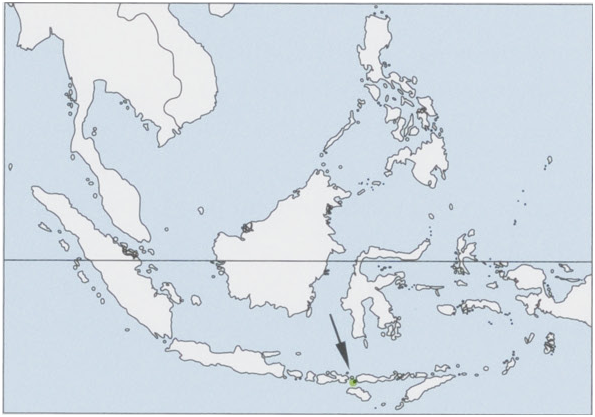
Foto: Don E. Wilson;Russell A. Mittermeier;Thomas E. Lacher, Jr
Otoritas penamaan: (Sody, 1941) (1941)
Status taksonomi: ACCEPTED
Status konservasi (IUCN): VU Rentan
Dipublikasikan dalam: Treubia vol.18 p.310
Total Catatan di Indonesia
0
Provinsi Ditemukan
0
dari 38 provinsi
Catatan Pertama
0
tahun pertama tercatat
Tren Tahunan
+0%
+200.0% vs 2019
Komodo Rat (Komodomys rintjanus) termasuk dalam famili Muridae, ordo Rodentia, kelas Mammalia. Berdasarkan data yang terhimpun, spesies ini telah tercatat sebanyak 8 kali di Indonesia, tersebar di 1 provinsi. Catatan pertama tercatat pada tahun 1929.
Nusa Tenggara Timur merupakan provinsi dengan catatan observasi terbanyak untuk spesies ini, dengan 5 catatan (62.5% dari total). Data distribusi ini mencerminkan akumulasi dari berbagai kegiatan survei, penelitian, dan kontribusi citizen science. Pola distribusi yang tercatat mungkin tidak sepenuhnya menggambarkan persebaran alami spesies, karena dipengaruhi oleh intensitas pengamatan di masing-masing wilayah.
Tren observasi tahunan Komodomys rintjanus menunjukkan peningkatan signifikan (+200%) pada periode terakhir dibanding tahun sebelumnya, dengan catatan pertama pada tahun 1929.
Catatan deskriptif tentang Komodomys rintjanus dari sumber literatur primer (via GBIF).
DISTRIBUTION: Nusa Tenggara: islands of Rintja, Padar, and Flores; probably occurs on other islands in the Lesser Sunda chain (e. g., Komodo).
Sumber: Order Rodentia - Family Muridae
DISTRIBUTION: Rintja and Padar Isis. (Lesser Sunda Isis.).
Sumber: Order Rodentia (Part 5)
Habitat. Rocky habitats, tall thickets, near gallery forests close to streams, and mainly dry thornscrub habitats.
Sumber: Muridae
Movements, Home range and Social organization. No information.
Sumber: Muridae
Status and Conservation. Classified as Vulnerable on The IUCN Red List. The Komodo Rat seems to be abundant based on the number of specimens collected for the type series. It may be found on the nearby Flores Island and Komodo Island, although surveys are needed to confirm this. The species seems to be resilient and adaptable since the islands in which it is found have been highly degraded. Further research is needed to fully understand the evolution, ecology, and potential threats to this species.
Sumber: Muridae
Descriptive notes. Head-body 120 - 180 mm, tail 120 - 163 mm, ear 19 - 22 mm, hindfoot 29 - 36 mm; weight 59 - 155 g. The Komodo Rat is a amedium sized rat with thick, coarse, and spinous fur. Dorsal pelage is straw-yellow or buff flecked with brown. Middle of head and body, from nose to rump, is darker, suffused with more brown. Cheeks and sides of head and body are paler, suffused with gray. Many guard hairs emerge from the coat and are longest near the rump, reaching 40 - 50 mm. Guard hairs, along with fine underfur, coarse overhairs, and flexible flattened spines, form the dorsal coat. Underhairs and overhairs are gray for most of their lengths, then banded with pale brown and tipped with buff or straw-yellow, a pattern also found on the guard hairs. Spines are translucent and tipped with pale buff or straw-yellow. The dark vibrissae extend up to 55 mm. There is a conspicuous triangle of bright buffy hairs behind each eye. Ears are tan and covered with fine, short hairs. Ventral pelage is composed of fine underhairs, short overhairs, and scattered soft spines and is shorter and much softer than the dorsal coat. Hairs have pale gray or dark gray bases and white tips, the thin soft spines are white. Overall color of ventral coat is white, moderately or densely suffused withpale or dark gray. Some specimens have whitish-gray underparts tinged with buff. Hindfeet are long and narrow. Digits are long, as are nails, which are nearly straight on the hindfeet. Dorsal surfaces of all four feet are densely covered by white hairs. Claws are cream in color and overladen with long white hairs. Palmar and plantar surfaces are naked, tan, and have small oblong pads. There are five pads on each palmar surface (three interdigital and two palmar) and six pads on each ofthe plantar surfaces (four interdigital and two plantar). Tail is short (c. 90 - 100 % of head-body length), coarselyscaled, and covered with long silver hairs. Dorsal surface and sides of tails are dark brown, ventral surface is paler, ranging from whitish-brown to tan and the proximal third is nearly unpigmented in some specimens. Pelage ofjuveniles is colored much like the fur of adults, but is shorter and softer, with a finer, silky texture. Skull is strongly curved dorsally between tip of nasal toward occiput. Rostrum is long and narrow. Interorbital area is flat and wide, and there are weak ridges on dorso-lateral margin of braincase. Females have five pairs of mammae: two post-axillary, one abdominal, and two inguinal pairs. Lacrimal is large, and zygomatic plate is wide, angular, and squarish. Braincase is wide and deep; interparietal is reduced; long and narrow incisive foramina widen posteriorly; incisive foramina reach level of M'; palatal bridge is short; and mesopterygoid fossa is narrow, with deep ectopterygoid fossae and some expansive sphenopalatine vacuities. Tympanic bullae are large and deep. Heavy teeth are very characteristic, with high conic cusps; cusps on M' and M? slant posteriorly, resulting in great overlap between M' and M ” and between M? and M ®. M' is anchored by five roots. Laminae on M' and M? formed high, separate cone-like cylindrical cusps; second row of labial cusp in M' is well-separated from medial one; cusp t 7 and posterior cingulum are absent on upper cheek teeth; M? is wider than M' and M?; and jaw is long and lowjaw, with weak coronoid process.
Sumber: Muridae
| # | Provinsi | Catatan | % |
|---|---|---|---|
| 1 | Nusa Tenggara Timur | 5 | 62.5% |
Jumlah catatan observasi Komodomys rintjanus di Indonesia per tahun
Komodomys rintjanus
Foto: Don E. Wilson;Russell A. Mittermeier;Thomas E. Lacher, Jr
Komodomys rintjanus
Foto: Don E. Wilson;Russell A. Mittermeier;Thomas E. Lacher, Jr
| Nama | Bahasa | Sumber |
|---|---|---|
| Komodo Rat | Inggris | Catalogue of Life |
| Komodo-Ratte | Jerman | Catalogue of Life |
| Nusa Tenggara Komodomys | Inggris | Order Rodentia - Family Muridae |
| Rat de Komodo | Prancis | Muridae |
| Rata de Komodo | - | Muridae |
| Ratto di Komodo | Italia | Catalogue of Life |
| komodoszczur skalny | pol | Catalogue of Life |
| krysa komodská | ces | Catalogue of Life |
| padarinrotta | fin | Catalogue of Life |
| Комодская крыса | rus | Catalogue of Life |
| コモドネズミ | Jepang | Catalogue of Life |
Berdasarkan data 8 observasi, Nusa Tenggara Timur adalah provinsi dengan catatan Komodo Rat (Komodomys rintjanus) terbanyak — 5 observasi (62.5% dari total catatan di Indonesia). Spesies ini tersebar di 1 provinsi.
Catatan pertama Komodo Rat (Komodomys rintjanus) di Indonesia tercatat pada tahun 1929. Hingga kini terdapat 8 catatan dari 1 provinsi, yang dihimpun dari survei lapangan, koleksi museum, dan platform citizen science.
Menurut IUCN Red List, Komodo Rat (Komodomys rintjanus) berstatus "Rentan" (kode VU). Status ini mencerminkan tingkat risiko kepunahan global spesies, bukan khusus Indonesia.
Komodomys rintjanus diklasifikasikan sebagai berikut: Kingdom Animalia, Phylum Chordata, Class Mammalia, Order Rodentia, Family Muridae, Genus Komodomys. Spesies ini dideskripsikan oleh (Sody, 1941).
4 titik observasi Komodomys rintjanus di Indonesia
Memuat peta...
Setiap titik merepresentasikan satu lokasi observasi yang tercatat. Klik titik untuk melihat detail.