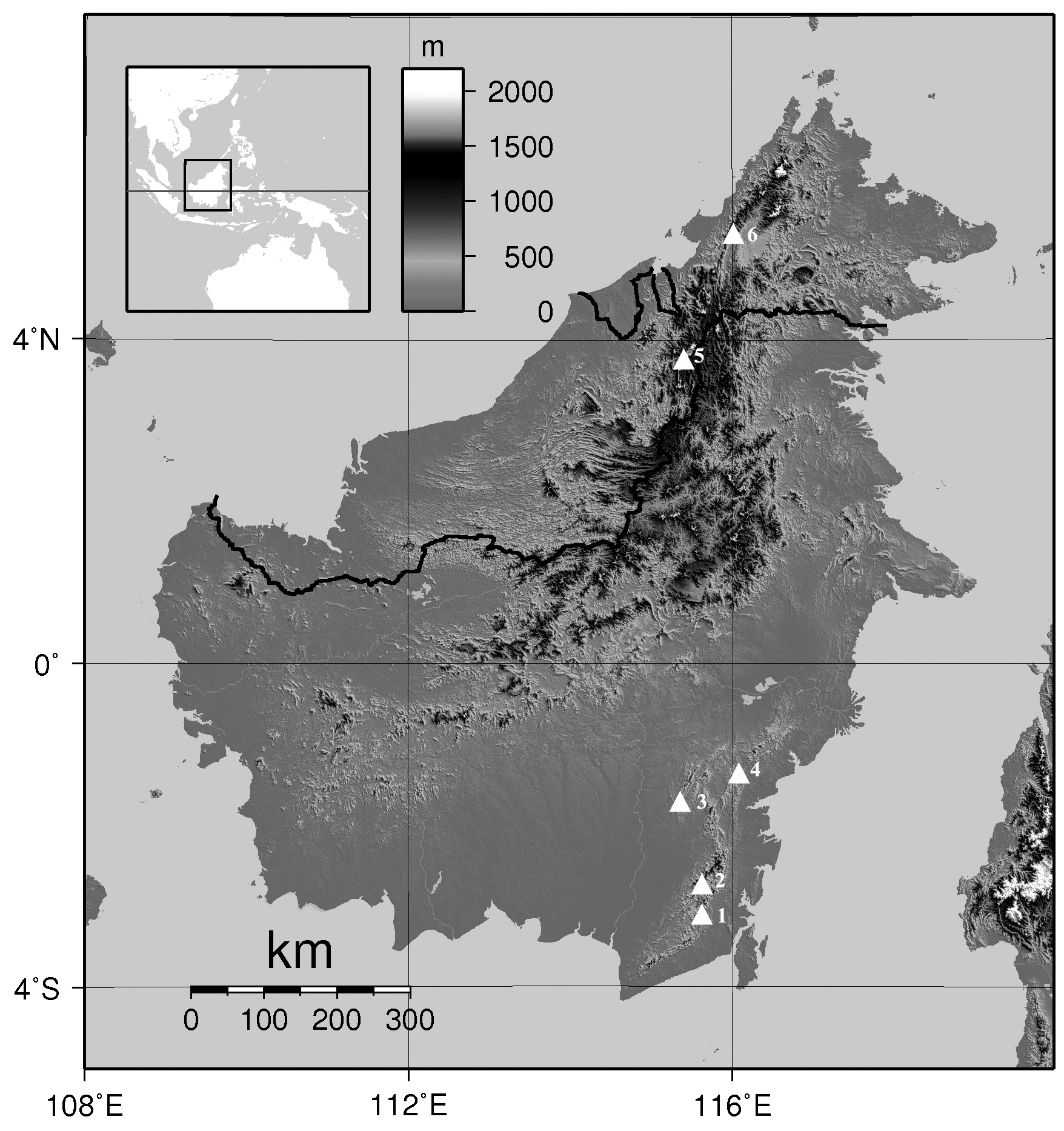
Description of Holotype (in mm). Body large (SVLh 91.0; SVL 90.8) and stocky; head depressed and broad, slightly wider (HW 38.9: 42.7 % SVLh) than long (HL 33.6: 36.9 % SVLh); snout protruding in lateral view, acutely pointed in dorsal view with a short dermal, rostral appendage (SAL 0.2: 0.2 % SVLh), projecting beyond lower jaw; eye laterally positioned, large, more than twice and half of tympanum horizontal diameter (ED 12.0: 266.6 % TDH), longer (ED 12.0: 13.2 % SVLh) than snout – horn (SLh 10.4: 11.4 % SVLh) and shorter than nostril to eye (NEL 5.0: 5.5 % SVLh); canthus rostralis with sharp, angular ridge; lore sloping and concave; internarial distance (IND 7.1: 7.8 % SVLh) about half of interorbital distance (IOD 16.8: 236.6 % IND); orbital appendage about 0.37 times of total upper eyelid width (EHL 4.5: 37.2 % UEWh), tip of orbital appendage acute, surface smooth scattered with small and low tubercles; tympanum distinct, oval, slightly longer vertically (TDV 4.6: 5.0 % SVLh) than horizontally (TDH 4.5: 4.9 % SVLh); distinct, angular supratympanic fold widened anteriorly, narrowed posteriorly, extending from behind eye, curving down around upper border of tympanum and terminating above axilla; white conical tubercles behind the supratympanic fold and front of axilla; spinous gland on corner of mouth on jaw angle; single row maxillary teeth present; vomerine teeth in two widely separated groups on level connecting posterior borders of choana; tongue mushroom-shaped, without papillae, notched posteriorly: median subgular vocal sacs with slit-like opening on each side of jaw commissures. Forelimb slender, short (FLL 57.88: 63.5 % SVLh), lower arm proximally enlarged, wider than upper arm; fingers moderately slender, with rounded and swollen tips, unwebbed and lacking lateral fringes; finger formula II <I <IV <III (fin 1 L 7.2: 7.8 % SVLh; fin 2 L 6.6: 7.3 % SVLh; fin 4 L 8.4: 9.2 % SVLh; and fin 3 L 10.7: 11.8 % SVLh); subarticular tubercles absent; outer palmar tubercle smaller (OPTL 4.9: 5.4 % SVLh) than inner palmar tubercle (IPTL 6.2: 6.9 % SVLh) Hindlimb slender and moderately long (HLL 125.5: 137.9 % SVLh), thigh (FML 40.5: 44.5 % SVLh) longer than tibia (TL 35.1: 38.6 % SVLh), tarsus (TSL 19.5: 21.4 % SVLh), and foot (FL 35.9: 39.5 % SVLh); toe formula being I <II <V <III <IV (Toe 1 L 5.8: 6.3 % SVLh; Toe 2 L 6.1: 6.7 % SVLh; Toe 5 L 8.4: 9.2 % SVLh; Toe 3 L 10.3: 11.4 % SVLh; and Toe 4 L 18.9: 20.7 % SVLh); tibiotarsal articulation reaching to point anterior to tympanum; inner metatarsal tubercle moderately large (IMTL 5.3: 5.8 % SVLh) but outer one absent; subarticular tubercles absent, toes with rounded and swollen tips and webbed only at base. Dorsal skin smooth with low dense tubercles mostly on forelimb, hindlimb and lateral body; a distinct pair of dorsolateral fold, extending from shoulder on axilla region to groin. Aside from dorsolateral fold, there is an additional lateral fold on the lateral side of the body, extending from corner of supratympanic fold to groin, and about one third length of flank; vent with dermal accessory extension above cloaca; three transverse folds on lower arm; four transverse folds on hind limb, two on thigh and two on tarsus; limb skin laterally smooth, with small tubercles around groin; ventral skin smooth, wrinkled in preservative; a pair of white, conical pectoral glands, at base of axilla; a pair of white, conical femoral glands, at middle of lateral side of posterior thigh; dark brown coloured microspinules nuptial pads covering dorsal and median surfaces of distal half of metacarpal and proximal half of basal phalanx of first and second fingers and a narrow dorsomedial strip of second finger. Colouration. In life (Figs. 4, 5 A – B), dark brown to orange-brown above, with a darker area occupying median strip of back between dorsolateral folds and sending wide branches to upper eyelid; forearm, hand, and hindlimb above darker than dorsal body with dark crossbars, three on forearm and two on thigh and tarsus, medially with a light brown streak; knee with irregular dark spot; laterally tip of snout dark brown, a light orange brown bar present behind of nares to eye, a dark bar below eye; sides of trunk unmarked; dark brown reticulum on ventrum; orange brown on throat with three longitudinal, dark stripes; palmar of hand and feet dark brown, posterior and ventral surfaces of thigh to tarsus dark brown with white spots; iris brown with dark vertical pupil. In preservative orange brown colour changed to be pale (Fig. 5 C). Tadpole (stages 30 and 36 in mm). Body slender, ellipsoidal (TTL, 30 = 38.8; 36 = 47.0), about one and half as long as broad, flattened above; body (BH, 30 = 6.3: 6.2 % TTL; 36 = 5.2: 11.2 % TTL) slightly higher than tail muscle height (TMH, 30 = 5.8: 1 15.0 % TTL; 36 = 4.7: 10.0 % TTL); the mouth labia dorsoterminal with a surface-oriented umbelliform oral disc; submarginal papillae are present on both sides between the oral orifice and emergination of upper and lower lip, concentrated around the margins, keratodonts are absent; head broader than trunk; eyes positioned laterally (ED, 30 = 1.7: 4.4 % TTL; 36 = 1.4: 2.9 % TTL); nares oval, opening laterally and dorsolaterally positioned, closer to snout than to eye (NE, 30 = 1.1: 84.6 % ES; 36 = 1.6: 58.3 % ES); internarial distance (IND, 30 = 3.0: 7.7 % TTL; 36 = 3.6: 7.7 % TTL) smaller than interorbital distance (IOD, 30 = 4.1: 10.6 % TTL; 36 = 4.5: 9.6 % TTL); spiracle sinistral; anus median, anal tube ending at margin and separated from ventral fin (Fig. 8 C); tail muscle strong about 72.5 % of total length; fin beginning at base of tail; dorsal fin deeper than ventral fin, tail tapering gradually from centre to blunt tip (Fig. 8 A – C). The tadpole body measurement, including stage 45, is shown in table 4. Background colour of body and tail of living specimens (stage 30 and 36) semi-transparent dark-brown with irregular white spot, slightly lighter on rostral appendage; a conspicuous pattern of dark brown and gold or orange brown pigmentation on dorsum of body and half of tail, particularly on dorsal part of head and trunk reaching laterally below eye; a shiny lateral stripe from base of oral umbeliform to pre-orbital below nares and border between rostral and rostral appendage; black eye sclera, iris dominated with gold brown with sprinkle dark spot, pupil rounded homogenously black; a pale stripe below spiracle; tail and fin laterally covered by a marbled pattern of dark brown pigmentation (Fig. 8 A); edges of upper and lower fins with golden iridophores, smaller on lower fin; in preserved specimens, the dark patterns fade and the skin turn transparent, and the orange gold pigmentation become pale whitish. Orange gold pigmentation lost on specimen at stage 45 (Fig. 8 D – F), dorsal side of head and body dark brown, lighter on frontal to snout region, behind eye and limbs; light orange gold pattern on dorsal surface of elbow and tips of fingers and toes; limbs dorsally with dark cross bars; dorsum of tail covered with a marbled pattern of gold; ventrum of throat black with small white spot; dark brown marbled pattern on ventrum of body and limbs, While the tail ventrally marbled light orange gold; laterally, body and tail have the same color pattern as dorsum. Characteristics of advertisement call (Fig. 9 A−B). The following description is based on the male holotype (MZB. Amph 31765). Calls contained two major types, one containing repeated short notes (type I) and another is containing repeated long notes (type II). Call type I contains 4 − 22 short notes with call duration of 1.1 − 6.5 s (mean ± SD = 3.8 ± 6.49, n = 3), note duration 116.2 − 211.5 ms (mean ± SD = 137.9 ± 16.18, n = 50), internote duration 141.8 − 233.8 ms (mean ± SD = 185.8 ± 23.53, n = 50), note period 296.4 − 393.1 ms (mean ± SD = 324.0 ± 27.16, n = 50), and dominant frequency 1.8 − 2.3 kHz (mean ± SD = 2.1 ± 0.15, n = 50). Call type II contains 3 − 6 notes with call dura- tion 1.8 − 5.8 s, note duration 268.7 − 885.6 ms (mean ± SD = 536.9 ± 195.08, n = 6), internote duration 323.7 − 535.1 ms (mean ± SD = 434.7 ± 75.93, n = 6), note period 679.5 − 1363.2 ms (mean ± SD = 1009.9 ± 26.86, n = 6) and dominant frequency 1.9 − 2.2 kHz (mean ± SD = 2.04 ± 0.1, n = 6). Most of calls contained only type I (Fig. 9 A), but one call contained both types and began with a call type II followed by the type I (Fig. 9 B). Variation. Individuals of the type series are morphometrically similar. A summary of morphometric data is shown in Tables 5 & 6 together with those on the allied species, M. nasuta. In SVLh, the adult females (mean ± SD = 113.7 ± 3.19 mm, n = 4) are significantly larger than the adult males (81.4 ± 14.50 mm, n = 6). Relative lengths of rostral appendage (RSAL) slightly larger in males (median = 0.5 %) than females (0.4 %), but the variation range largely overlaps. Relative length and width of head tend smaller in males (RHLh 39.6 %; RHW 44.3 %) than females (RHLh 41.4 %; RHW 46.1 %) but overlap in range of variations in both sexes. Relative length of orbital appendage (REHL) is larger in males (median = 4.7 %) than females (3.9 %). When the hindlimb is bent forward along the body, tibiotarsal joint usually reaches to the posterior corner of the eye in adult males and subadult females, but in adult females, the joint reaches the posterior of tympanum. The transverse fold on the occipital region varies in degree of development, and although most adults possess it, the holotype, two male paratypes (MZB. Amph 31766; 31767), and subadult females lack it. Individuals are only slightly variable in coloration. Longitudinal dark brown patch on the centre of throat seen in the holotype is also found in all males and all females, but lacking in one male (MZB. Amph 25056). Dorsum in males and females is darker, but is lighter than holotype in MZB. Amph 25054; 25055; 25728. Black conical tubercles on dorsum are present in males and female paratypes but absent in holotype and two male paratypes (MZB. Amph 25054; 31766), positioned on occipital region, both side of upper tympanum and sacral regions (Fig. 6 A). Secondary sex characters. Males have vocal slits on the corner of jaw, one each side and rugose dark nuptial pads covered with microspinules on the first and second fingers, positioned dorsomedially from the basis to the first subarticular joint of the finger, and enlarged lower arm. Comparisons. Within Sundaland and Philippines Megophrys, the new species can be distinguished from the members of the subgenus Xenophrys (M. aceras and M. longipes) and M. dringi by the absence versus presence of Y, X or H folds directed backwards at the parietoscapular region to the axilla level (Boulenger 1885; Boulenger, 1903; Inger et al. 1995). Molecularly the new species belongs to subgenus Pelobatrachus, however morphologically, it is difficult to differentiate it from the subgenus Megophrys, since there is no significant key character available to differentiate between these two subgenera. Based on the type of dorsolateral fold categorised by Munir et al. (2018), M. kalimantanensis sp. nov. is included in type I together with M. lancip, M. montana, M. nasuta, M. parallela, and M. stejnegeri. Megophrys kalimantanensis sp. nov. and M. nasuta can be morphologically differentiated from all the members of the subgenus Megophrys (M. lancip, M. montana, and M. parallela) by presence of an additional lateral fold that are elongated from supratympanic fold to the end of the trunk (Munir et al. 2018). This additional lateral fold is also present on M. kobayashii and M. ligayae but differs in shape. In M. kobayashii and M. ligayae the lateral fold does not extend more than two-thirds length of the trunk (Taylor 1920; Inger 1954; Malkmus & Matsui 1997), but it continues to end of the trunk in M. kalimantanensis sp. nov. and M. nasuta. While M. kobayashii and M. ligayae have type II dorsolateral fold (Munir et al. 2018), M. kalimantanensis sp. nov. has type I. Megophrys kalimantanensis sp. nov. is superficially similar to the widespread species M. nasuta and has been confused with it molecularly (Frost et al. 2006; Hamidy et al. 2012, Matsui et al. 2017 a). Our molecular results support their close relationships (Fig. 2), but they can be clearly differentiated morphologically in some characteristics (see Tables 5 & 6). Megophrys kalimantanensis sp. nov. has a much shorter rostral appendage (RSAL 0.1 – 0.8 in males; 0.1 – 0.5 in females) than M. nasuta (RSAL 2.3 – 9.5 in males; 1.8 – 8.4 in females), shorter head (RHLh 37.2 – 44.1 in males and 40.3 – 42.5 in females vs. 40.8 – 53.9 in males and 42.9 – 57.2 in females), narrower head (RHW 41.5 – 48.9 in males and 45.1 – 47.7 in females vs 45.5 – 52.8 in males and 45.7 – 57.4 in females), shallower head (RHD 15.3 – 19.5 in males and 15.7 – 17.1 in females vs. 16.0 – 25.5 in males and 15.4 – 24.1 in females), shorter snout (RSLh 11.3 – 12.9 in males and 11.2 – 12.5 in females vs. 9.1 – 21.9 in males and 12.6 – 21.7 in females), narrower upper eyelid (RUEWh 11.2 – 15.7 in males and 9.8 – 11.8 in females vs 14.0 – 22.6 in males and 11.2 – 20.0 in females). Megophrys kalimantanensis sp. nov. tends to have a shorter orbital appendage (REHL 4.4 – 5.0 in males and 3.2 – 4.4 in females) than M. nasuta (7.2 – 12.0 in males and 4.6 – 12.0 in females), and narrower inner palmar tubercle than the latter (RIPTL 6.1 – 9.6 in males and 6.8 – 9.5 in females vs. 7.3 – 11.2 in males and 7.2 – 11.6 in females). The rostral and orbital appendages are acute in M. kalimantanensis sp. nov. but acuminate in M. nasuta. The orbital appendage ratio of M. kalimantanensis sp. nov. is smaller (REHL / RUEWh 32.1 – 41.6 in males and 31.1 – 37.6 in females) than M. nasuta (43.7 – 61.4 in males and 32.7 – 61.3 in females). These differences also apply in sub-adult specimens (Table 5 & 6). Megophrys kalimantanensis sp. nov. can be distinguished from its ally M. nasuta in the advertisement call characteristics. Calls of M. kalimantanensis sp. nov. contain two types, repeated single short and repeated single long notes versus repeated double notes in M. nasuta (Fig. 9 A – C), and differ from those of M. nasuta by longer call duration (1.1 − 6.5 s in type I and 1.8 − 5.8 s in type II vs. 0.1 − 1.8 s); more notes in a call (4 − 22 notes in type I and 3 – 6 notes in type II vs. 1 − 3 notes); longer note duration (type I = 116.2 − 211.5 ms and type II = 268.7 − 885.6 ms vs. 76.1 − 154.9 ms); shorter inter-note duration in type I (141.8 − 233.8 ms vs. 296.9 – 439.0 ms); shorter and longer note period (type I = 296.4 − 393.1 ms and type II = 679.5 − 1363.2 ms vs. 421.8 − 563.8 ms); and slightly higher dominant frequency (type I = 1.8 − 2.3 kHz and type II = 1.9 − 2.2 kHz vs. 1.7 − 2.2 kHz).