
Biologi & Ekologieng
Habitat. [Lowland to hill rainforest from sea level up to elevations of ¢. 600 m.
Sumber: Pteropodidae
Family Pteropodidae · Order Chiroptera
Data diperbarui secara berkala dari berbagai sumber observasi biodiversitas.
58 titik observasi Penthetor lucasii di Indonesia
Memuat peta...
Setiap titik merepresentasikan satu lokasi observasi yang tercatat. Klik titik untuk melihat detail.
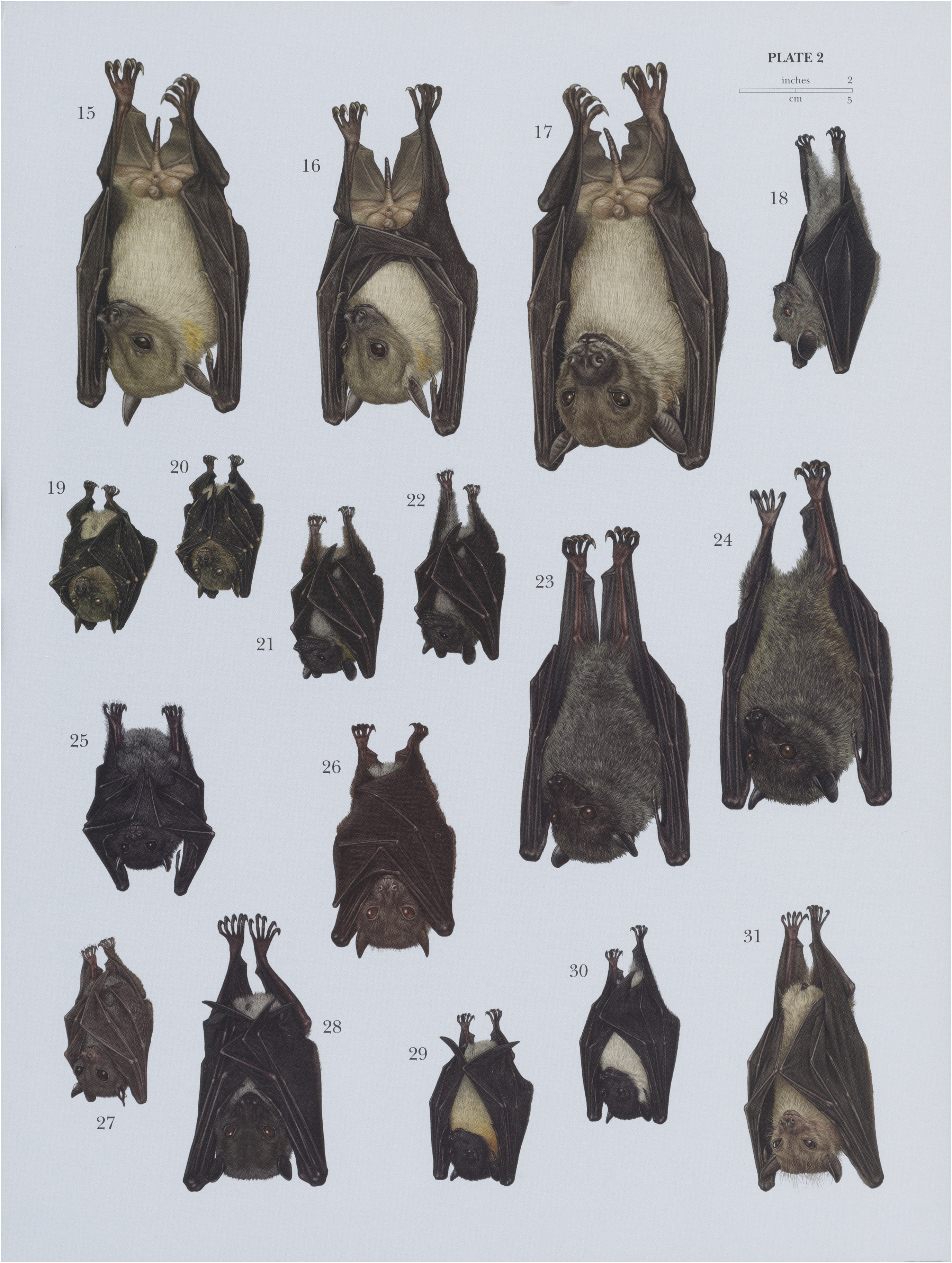
Foto: Don E. Wilson;Russell A. Mittermeier
Otoritas penamaan: (Dobson, 1880) (1880)
Status taksonomi: ACCEPTED
Status konservasi (IUCN): LC Risiko Rendah
Dipublikasikan dalam: Ann. Mag. Nat. Hist., ser. 5 vol.6 p.163
Total Catatan di Indonesia
0
Provinsi Ditemukan
0
dari 38 provinsi
Catatan Pertama
0
tahun pertama tercatat
Tren Tahunan
+0%
+0.0% vs 2009
Dusky Fruit Bat (Penthetor lucasii) termasuk dalam famili Pteropodidae, ordo Chiroptera, kelas Mammalia. Berdasarkan data yang terhimpun, spesies ini telah tercatat sebanyak 130 kali di Indonesia, tersebar di 4 provinsi. Catatan pertama tercatat pada tahun 1894.
Kalimantan Timur merupakan provinsi dengan catatan observasi terbanyak untuk spesies ini, dengan 44 catatan (33.8% dari total). Data distribusi ini mencerminkan akumulasi dari berbagai kegiatan survei, penelitian, dan kontribusi citizen science. Pola distribusi yang tercatat mungkin tidak sepenuhnya menggambarkan persebaran alami spesies, karena dipengaruhi oleh intensitas pengamatan di masing-masing wilayah.
Tren observasi tahunan Penthetor lucasii relatif stabil pada periode terakhir dibanding tahun sebelumnya, dengan catatan pertama pada tahun 1894.
Catatan deskriptif tentang Penthetor lucasii dari sumber literatur primer (via GBIF).
Habitat. [Lowland to hill rainforest from sea level up to elevations of ¢. 600 m.
Sumber: Pteropodidae
Movements, Home range and Social organization. Colonies of Lucas’s Short-nosed Fruit Bats can have more than 100 individuals that cluster together in crevices and cave ceilings in the twilight zones. Nursing females roost together in clusters in caves. Lucas’s Short-nosed Fruit Bat likely commutes between a fixed cave roost and shifting feeding areas.
Sumber: Pteropodidae
Status and Conservation. Classified as Least Concern on The IUCN Red List. Lucas’s Short-nosed Fruit Bats can be locally very common, generally in the proximity of occupied caves, but are generally rare. Limestone extraction and to a lesser extent deforestation are likely conservation threats.
Sumber: Pteropodidae
Descriptive notes. Head — body 78 - 103 mm, tail 8 - 13 mm, ear 13 - 17 mm, hindfoot 10 - 13 mm, forearm 54 - 66 mm (males) and 57 - 63 mm (females); weight 34 - 48 g (males) and 42 - 55 g (females). Head is stout; muzzle is broad at base, tapering, and moderately deep; nostrils are shortly tubular; philtrum is divided into two parallel grooves. Eyes are large and bulging; iris is warm brown. Fars are moderately long and rounded, pale brown skin is thin, and antitragus is very small. Head is very wide; pelage is sparse on muzzle and cheek; pelage is very short, dense, and darker on cap, with some individuals presenting a distinctly darker, wide central line on the cap; and very long guard hairs occur in occiput. Neck and back are sparsely haired, especially in scapular area; dorsum is brown to grayish brown. Uropatagium is naked, tail is moderately long and very thin, calcar is short, and tibia is long. Throatis thinly furred but has isolated, very long hairs, and sides of neck lack tufts or distinctly colored ruff. Chest and belly are light grayish brown, and flanks are distinctly warmer and browner. Wing membranes are dark brown from sides of body and attach on first toe, pollex and index finger are distinctly short, and index claw is present. Skull lacks basicranial deflection, rostrum is short and moderately deep, orbit is large, zygomatic rootis slightly above upper alveolar line, and zygomais rather thin and little arched posteriorly. Dorsally, rostrum is wide at base and slightly tapering; paranasal recesses are inflated, passing root of small, triangular postorbital processes; there is no postorbital foramen or postorbital constriction; barely obvious temporal lines do notjoin in a sagittal crest; braincase is oval and long; and nuchal crest is moderately developed. Ventrally, palate is moderately long (wider in nominate lucasit) and flat; tooth rows are almost straight; post-dental is short and converging; end of post-dental palate is concave; there is no palatine spine; sphenoidalcrest is thin and sharp; and ectotympanic is small and wide anteriorly, and edged internally by ribbon-like entotympanic. Mandible is thin (less so in subspecies suyantoi); coronoid slopes butis rather tall, with rounded tip; condyle is level with lower alveolar line; and angle is distinctly marked. Dental formula is 12 / 1, C 1 / 1, P 3 / 3 M 1 / 2 (x 2) = 28. Upper incisors are very thin; I! is longer; Cl is short with marked anterointernal groove; P' is a spicule; posterior cheekteeth decrease in height, without additional cusps, and have rectangular outlines; and P 23 is broad. Lower incisors are thin (possibly representing L,); C, is relatively wide at base and short; P, is peg-like; posterior cheekteeth decrease in height and are rather wide and somewhat squarish in occlusal outline; and M, is peg-like. Diploid numberis 2 n = 48.
Nama-nama ilmiah lain yang pernah digunakan untuk Penthetor lucasii dalam literatur taksonomi.
| Nama Sinonim | Otoritas | Status |
|---|---|---|
| Cynopterus lucasii | Dobson, 1880 | SYNONYM |
| # | Provinsi | Catatan | % |
|---|---|---|---|
| 1 | Kalimantan Timur | 44 | 33.8% |
| 2 | Kalimantan Barat | 6 | 4.6% |
| 3 | Jawa Tengah | 2 | 1.5% |
| 4 | Kalimantan Tengah | 2 | 1.5% |
Jumlah catatan observasi Penthetor lucasii di Indonesia per tahun
Penthetor lucasii
Foto: Don E. Wilson;Russell A. Mittermeier
Penthetor lucasii
Foto: Don E. Wilson;Russell A. Mittermeier
Penthetor lucasii
Foto: Voon-Ching Lim;Rosli Ramli;Subha Bhassu;John-James Wilson
| Nama | Bahasa | Sumber |
|---|---|---|
| Cynoptére de Lucas | Prancis | Pteropodidae |
| Dusky Fruit Bat | Inggris | Pteropodidae |
| Lucas's Short-nosed Fruit Bat | Inggris | Order Chiroptera - Family Pteropodidae |
| Lucas-Kurznasenflughund | Jerman | Catalogue of Life |
| Lucas’s Short-nosed Fruit Bat | Inggris | Pteropodidae |
| Penthetor de Lucas | - | Pteropodidae |
| Lucas' Short-nosed Fruit Bat | Inggris | The IUCN Red List of Threatened Species |
Berdasarkan data 130 observasi, Kalimantan Timur adalah provinsi dengan catatan Dusky Fruit Bat (Penthetor lucasii) terbanyak — 44 observasi (33.8% dari total catatan di Indonesia). Spesies ini tersebar di 4 provinsi.
Catatan pertama Dusky Fruit Bat (Penthetor lucasii) di Indonesia tercatat pada tahun 1894. Hingga kini terdapat 130 catatan dari 4 provinsi, yang dihimpun dari survei lapangan, koleksi museum, dan platform citizen science.
Menurut IUCN Red List, Dusky Fruit Bat (Penthetor lucasii) berstatus "Risiko Rendah" (kode LC). Status ini mencerminkan tingkat risiko kepunahan global spesies, bukan khusus Indonesia.
Ya, Penthetor lucasii memiliki 1 nama sinonim ilmiah, di antaranya: Cynopterus lucasii. Nama sinonim adalah nama-nama lain yang pernah digunakan untuk spesies yang sama dalam literatur taksonomi.
Penthetor lucasii diklasifikasikan sebagai berikut: Kingdom Animalia, Phylum Chordata, Class Mammalia, Order Chiroptera, Family Pteropodidae, Genus Penthetor. Spesies ini dideskripsikan oleh (Dobson, 1880).
Sumber: Pteropodidae
BOLD: AAB 3098 and BOLD: AAB 3099 (Fig 2). Currently no subspecies have been described for P. lucasi but considering two DNA clusters could occur within a population [86], further analyses including nuclear DNA, morphology and specimens from several localities are required for a taxonomic revision.
Sumber: A checklist of the bats of Peninsular Malaysia and progress towards a DNA barcode reference library
Recorded at: Terengganu: Kenyir Dam [87]; Pahang: Gunung Brinchang [11, 23], Cameron Highlands [23], Krau Wildlife Reserve [11, 41], Tasik Chini [43], Fraser Hill Forest Reserve [56], National Park [87]; Selangor: Bangi Forest Reserve [41], Bukit Kutu Wildlife Reserve [51], Ulu Gombak [52, 54], Ulu Langat Forest Reserve and Sungai Dusun Game Reserve [88]; Negeri Sembilan: Pasoh Forest Reserve [45]; Perak: Temengor Forest Reserve [47]; Kelantan: Air Panas-Gua Musang [61], Gunung Stong State Park [67]; Kedah: Ulu Muda Forest Reserve [57].
Sumber: A checklist of the bats of Peninsular Malaysia and progress towards a DNA barcode reference library