
Distribusieng
DISTRIBUTION: Endemic to the Sunda Shelf; Peninsular Thailand south of Isthmus of Kra, Malay Peninsula, Riau Archipelago, Sumatra, amd Borneo; absent from Java and Bali.
Sumber: Order Rodentia - Family Muridae
Family Muridae · Order Rodentia
Data diperbarui secara berkala dari berbagai sumber observasi biodiversitas.
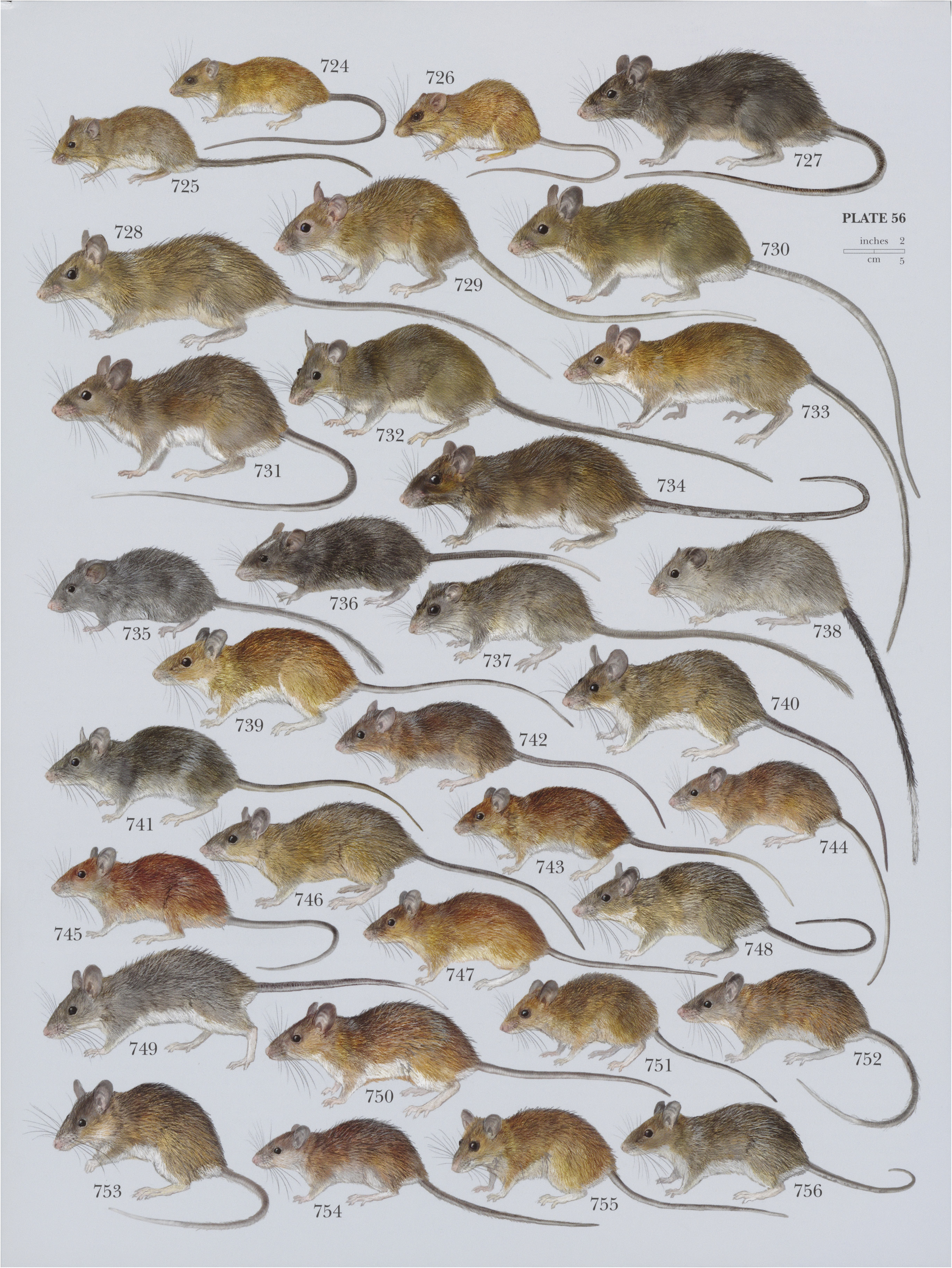
Foto: Don E. Wilson;Russell A. Mittermeier;Thomas E. Lacher, Jr
Otoritas penamaan: (Thomas, 1894) (1894)
Status taksonomi: ACCEPTED
Status konservasi (IUCN): VU Rentan
Dipublikasikan dalam: Ann. Mag. Nat. Hist., ser. 6 vol.14 p.451
Total Catatan di Indonesia
0
Provinsi Ditemukan
0
dari 38 provinsi
Catatan Pertama
0
tahun pertama tercatat
Tren Tahunan
-0%
-23.1% vs 1998
Brown Spiny Rat (Maxomys rajah) termasuk dalam famili Muridae, ordo Rodentia, kelas Mammalia. Berdasarkan data yang terhimpun, spesies ini telah tercatat sebanyak 292 kali di Indonesia, tersebar di 6 provinsi. Catatan pertama tercatat pada tahun 1899.
Kalimantan Timur merupakan provinsi dengan catatan observasi terbanyak untuk spesies ini, dengan 97 catatan (33.2% dari total). Data distribusi ini mencerminkan akumulasi dari berbagai kegiatan survei, penelitian, dan kontribusi citizen science. Pola distribusi yang tercatat mungkin tidak sepenuhnya menggambarkan persebaran alami spesies, karena dipengaruhi oleh intensitas pengamatan di masing-masing wilayah.
Tren observasi tahunan Maxomys rajah menunjukkan penurunan signifikan (-23%) pada periode terakhir dibanding tahun sebelumnya, dengan catatan pertama pada tahun 1899.
Catatan deskriptif tentang Maxomys rajah dari sumber literatur primer (via GBIF).
DISTRIBUTION: Endemic to the Sunda Shelf; Peninsular Thailand south of Isthmus of Kra, Malay Peninsula, Riau Archipelago, Sumatra, amd Borneo; absent from Java and Bali.
Sumber: Order Rodentia - Family Muridae
DISTRIBUTION: Peninsular Thailand; Malay Peninsula; Riau Arch.; Sumatra; Borneo.
Sumber: Order Rodentia (Part 5)
Habitat. Primary and disturbed lowland evergreen tropical forestfrom sea level to elevations of ¢. 1100 m. Rajah Sundaic Spiny Rats are rarely found in disturbed forests and oil palm plantations, which fragment their distribution in some areas. Food and Feeding. The Rajah Sundaic Spiny Rat eats various arthropods and vegetation, including variousfruits. Breeding. The Rajah Sundaic Spiny Rat can breed monogamously, with pairs sharing parts of their home ranges. Activity patterns. The Rajah Sundaic Spiny Rat is nocturnal and terrestrial. It builds nests in burrows (c. 2 m deep ending in nesting chamber) and rarely in cavities in logs or roots, with 1 - 2 entrances covered with leaflitter. Movements, Home range and Social organization. In Borneo, home ranges were 200 - 1400 m? (mean 670 - 6 m?). Females (mean 666 - 7 m?) had similarly sized home ranges as males (671 - 4 m?). Home rangesrarely overlap, but when they do, it is usually between a male and a female rather than individuals of the same sex. Home ranges of Rajah Sundaic Spiny Rats and sympatric Whitehead’s Sundaic Spiny Rats (M. whiteheadi) overlap substantially. Populations of Rajah Sundaic Spiny Rats can very common to very rare between years, being less abundant during times of drought but more abundant than Whitehead’s Sundaic Spiny Rats in the same region. During mass fruiting events, populations of Rajah Sundaic Spiny Rats can explode.
Nama-nama ilmiah lain yang pernah digunakan untuk Maxomys rajah dalam literatur taksonomi.
| Nama Sinonim | Otoritas | Status |
|---|---|---|
| Epimys similis | Robinson & Kloss, 1916 | SYNONYM |
| Mus lingensis | Miller, 1900 | SYNONYM |
| Mus pellax | Miller, 1900 | SYNONYM |
| # | Provinsi | Catatan | % |
|---|---|---|---|
| 1 | Kalimantan Timur | 97 | 33.2% |
| 2 | Kepulauan Riau | 57 | 19.5% |
| 3 | Sumatera Barat | 50 | 17.1% |
| 4 | Riau | 46 | 15.8% |
| 5 | Kalimantan Barat | 13 | 4.5% |
| 6 | Jambi | 1 | 0.3% |
Jumlah catatan observasi Maxomys rajah di Indonesia per tahun
Maxomys rajah
Foto: Don E. Wilson;Russell A. Mittermeier;Thomas E. Lacher, Jr
Maxomys rajah
Foto: Don E. Wilson;Russell A. Mittermeier;Thomas E. Lacher, Jr
| Nama | Bahasa | Sumber |
|---|---|---|
| Braune Rajah-Ratte | Jerman | Catalogue of Life |
| Brown Spiny Rat | Inggris | Muridae |
| Maxomys raja | Prancis | Muridae |
| Rajah Rat | Inggris | Integrated Taxonomic Information System (ITIS) |
| Rajah Spiny Rat | Inggris | Catalogue of Life |
| Rajah Sundaic Maxomys | Inggris | Order Rodentia - Family Muridae |
| Rajah Sundaic Spiny Rat | Inggris | Muridae |
| Rata espinosa de Sonda raja | - | Muridae |
| myszor królewski | pol |
Berdasarkan data 292 observasi, Kalimantan Timur adalah provinsi dengan catatan Brown Spiny Rat (Maxomys rajah) terbanyak — 97 observasi (33.2% dari total catatan di Indonesia). Spesies ini tersebar di 6 provinsi.
Catatan pertama Brown Spiny Rat (Maxomys rajah) di Indonesia tercatat pada tahun 1899. Hingga kini terdapat 292 catatan dari 6 provinsi, yang dihimpun dari survei lapangan, koleksi museum, dan platform citizen science.
Menurut IUCN Red List, Brown Spiny Rat (Maxomys rajah) berstatus "Rentan" (kode VU). Status ini mencerminkan tingkat risiko kepunahan global spesies, bukan khusus Indonesia.
Ya, Maxomys rajah memiliki 3 nama sinonim ilmiah, di antaranya: Epimys similis, Mus lingensis, Mus pellax. Nama sinonim adalah nama-nama lain yang pernah digunakan untuk spesies yang sama dalam literatur taksonomi.
Maxomys rajah diklasifikasikan sebagai berikut: Kingdom Animalia, Phylum Chordata, Class Mammalia, Order Rodentia, Family Muridae, Genus Maxomys. Spesies ini dideskripsikan oleh (Thomas, 1894).
Sumber: Muridae
Status and Conservation. Classified as Vulnerable on The IUCN Red List. The Rajah Sundaic Spiny Rat has a wide distribution and is found in numerous protected areas, including Maliau Basin Conservation Area, Gunung Stong State Park, and Wang Kelian State Park. Population size is predicted to have dropped by 30 % in the last ten years due to extensive deforestation. It is threatened mainly by logging and agricultural expansion.
Sumber: Muridae
Descriptive notes. Head-body 166 - 226 mm, tail 162 - 210 mm, ear 21 - 24 mm, hindfoot 35 - 43 mm; weight 95 - 220 g. The Rajah Sundaic Spiny Rat is large and similar to the Indomalayan Spiny Rat (M. surifer). Pelage is short and very spiny. Dorsum is brown to reddish brown or orangish brown, being darker along back and lighter along sides, with manystiff gray-brown spines. Venter is white, with dark brown streak down abdomen and many softer white spines throughout; ventral pelage is sharply demarcated from dorsal pelage. Juveniles are very dark blackish brown, fading through gray to white ventrally, and they are not identifiable to the species level. Feet are white, long, and narrow. Ears are long and dark brown; vibrissae are long and dark. Tail is 90 - 95 % of head-body length and sharply bicolored, dark brownish black above and white below. Rostrum is long and narrower than in the Broad-nosed Sumatran Spiny Rat (M. inflatus). Various species of mites (Laelaps sanguisugus, L. sculpturata, and Longolaelaps longutus), chiggers (Gahrlepia fletcher), and ticks (Amblyomma, Ixodes granulatus, and Haemaphysalis) have been recorded from the Rajah Sundaic Spiny Rat. There are four pairs of mammae: one pectoral, one post-axillary, and two inguinal. Chromosomal complement is 2 n = 36, FN = 56.
Sumber: Muridae
Distribution. S peninsular Thailand, Peninsular Malaysia, Sumatra, Borneo, and some offshore Is.
Sumber: Muridae
| Catalogue of Life |
| rajahinokarotta | fin | Catalogue of Life |
| Крыса раджи | rus | Catalogue of Life |
| หนูฟานสีน้ำตาล | tha | Catalogue of Life |
| チャイロスンダトゲネズミ | Jepang | Catalogue of Life |
103 titik observasi Maxomys rajah di Indonesia
Memuat peta...
Setiap titik merepresentasikan satu lokasi observasi yang tercatat. Klik titik untuk melihat detail.