
Konservasieng
Conservation: IUCN – Endangered.
Sumber: Order Soricomorpha
Family Soricidae · Order Soricomorpha
Data diperbarui secara berkala dari berbagai sumber observasi biodiversitas.
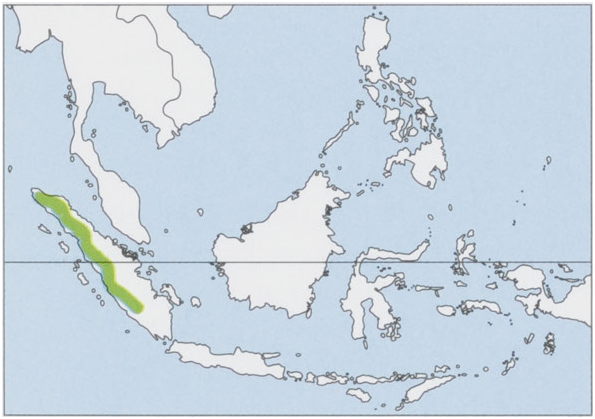
Foto: Russell A. Mittermeier;Don E. Wilson
Otoritas penamaan: Dobson, 1886 (1886)
Status taksonomi: ACCEPTED
Status konservasi (IUCN): LC Risiko Rendah
Dipublikasikan dalam: Ann. Mus. Civ. Stor. Nat. Genova vol.4 p.566
Total Catatan di Indonesia
0
Provinsi Ditemukan
0
dari 38 provinsi
Catatan Pertama
0
tahun pertama tercatat
Tren Tahunan
+0%
N/A
Paradox Shrew (Crocidura paradoxura) termasuk dalam famili Soricidae, ordo Soricomorpha, kelas Mammalia. Berdasarkan data yang terhimpun, spesies ini telah tercatat sebanyak 66 kali di Indonesia, tersebar di 5 provinsi. Catatan pertama tercatat pada tahun 2011.
Sumatera Barat merupakan provinsi dengan catatan observasi terbanyak untuk spesies ini, dengan 23 catatan (34.8% dari total). Data distribusi ini mencerminkan akumulasi dari berbagai kegiatan survei, penelitian, dan kontribusi citizen science. Pola distribusi yang tercatat mungkin tidak sepenuhnya menggambarkan persebaran alami spesies, karena dipengaruhi oleh intensitas pengamatan di masing-masing wilayah.
Catatan deskriptif tentang Crocidura paradoxura dari sumber literatur primer (via GBIF).
Conservation: IUCN – Endangered.
Sumber: Order Soricomorpha
Distribution: Mountains of N and W Sumatra.
Sumber: Order Soricomorpha
Habitat. Humid mossy montane forest at elevations of 1000 - 2400 m. It is not clear whether the Sumatran Long-tailed White-toothed Shrew is capable of adapting to anthropogenic environments.
Sumber: Soricidae
Movements, Home range and Social organization. No information.
Sumber: Soricidae
Status and Conservation. Classified as Least Concern on The IUCN Red List. The Sumatran Long-tailed White-toothed Shrew is linked to forest habitats and, accordingly, deforestation is a threat, most importantly for agriculture and timber extraction, and with the spread of human settlements; the shrew population is decreasing. However, the species is widespread and can be found in high mountain forests where deforestation is not such a major problem. Within its range are some large protected areas, which should be significant for the conservation of the species.
| # | Provinsi | Catatan | % |
|---|---|---|---|
| 1 | Sumatera Barat | 23 | 34.8% |
| 2 | Sumatera Selatan | 13 | 19.7% |
| 3 | Aceh | 7 | 10.6% |
| 4 | Sumatera Utara | 3 | 4.5% |
| 5 | Jambi | 2 | 3.0% |
Jumlah catatan observasi Crocidura paradoxura di Indonesia per tahun
Data tren temporal belum tersedia
Crocidura paradoxura
Foto: Russell A. Mittermeier;Don E. Wilson
Crocidura paradoxura
Foto: Russell A. Mittermeier;Don E. Wilson
| Nama | Bahasa | Sumber |
|---|---|---|
| Crocidure paradoxale | Prancis | Catalogue of Life |
| Musarana de Sumatra | - | Soricidae |
| Paradox Shrew | Inggris | Soricidae |
| Sumatra-Langschwanz-Weilizahnspitzmaus | Jerman | Soricidae |
| Sumatran Long-tailed Shrew | Inggris | Order Soricomorpha |
| Sumatran Long-tailed White-toothed Shrew | Inggris | Soricidae |
| sumatranhäntäsupiainen | fin | Catalogue of Life |
| zębiełek przedziwny | pol | Catalogue of Life |
| Странная белозубка |
Berdasarkan data 66 observasi, Sumatera Barat adalah provinsi dengan catatan Paradox Shrew (Crocidura paradoxura) terbanyak — 23 observasi (34.8% dari total catatan di Indonesia). Spesies ini tersebar di 5 provinsi.
Catatan pertama Paradox Shrew (Crocidura paradoxura) di Indonesia tercatat pada tahun 2011. Hingga kini terdapat 66 catatan dari 5 provinsi, yang dihimpun dari survei lapangan, koleksi museum, dan platform citizen science.
Menurut IUCN Red List, Paradox Shrew (Crocidura paradoxura) berstatus "Risiko Rendah" (kode LC). Status ini mencerminkan tingkat risiko kepunahan global spesies, bukan khusus Indonesia.
Crocidura paradoxura diklasifikasikan sebagai berikut: Kingdom Animalia, Phylum Chordata, Class Mammalia, Order Soricomorpha, Family Soricidae, Genus Crocidura. Spesies ini dideskripsikan oleh Dobson, 1886.
Sumber: Soricidae
Descriptive notes. Head-body 66 - 77 mm, tail 80 - 105 mm, ear 10 - 10 - 5 mm, hindfoot 15 - 5 — 16 mm. No specific data are available for body weight. Fur of the Sumatran Longtailed White-toothed Shrew is dense and soft, and the hairs are long (7 - 8 mm). Dorsal hair is slate to bluish gray at the base and shiny brownish on the tip. At the extremities the pelage color changes more toward ash gray. Ventral pelage is almost completely gray. Forefeet and hindfeet almost naked with cream-colored to pinkish skin. Feet are elongated, and the tail is very long (tail of the holotype 160 % of head-body length, but shorter for other specimens), which allows climbing ability. Tail with short brown hair; the long tail hairs typical of the genus are missing. Ears with short, barely visible hair. Skull without neck and sagittal ridges; in profile, the highest point is at the beginning of the braincase. The first incisor is only about half the size of the first incisor of the similarly sized Hutan White-toothed Shrew (C. hutanis). In general, the dentition is also weaker than in the Hutan White-toothed Shrew. Mandible is very slender. Greatest length of skull ¢. 21 - 7 mm.
Sumber: Soricidae
| rus |
| Catalogue of Life |
| パラドックスジネズミ | Jepang | Catalogue of Life |
63 titik observasi Crocidura paradoxura di Indonesia
Memuat peta...
Setiap titik merepresentasikan satu lokasi observasi yang tercatat. Klik titik untuk melihat detail.