Konservasieng
Conservation: CITES – Appendix II; IUCN – Endangered; Cynogale populations from Vietnam (C. b. lowei) considered by IUCN to have high conservation priority status for viverrids (Schreiber et al., 1989).
Sumber: Order Carnivora
Family Viverridae · Order Carnivora
Data diperbarui secara berkala dari berbagai sumber observasi biodiversitas.
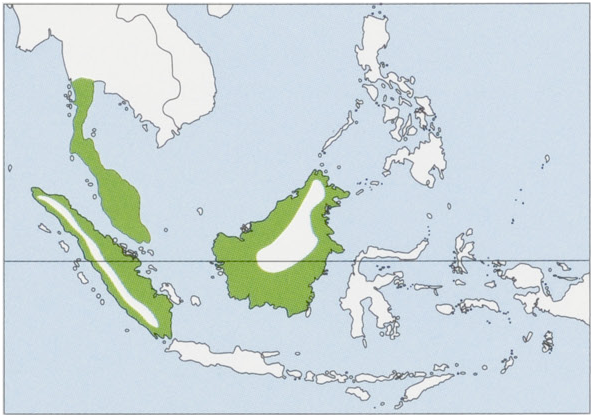
Foto: Don E. Wilson;Russell A. Mittermeier
Otoritas penamaan: Gray, 1837 (1837)
Status taksonomi: ACCEPTED
Status konservasi (IUCN): EN Terancam Punah
Dipublikasikan dalam: Proc. Zool. Soc. Lond. vol.1836 p.88
Total Catatan di Indonesia
0
Provinsi Ditemukan
0
dari 38 provinsi
Catatan Pertama
0
tahun pertama tercatat
Tren Tahunan
-0%
-50.0% vs 1977
Musang air (Cynogale bennettii) termasuk dalam famili Viverridae, ordo Carnivora, kelas Mammalia. Berdasarkan data yang terhimpun, spesies ini telah tercatat sebanyak 43 kali di Indonesia, tersebar di 5 provinsi. Catatan pertama tercatat pada tahun 1826.
Kalimantan Barat merupakan provinsi dengan catatan observasi terbanyak untuk spesies ini, dengan 12 catatan (27.9% dari total). Data distribusi ini mencerminkan akumulasi dari berbagai kegiatan survei, penelitian, dan kontribusi citizen science. Pola distribusi yang tercatat mungkin tidak sepenuhnya menggambarkan persebaran alami spesies, karena dipengaruhi oleh intensitas pengamatan di masing-masing wilayah.
Tren observasi tahunan Cynogale bennettii menunjukkan penurunan signifikan (-50%) pada periode terakhir dibanding tahun sebelumnya, dengan catatan pertama pada tahun 1826.
Catatan deskriptif tentang Cynogale bennettii dari sumber literatur primer (via GBIF).
Conservation: CITES – Appendix II; IUCN – Endangered; Cynogale populations from Vietnam (C. b. lowei) considered by IUCN to have high conservation priority status for viverrids (Schreiber et al., 1989).
Sumber: Order Carnivora
Distribution: Brunei, Indonesia (Kalimantan, Sumatra), Malaysia, Thailand, Vietnam.
Sumber: Order Carnivora
PROTECTED STATUS: CITES - Appendix II.
Sumber: Order Carnivora
DISTRIBUTION: Malaya; Indochina; Sumatra; Borneo.
Sumber: Order Carnivora
Habitat. Primary lowland dry forest, swamp forest, bamboo forest, and secondary forest. It has been recorded as high as 1200 m in Borneo, but most records are from lowland forest. The majority of field observations and camera-trap records are in the vicinity of water, near streams and swampy areas.
Sumber: Viverridae
Movements, Home range and Social organization. Terrestrial, but there is one camera-trap photograph showing an Otter Civet climbing a tree. Mainly solitary, but photographs of mothers with young have been recorded: of 59 camera-trap pictures in Sumatra, 53 were of single individuals, four were of two individuals, and two were of three individuals.
Sumber: Viverridae
Nama-nama ilmiah lain yang pernah digunakan untuk Cynogale bennettii dalam literatur taksonomi.
| Nama Sinonim | Otoritas | Status |
|---|---|---|
| Cynogale lowei | Pocock, 1933 | SYNONYM |
| Viverra carcharias | de Blainville, 1837 | SYNONYM |
| # | Provinsi | Catatan | % |
|---|---|---|---|
| 1 | Kalimantan Barat | 12 | 27.9% |
| 2 | Sumatera Utara | 5 | 11.6% |
| 3 | Kalimantan Tengah | 2 | 4.7% |
| 4 | Riau | 1 | 2.3% |
| 5 | Sumatera Selatan | 1 | 2.3% |
Jumlah catatan observasi Cynogale bennettii di Indonesia per tahun
Cynogale bennettii
Foto: Don E. Wilson;Russell A. Mittermeier
Cynogale bennettii
Foto: Don E. Wilson;Russell A. Mittermeier
| Nama | Bahasa | Sumber |
|---|---|---|
| Cibeta Nutria | Spanyol | Catalogue of Life |
| Civeta pescadora | - | Viverridae |
| Civeta pescadora | Spanyol | Catalogue of Life |
| Civeta-Lontra | Portugis | Catalogue of Life |
| Civetta lontra | Italia | Catalogue of Life |
| Civette loutre | Prancis | Viverridae |
| Civette-loutre De Sumatra | Prancis | Catalogue of Life |
| Mampalon | Italia | Catalogue of Life |
| Mampalon sundajski | pol | Catalogue of Life |
| Mampalon wietnamski | pol | Catalogue of Life |
| Mampalon wydrowaty | pol | Catalogue of Life |
| Musang air | Indonesia | Catalogue of Life |
| Otersivett | nob | Catalogue of Life |
| Otter Civet | Inggris | Mammal Species of the World |
| Otter civet | - | Phthiraptera.myspecies.info |
| Otter-Zivette | Jerman | Catalogue of Life |
| Otter-civet | Inggris | Catalogue of Life |
| Ottercivetkat | Belanda | Catalogue of Life |
| Otterzivette | Jerman | Viverridae |
| Singkanung | - | Catalogue of Life |
Berdasarkan data 43 observasi, Kalimantan Barat adalah provinsi dengan catatan Musang air (Cynogale bennettii) terbanyak — 12 observasi (27.9% dari total catatan di Indonesia). Spesies ini tersebar di 5 provinsi.
Catatan pertama Musang air (Cynogale bennettii) di Indonesia tercatat pada tahun 1826. Hingga kini terdapat 43 catatan dari 5 provinsi, yang dihimpun dari survei lapangan, koleksi museum, dan platform citizen science.
Menurut IUCN Red List, Musang air (Cynogale bennettii) berstatus "Terancam Punah" (kode EN). Status ini mencerminkan tingkat risiko kepunahan global spesies, bukan khusus Indonesia.
Di Indonesia dan Malaysia, Cynogale bennettii dikenal dengan beberapa nama lokal: Musang air. Penamaan dapat berbeda antardaerah dan bahasa.
Ya, Cynogale bennettii memiliki 2 nama sinonim ilmiah, di antaranya: Cynogale lowei, Viverra carcharias. Nama sinonim adalah nama-nama lain yang pernah digunakan untuk spesies yang sama dalam literatur taksonomi.
Cynogale bennettii diklasifikasikan sebagai berikut: Kingdom Animalia, Phylum Chordata, Class Mammalia, Order Carnivora, Family Viverridae, Genus Cynogale. Spesies ini dideskripsikan oleh Gray, 1837.
20 titik observasi Cynogale bennettii di Indonesia
Memuat peta...
Setiap titik merepresentasikan satu lokasi observasi yang tercatat. Klik titik untuk melihat detail.