
Biologi & Ekologieng
Habitat. [Lowland forests in secondary and disturbed areas up to elevations of ¢. 100 m.
Sumber: Pteropodidae
Family Pteropodidae · Order Chiroptera
Data diperbarui secara berkala dari berbagai sumber observasi biodiversitas.
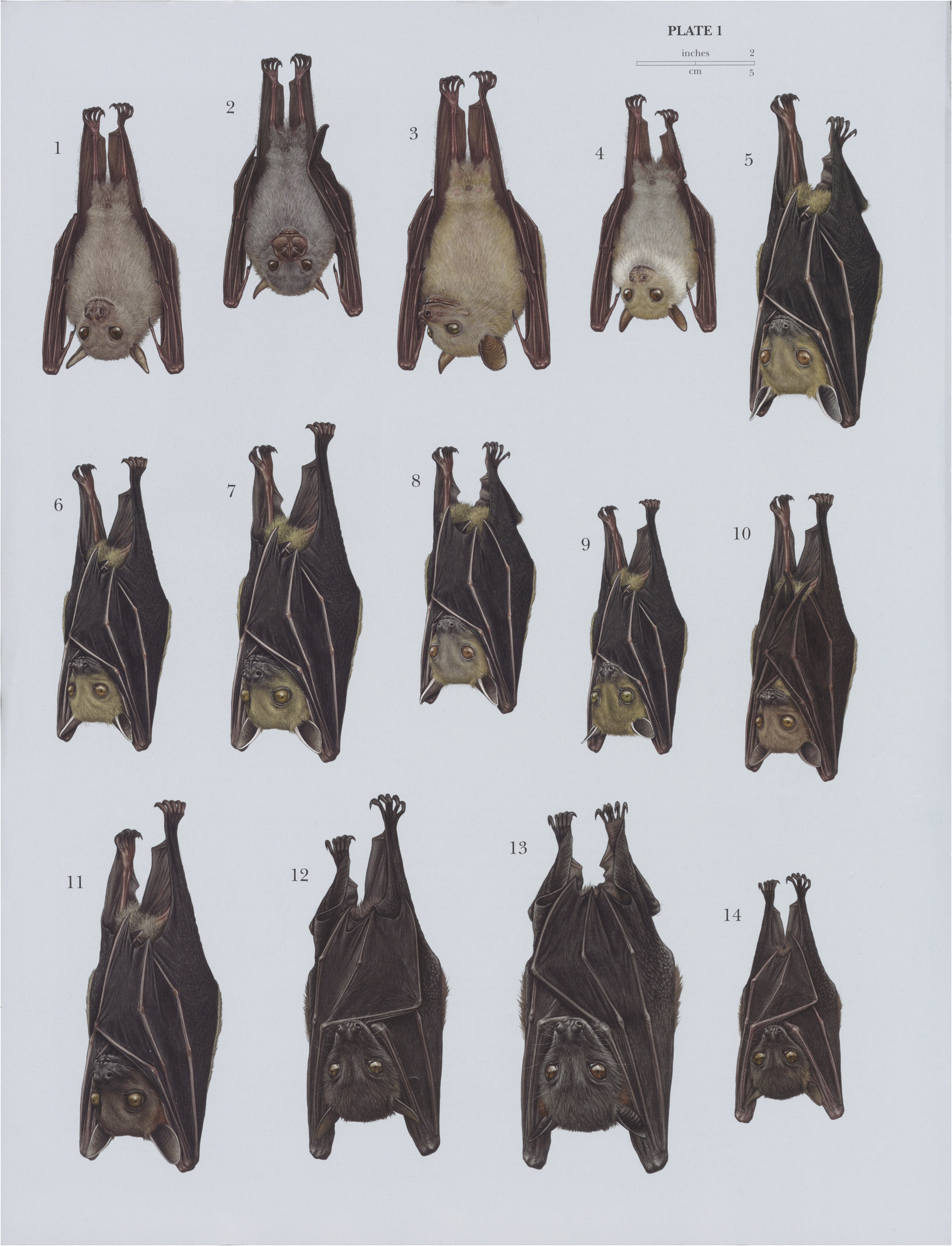
Foto: Don E. Wilson;Russell A. Mittermeier
Otoritas penamaan: Kitchener & Maharadatunkamsi, 1991 (1991)
Status taksonomi: ACCEPTED
Status konservasi (IUCN): LC Risiko Rendah
Dipublikasikan dalam: Kitchener, D. J., and Maharadatunkamsi. (1991). Description of a new species of Cynopterus (Chiroptera: Pteropodidae) from Nusa Tenggara, Indonesia. Records of the Western Australian Museum, Vol. 15, No. 2.
Total Catatan di Indonesia
0
Provinsi Ditemukan
0
dari 38 provinsi
Catatan Pertama
0
tahun pertama tercatat
Tren Tahunan
+0%
+0.0% vs 2004
Codot Nusatenggara (Cynopterus nusatenggara) termasuk dalam famili Pteropodidae, ordo Chiroptera, kelas Mammalia. Berdasarkan data yang terhimpun, spesies ini telah tercatat sebanyak 6 kali di Indonesia, tersebar di 2 provinsi. Catatan pertama tercatat pada tahun 1972.
Nusa Tenggara Barat merupakan provinsi dengan catatan observasi terbanyak untuk spesies ini, dengan 1 catatan (16.7% dari total). Data distribusi ini mencerminkan akumulasi dari berbagai kegiatan survei, penelitian, dan kontribusi citizen science. Pola distribusi yang tercatat mungkin tidak sepenuhnya menggambarkan persebaran alami spesies, karena dipengaruhi oleh intensitas pengamatan di masing-masing wilayah.
Tren observasi tahunan Cynopterus nusatenggara relatif stabil pada periode terakhir dibanding tahun sebelumnya, dengan catatan pertama pada tahun 1972.
Catatan deskriptif tentang Cynopterus nusatenggara dari sumber literatur primer (via GBIF).
Habitat. [Lowland forests in secondary and disturbed areas up to elevations of ¢. 100 m.
Sumber: Pteropodidae
Movements, Home range and Social organization. No information.
Sumber: Pteropodidae
Status and Conservation. Classified as Least Concern on The IUCN Red List. Population trend of the Nusatenggara Short-nosed Fruit Bat is stable.
Sumber: Pteropodidae
Descriptive notes. Head — body 88 mm, tail 5 mm, ear 18 mm, hindfoot 13 mm, forearm 55 - 1 - 64 - 8 mm; weight 24 - 5 - 37 - 5 g (mean in males 27 - 9 g, mean in females 29 - 9 g). The Nusatenggara Short-nosed Fruit Bat is medium-sized and brown, without white ear rims or wing digits. Muzzle is short, skin is brown, and nostrils are shortly tubular and diverging. Eyes are moderately large; iris is chestnut-brown to olive-brown. Ears are moderately short; pinnae are light brown, oval, with small round antitragus, slightly attenuated attip, and light brown rims. Head pelage is short and brown; nape and dorsum are lighter brown to olive-brown, with slightly longer hairs. Tibia is lightly haired, uropatagium and tail are well developed, tuft of hair occurs around tail, and calcar is short. Yellowish brown ruff extends to back of adult males and is lighter and less extended on females. Chest and belly are grayer. Wing membranes are warm brown, originate on sides of body and attach to first toe; index claw is present; and dorsal skin of metacarpals and phalanges is light brown, not contrasting with patagial, which is lightly furred with ocherous buff near body. Skull lacks basicranial deflection, laterally, rostrum is very short and moderately deep and slopes gently to forehead, orbits are large, braincase is rounded, zygomatic rootis slightly above alveolar line, and zygoma is moderately thin and gently arched posteriorly. Dorsally, rostrum is moderately wide; paranasal recesses are inflated and reach postorbital foramina; postorbital processes are short and projectlaterally; and braincase is oval, with thin parallel temporal lines and inconspicuous nuchalcrest. Ventrally, palate is flat; post-dental is long and converges posteriorly; palatine spine is inconspicuous and joined to sphenoidal crest; and ectotympanic is wide anteriorly, with entotympanic alongside its inner margin. Mandible is moderatelythin; coronoid is long and steep, with narrow tip; condyle is slightly above lower alveolar line; and angle is round off. Upper incisors are small and rather long; C' is small and decurved; P' is minute; and posterior cheekteeth are small and decrease in size posteriorly. Lower incisors are small; C, is thin and short; P, has triangular crown; posterior cheekteeth are tall and decrease posteriorly, without marked additional surface cusps; and M, is small.
Sumber: Pteropodidae
Conservation: Described after completion of IUCN / SSC Action Plan (1992). IUCN 2003 – Lower Risk (nt).
Sumber: Order Chiroptera - Family Pteropodidae
Distribution: Lombok, Moyo, Sumbawa, Sangeang, Komodo, Flores, Sumba, Adonara, Lembata, Pantar, Alor, and Wetar Isls (Indonesia).
Sumber: Order Chiroptera - Family Pteropodidae
| # | Provinsi | Catatan | % |
|---|---|---|---|
| 1 | Nusa Tenggara Barat | 1 | 16.7% |
| 2 | Nusa Tenggara Timur | 1 | 16.7% |
Jumlah catatan observasi Cynopterus nusatenggara di Indonesia per tahun
Cynopterus nusatenggara
Foto: Don E. Wilson;Russell A. Mittermeier
Cynopterus nusatenggara
Foto: Don E. Wilson;Russell A. Mittermeier
| Nama | Bahasa | Sumber |
|---|---|---|
| Codot Nusatenggara | Indonesia | Catalogue of Life |
| Cynoptere de Nusa Tenggara | Prancis | Pteropodidae |
| Cynéptero de Nusa Tenggara | - | Pteropodidae |
| Krótkonosek wyspowy | pol | Catalogue of Life |
| Nusa-Tenggara-Kurznasenflughund | Jerman | Catalogue of Life |
| Nusatengarra Short-nosed Fruit Bat | Inggris | Catalogue of Life |
| Nusatenggara Short-nosed Fruit Bat | Inggris | Pteropodidae |
| kaloň nusatenggarský | ces | Catalogue of Life |
| lombokinkoirankuono | fin | Catalogue of Life |
| ค้างคาวขอบหูขาวนูซาเติงการา | tha | Catalogue of Life |
| ヌサトゥンガラフルーツコウモリ | Jepang | Catalogue of Life |
Berdasarkan data 6 observasi, Nusa Tenggara Barat adalah provinsi dengan catatan Codot Nusatenggara (Cynopterus nusatenggara) terbanyak — 1 observasi (16.7% dari total catatan di Indonesia). Spesies ini tersebar di 2 provinsi.
Catatan pertama Codot Nusatenggara (Cynopterus nusatenggara) di Indonesia tercatat pada tahun 1972. Hingga kini terdapat 6 catatan dari 2 provinsi, yang dihimpun dari survei lapangan, koleksi museum, dan platform citizen science.
Menurut IUCN Red List, Codot Nusatenggara (Cynopterus nusatenggara) berstatus "Risiko Rendah" (kode LC). Status ini mencerminkan tingkat risiko kepunahan global spesies, bukan khusus Indonesia.
Di Indonesia dan Malaysia, Cynopterus nusatenggara dikenal dengan beberapa nama lokal: Codot Nusatenggara. Penamaan dapat berbeda antardaerah dan bahasa.
Cynopterus nusatenggara diklasifikasikan sebagai berikut: Kingdom Animalia, Phylum Chordata, Class Mammalia, Order Chiroptera, Family Pteropodidae, Genus Cynopterus. Spesies ini dideskripsikan oleh Kitchener & Maharadatunkamsi, 1991.
5 titik observasi Cynopterus nusatenggara di Indonesia
Memuat peta...
Setiap titik merepresentasikan satu lokasi observasi yang tercatat. Klik titik untuk melihat detail.