
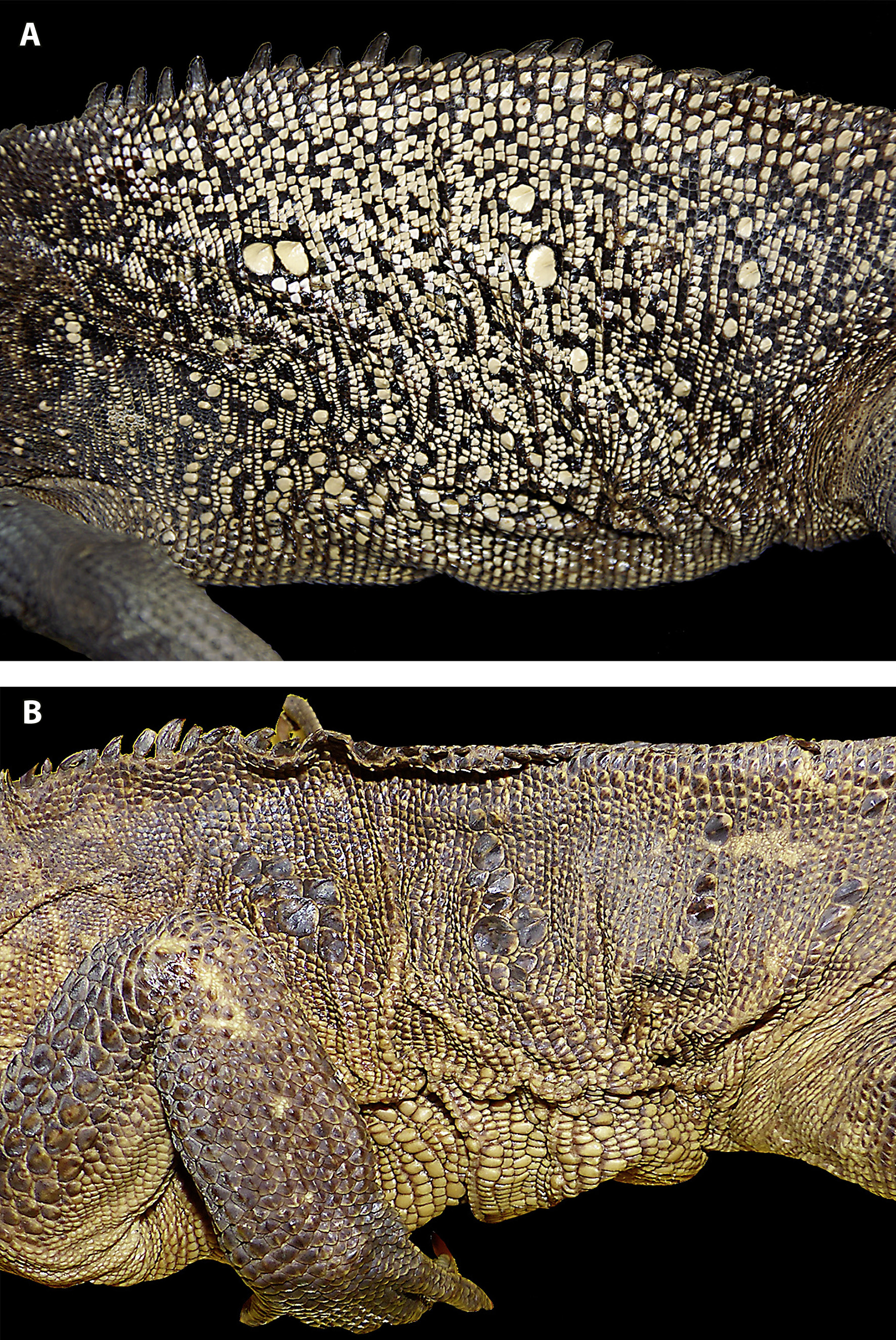
Biology: H. microlophus appears to prefer open freshwater habitats mostly surrounded by high trees. We observed this species mainly on stony or rocky ground. In Bantimurung specimens were seen in a river with large boulders and low vegetation on the banks. Remarkably, this site was near the entrance of the Bantimurung National Park that is highly frequented by many visitors. Some specimens even occurred near a busy building site. Near Bengo-Bengo six specimens (one male and five females) were observed on a tree. It appeared as if this assemblage had a harem structure with the single male being the dominant individual. According to locals and own observations, individuals living close to human settlements are often seen in trees during the dry season to escape the hunting dogs. In contrast, during the rainy season a more terrestrial behaviour is observed. Individuals or groups of sailfin lizards of different ages are mainly seen on riverbanks and flee into the river when disturbed. We observed several specimens of all age groups living together within a relatively small range especially in the dry season. The semiaquatic habitat was shared with Varanus togianus, a potential predator of juvenile Hydrosaurus.
Sumber: Dragons in neglect: Taxonomic revision of the Sulawesi sailfin lizards of the genus Hydrosaurus Kaup, 1828 (Squamata, Agamidae)