
Konservasieng
Conservation: CITES – Appendix II; IUCN – Endangered.
Sumber: Order Primates
Family Cercopithecidae · Order Primates
Data diperbarui secara berkala dari berbagai sumber observasi biodiversitas.
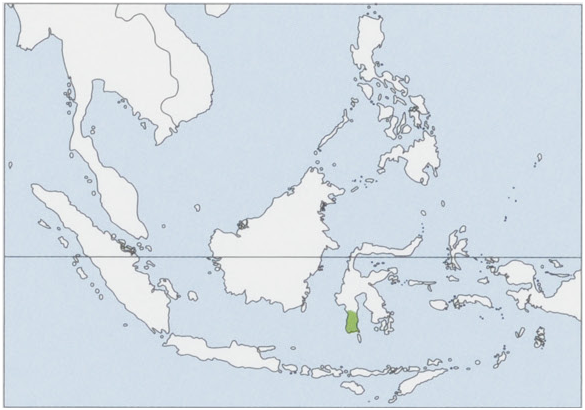
Foto: Russell A. Mittermeier;Anthony B. Rylands;Don E. Wilson
Otoritas penamaan: (Schinz, 1825) (1825)
Status taksonomi: ACCEPTED
Status konservasi (IUCN): EN Terancam Punah
Dipublikasikan dalam: In Cuvier, Das Thierreich p.257
Total Catatan di Indonesia
0
Provinsi Ditemukan
0
dari 38 provinsi
Catatan Pertama
0
tahun pertama tercatat
Tren Tahunan
+0%
+66.7% vs 2025
Ceba (Macaca maura) termasuk dalam famili Cercopithecidae, ordo Primates, kelas Mammalia. Berdasarkan data yang terhimpun, spesies ini telah tercatat sebanyak 177 kali di Indonesia, tersebar di 2 provinsi. Catatan pertama tercatat pada tahun 1888.
Sulawesi Selatan merupakan provinsi dengan catatan observasi terbanyak untuk spesies ini, dengan 128 catatan (72.3% dari total). Data distribusi ini mencerminkan akumulasi dari berbagai kegiatan survei, penelitian, dan kontribusi citizen science. Pola distribusi yang tercatat mungkin tidak sepenuhnya menggambarkan persebaran alami spesies, karena dipengaruhi oleh intensitas pengamatan di masing-masing wilayah.
Tren observasi tahunan Macaca maura menunjukkan peningkatan signifikan (+67%) pada periode terakhir dibanding tahun sebelumnya, dengan catatan pertama pada tahun 1888.
Catatan deskriptif tentang Macaca maura dari sumber literatur primer (via GBIF).
Conservation: CITES – Appendix II; IUCN – Endangered.
Sumber: Order Primates
Distribution: S Sulawesi, south of Tempe Depression (Indonesia).
Sumber: Order Primates
PROTECTED STATUS: CITES - Appendix II as Order Primates.
Sumber: Order Primates
DISTRIBUTION: S. Sulawesi, south of Tempe Depression.
Sumber: Order Primates
Habitat. Moist deciduous forest (up to 2000 m above sea level), mosaics of forest with grasslands resulting from habitat conversion, and areas of cultivation surrounded by primary and secondary forests. A large part of the remaining population of Moor Macaques is likely confined to karst (limestone) forest. The tower karsts in southwestern Sulawesi are 150 - 300 m tall, with many fruit trees growing on top that are favored by Moor Macaques. Karst forests in Bantimurung-Bulusaraung National Park have considerable seasonal variation in rainfall, with a pronounced dry season in May-September. Moor Macaques are frequently found in association with endemic yellowbilled malkohas (Phaenicophaeus calyorhynchus). Malkohas benefit from insect prey that is flushed out of the canopy by the macaques’ movements. Figs (Ficus, Moraceae), an important food resource for many Sulawesi mammals and birds, are very abundant in Karaenta Nature Reserve (23 - 3 fig trees / ha) compared with other Indonesian forests (6 - 6 fig trees / ha, East Kalimantan Province and 7 - 10 fig trees / ha, North Sulawesi Province).
Sumber: Cercopithecidae
Movements, Home range and Social organization. The Moor Macaque lives in multimale-multifemale groups. Group sizes are 15 - 40 individuals, with an adult sex ratio of males to females of 1: 0 - 5 - 2 - 7. Males emigrate from their natal groups at 7 - 9 years of age. Females form linear dominance hierarchies, but they have relaxed relationships characterized by low levels of intense aggression, bidirectionality when agonistic behavior occurs (either female in a dyad may initiate the interaction), and frequent post-conflict affiliative contacts. Social tolerance among adult males has also been reported. Adult males (typically the highest ranked) emit a birdlike vocalization called a “ loud call. ” These calls are given when group members are dispersed, following stimuli such as agonistic interactions or vocalizations from other group members, but not during intergroup interactions. Home range size is 20 - 30 ha, and ranges often overlap with those of neighboring groups. Data from the group in Bantimurung-Bulusaraung National Park indicate that intergroup encounters occur, on average, every 28 - 8 hours. Males, rather than females, appear to be the primary participants. Presence of sexually receptive females is not related to frequency of intergroup encounters. Densities are 25 - 50 ind / km? ®. The well-studied population that lives in Karaenta Nature Reserve in Bantimurung-Bulusaraung National Park reached a density of 70 ind / km? * by 1998.
Sumber: Cercopithecidae
Nama-nama ilmiah lain yang pernah digunakan untuk Macaca maura dalam literatur taksonomi.
| Nama Sinonim | Otoritas | Status |
|---|---|---|
| Macaca cuvieri | (Fischer, 1829) | SYNONYM |
| Macaca fusco-ater | (Schinz, 1844) | SYNONYM |
| Macaca hypomelas | (Matschie, 1901) | SYNONYM |
| Macaca inornatus | (Gray, 1866) | SYNONYM |
| Macaca majuscula | Hooijer, 1950 | SYNONYM |
| Macacus fusco-ater | Schinz, 1844 | SYNONYM |
| Macacus inornatus | Gray, 1866 | SYNONYM |
| Simia cuvieri | Fischer, 1829 | SYNONYM |
| # | Provinsi | Catatan | % |
|---|---|---|---|
| 1 | Sulawesi Selatan | 128 | 72.3% |
| 2 | Sulawesi Tenggara | 1 | 0.6% |
Jumlah catatan observasi Macaca maura di Indonesia per tahun
Macaca maura
Foto: Russell A. Mittermeier;Anthony B. Rylands;Don E. Wilson
Macaca maura
Foto: Russell A. Mittermeier;Anthony B. Rylands;Don E. Wilson
| Nama | Bahasa | Sumber |
|---|---|---|
| Büyük Sulawesi şebeği | tur | Catalogue of Life |
| Ceba | Indonesia | Catalogue of Life |
| Celebes Macaque | Inggris | Catalogue of Life |
| Celebes-Makak | Jerman | Catalogue of Life |
| Dare | Indonesia | Catalogue of Life |
| Darre | - | Catalogue of Life |
| Macaca Mora | Spanyol | Catalogue of Life |
| Macaca maura | Spanyol | Catalogue of Life |
| Macaco de Célebes | - | Cercopithecidae |
| Macaco nero | Italia | Catalogue of Life |
| Macaque Maure | Prancis | Catalogue of Life |
| Macaque maure | Prancis | Cercopithecidae |
| Maur Macaque | - | Phthiraptera.myspecies.info |
| Maurermakak | nob | Catalogue of Life |
| Mohrenmakak | Jerman | Catalogue of Life |
| Moor Macaque | Inggris | Order Primates |
| Moormakaak | Belanda | Catalogue of Life |
| makak czarny | pol | Catalogue of Life |
| makak tmavý | ces | Catalogue of Life |
| močvirski makak | slv | Catalogue of Life |
Berdasarkan data 177 observasi, Sulawesi Selatan adalah provinsi dengan catatan Ceba (Macaca maura) terbanyak — 128 observasi (72.3% dari total catatan di Indonesia). Spesies ini tersebar di 2 provinsi.
Catatan pertama Ceba (Macaca maura) di Indonesia tercatat pada tahun 1888. Hingga kini terdapat 177 catatan dari 2 provinsi, yang dihimpun dari survei lapangan, koleksi museum, dan platform citizen science.
Menurut IUCN Red List, Ceba (Macaca maura) berstatus "Terancam Punah" (kode EN). Status ini mencerminkan tingkat risiko kepunahan global spesies, bukan khusus Indonesia.
Di Indonesia dan Malaysia, Macaca maura dikenal dengan beberapa nama lokal: Ceba, Dare. Penamaan dapat berbeda antardaerah dan bahasa.
Ya, Macaca maura memiliki 8 nama sinonim ilmiah, di antaranya: Macaca cuvieri, Macaca fusco-ater, Macaca hypomelas. Nama sinonim adalah nama-nama lain yang pernah digunakan untuk spesies yang sama dalam literatur taksonomi.
Macaca maura diklasifikasikan sebagai berikut: Kingdom Animalia, Phylum Chordata, Class Mammalia, Order Primates, Family Cercopithecidae, Genus Macaca. Spesies ini dideskripsikan oleh (Schinz, 1825).
122 titik observasi Macaca maura di Indonesia
Memuat peta...
Setiap titik merepresentasikan satu lokasi observasi yang tercatat. Klik titik untuk melihat detail.