
Konservasieng
Conservation: CITES – Appendix II; IUCN – Lower Risk (conservation dependent) as T. dianae. Status unknown.
Sumber: Order Primates
Family Tarsiidae · Order Primates
Data diperbarui secara berkala dari berbagai sumber observasi biodiversitas.
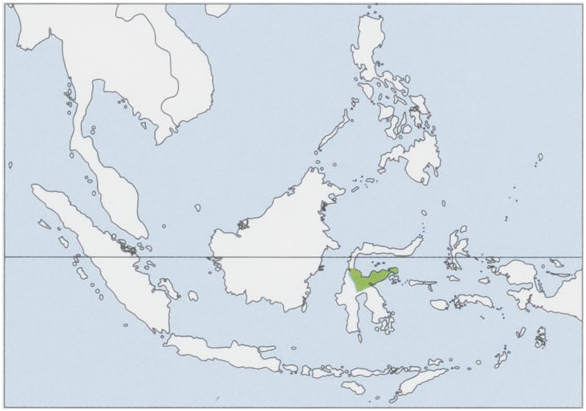
Foto: Russell A. Mittermeier;Anthony B. Rylands;Don E. Wilson
Otoritas penamaan: Miller & Hollister, 1921 (1921)
Status taksonomi: ACCEPTED
Status konservasi (IUCN): VU Rentan
Dipublikasikan dalam: Proc. Biol. Soc. Wash. vol.34 p.103
Total Catatan di Indonesia
0
Provinsi Ditemukan
0
dari 38 provinsi
Catatan Pertama
0
tahun pertama tercatat
Tren Tahunan
-0%
-66.7% vs 2025
Dian s Tarsier (Tarsius dentatus) termasuk dalam famili Tarsiidae, ordo Primates, kelas Mammalia. Berdasarkan data yang terhimpun, spesies ini telah tercatat sebanyak 35 kali di Indonesia, tersebar di 2 provinsi. Catatan pertama tercatat pada tahun 2013.
Sulawesi Tengah merupakan provinsi dengan catatan observasi terbanyak untuk spesies ini, dengan 14 catatan (40.0% dari total). Data distribusi ini mencerminkan akumulasi dari berbagai kegiatan survei, penelitian, dan kontribusi citizen science. Pola distribusi yang tercatat mungkin tidak sepenuhnya menggambarkan persebaran alami spesies, karena dipengaruhi oleh intensitas pengamatan di masing-masing wilayah.
Tren observasi tahunan Tarsius dentatus menunjukkan penurunan signifikan (-67%) pada periode terakhir dibanding tahun sebelumnya, dengan catatan pertama pada tahun 2013.
Catatan deskriptif tentang Tarsius dentatus dari sumber literatur primer (via GBIF).
Conservation: CITES – Appendix II; IUCN – Lower Risk (conservation dependent) as T. dianae. Status unknown.
Sumber: Order Primates
Distribution: C Sulawesi (Indonesia).
Sumber: Order Primates
Habitat. Primary and secondary lowland rainforest, mangrove forest, forest gardens, and other habitats providing adequate shrubby cover. Dian’s Tarsier occurs in Lore Lindu National Park, but although some of the lowland forest there is still preserved, itis relatively limited; c ¢. 70 % of the Park is hilly and montane at 1000 - 1500 m above sea level, with 3100 mm rainfall / year.
Sumber: Tarsiidae
Movements, Home range and Social organization. Dian’s Tarsier lives in small monogamous or polygamous family groups of 2 - 7 individuals, with more than one adult of the same sex living in the same home range. In a study on the north-eastern boundary of Lore Lindu National Park, home ranges were 1 - 1 - 1 - 8 ha, depending upon habitat type; the smallest home ranges were in lightly disturbed habitats and the largest in heavily disturbed habitats. The most heavily disturbed habitats were affected by herbicides, reducing insect abundance and the density of locomotory supports for tarsiers. Male home ranges were a little larger than those of females, 1 - 8 ha compared to 1 - 6 ha. Home ranges of mated pairs overlapped extensively, but overlap was minimal with members of other groups. Nightly distances moved were 600 - 1260 m and varied by habitat, with the longest movements in the most heavily disturbed habitats. Population surveys of Dian’s Tarsier in Lore Lindu found densities of 129 ind / km?. Densities were higher in secondary forest (250 ind / km? ®) than in primary forest (22 ind / km?). Surveysin habitats with a variety of human disturbance near Kamarora, on the edge of Lore Lindu National Park, found densities of 268 ind / km? ” in pristine habitat, 187 ind / km? in slightly disturbed habitat, 129 ind / km? for moderately disturbed habitat, and 45 ind / km? in heavily disturbed habitats. Dian’s Tarsier is scarce in forest at higher elevations.
Sumber: Tarsiidae
Status and Conservation. CITES Appendix II. Classified as Vulnerable on The IUCN Red List. Dian’s Tarsier is protected under Indonesian law. It is threatened mainly by massive habitat loss due to illegal logging and hunting. Other threats include agricultural pesticides, predation by domestic dogs and cats, and the pet trade. It occurs in two large protected areas, Lore Lindu National Park and Morowali Nature Reserve, but both areas suffer from illegal hunting and forest loss. Lore Lindu has been invaded by refugees (possibly illegal loggers), and entire villages have been built in the Park. Hunting is common in Lore Lindu. Rattan (abundant in the park) harvesting and logging degrade the forest, which is also burned for conversion to coffee and cacao plantations. Morowali Nature Reserve is hunted, and tarsiers are pursued with dogs and blowguns. The forest there is cut for slash-and-burn agriculture, and large tracts are burned for dry rice farming. Although Dian’s Tarsier can be abundant in lowland and especially secondary forest, it is scarcer at higher elevations, and a large part ofits distribution inland Sulawesi is montane.
Sumber: Tarsiidae
Descriptive notes. Head-body c. 11 - 8 cm, tail 25 - 27 cm; weight 104 - 135 g (males) and 95 - 110 g (females). Dian’s Tarsier tends to be slightly larger than tarsiers found elsewhere on Sulawesi. The body is grayish-buff, usually with a black spot on both sides of the nose. There are white hairs around the mouth and naked patches at the base of each ear. Skin of the hands, feet, and tail is noticeably darker.
Sumber: Tarsiidae
Nama-nama ilmiah lain yang pernah digunakan untuk Tarsius dentatus dalam literatur taksonomi.
| Nama Sinonim | Otoritas | Status |
|---|---|---|
| Tarsius dianae | Niemitz, Nietsch, Warter & Rumpler, 1991 | SYNONYM |
| Tarsius spectrum dentatus | (Miller & Hollister, 1921) | SYNONYM |
| # | Provinsi | Catatan | % |
|---|---|---|---|
| 1 | Sulawesi Tengah | 14 | 40.0% |
| 2 | Sulawesi Utara | 1 | 2.9% |
Jumlah catatan observasi Tarsius dentatus di Indonesia per tahun
Tarsius dentatus
Foto: Russell A. Mittermeier;Anthony B. Rylands;Don E. Wilson
Tarsius dentatus
Foto: Russell A. Mittermeier;Anthony B. Rylands;Don E. Wilson
| Nama | Bahasa | Sumber |
|---|---|---|
| Dian s Tarsier | Inggris | Mammal Species of the World |
| Dian's Tarsier | Inggris | Integrated Taxonomic Information System (ITIS) |
| Dian's tarsier | Inggris | The Paleobiology Database |
| Diana Tarsier | Inggris | Tarsiidae |
| Diana-Koboldmaki | Jerman | Catalogue of Life |
| Dianakoboldmaki | Jerman | Catalogue of Life |
| Dian’s Tarsier | Inggris | Tarsiidae |
| Noordelijk Celebesspookdier | Belanda | Catalogue of Life |
| Nördlicher Celebeskoboldmaki | Jerman | Catalogue of Life |
| Tarsero de Dian | - | Tarsiidae |
| Tarsero de Dian | Spanyol | Catalogue of Life |
| Tarsier de Dian | Prancis | Tarsiidae |
| Tarsio di Dian | Italia | Catalogue of Life |
| mustatäpläkummittelija | fin | Catalogue of Life |
| nártoun Dianin | ces | Catalogue of Life |
| wyrak sulaweski | pol | Catalogue of Life |
| Долгопят диана | rus | Catalogue of Life |
| أبخص ديان | ara | Catalogue of Life |
| ترسير ديان | ara | Catalogue of Life |
| ダイアンメガネザル | Jepang | Catalogue of Life |
Berdasarkan data 35 observasi, Sulawesi Tengah adalah provinsi dengan catatan Dian s Tarsier (Tarsius dentatus) terbanyak — 14 observasi (40.0% dari total catatan di Indonesia). Spesies ini tersebar di 2 provinsi.
Catatan pertama Dian s Tarsier (Tarsius dentatus) di Indonesia tercatat pada tahun 2013. Hingga kini terdapat 35 catatan dari 2 provinsi, yang dihimpun dari survei lapangan, koleksi museum, dan platform citizen science.
Menurut IUCN Red List, Dian s Tarsier (Tarsius dentatus) berstatus "Rentan" (kode VU). Status ini mencerminkan tingkat risiko kepunahan global spesies, bukan khusus Indonesia.
Ya, Tarsius dentatus memiliki 2 nama sinonim ilmiah, di antaranya: Tarsius dianae, Tarsius spectrum dentatus. Nama sinonim adalah nama-nama lain yang pernah digunakan untuk spesies yang sama dalam literatur taksonomi.
Tarsius dentatus diklasifikasikan sebagai berikut: Kingdom Animalia, Phylum Chordata, Class Mammalia, Order Primates, Family Tarsiidae, Genus Tarsius. Spesies ini dideskripsikan oleh Miller & Hollister, 1921.
15 titik observasi Tarsius dentatus di Indonesia
Memuat peta...
Setiap titik merepresentasikan satu lokasi observasi yang tercatat. Klik titik untuk melihat detail.