
Biologi & Ekologieng
Habitat. Generally montane rainforests but also Lesser Sundas deciduous forests (Lombok Island) at elevations of 1000 - 2700 m.
Sumber: Pteropodidae
Family Pteropodidae · Order Chiroptera
Data diperbarui secara berkala dari berbagai sumber observasi biodiversitas.
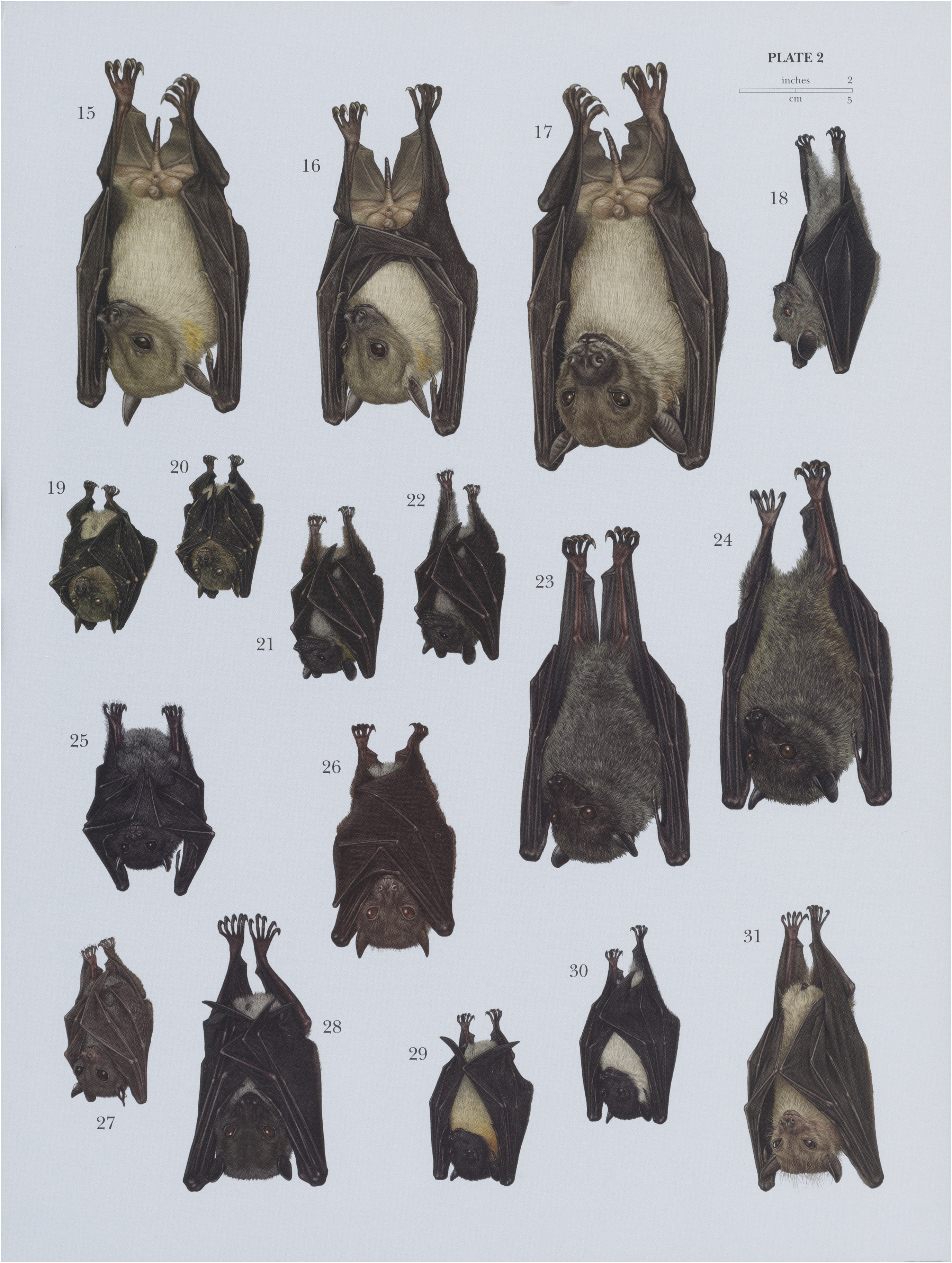
Foto: Don E. Wilson;Russell A. Mittermeier
Otoritas penamaan: (Thomas, 1923) (1923)
Status taksonomi: ACCEPTED
Status konservasi (IUCN): LC Risiko Rendah
Dipublikasikan dalam: Ann. Mag. Nat. Hist., ser. 9 vol.11 p.251
Total Catatan di Indonesia
0
Provinsi Ditemukan
0
dari 38 provinsi
Catatan Pertama
0
tahun pertama tercatat
Tren Tahunan
+0%
+0.0% vs 2016
Codot Bukit (Aethalops alecto) termasuk dalam famili Pteropodidae, ordo Chiroptera, kelas Mammalia. Berdasarkan data yang terhimpun, spesies ini telah tercatat sebanyak 94 kali di Indonesia, tersebar di 6 provinsi. Catatan pertama tercatat pada tahun 1968.
Kalimantan Timur merupakan provinsi dengan catatan observasi terbanyak untuk spesies ini, dengan 34 catatan (36.2% dari total). Data distribusi ini mencerminkan akumulasi dari berbagai kegiatan survei, penelitian, dan kontribusi citizen science. Pola distribusi yang tercatat mungkin tidak sepenuhnya menggambarkan persebaran alami spesies, karena dipengaruhi oleh intensitas pengamatan di masing-masing wilayah.
Tren observasi tahunan Aethalops alecto relatif stabil pada periode terakhir dibanding tahun sebelumnya, dengan catatan pertama pada tahun 1968.
Catatan deskriptif tentang Aethalops alecto dari sumber literatur primer (via GBIF).
Habitat. Generally montane rainforests but also Lesser Sundas deciduous forests (Lombok Island) at elevations of 1000 - 2700 m.
Sumber: Pteropodidae
Movements, Home range and Social organization. The Common Pygmy Fruit Bat roosts alone or in small groups of 2 - 3 individuals, and it appears to move solitarily.
Sumber: Pteropodidae
Status and Conservation. Classified as Least Concern on The IUCN Red Lust.
Sumber: Pteropodidae
Descriptive notes. Head-body 63 - 75 mm (tailless), ear 9 - 15 mm, hindfoot 9 - 14 mm, forearm 43 - 48 mm; weight 17 - 22 - 5 g. Head of the Common Pygmy Fruit Bat has moderately elongated muzzle and is naked with blackish skin; nostrils are shortly tubular and divergent; philtrum is divided into two parallel grooves; and lower lip pads are triangular. Eyes are moderately large; iris is blackish brown. Ears are short, rounded, and black, and medial rim is slightly paler than pinna. Head pelage is short, soft, and dark grayish brown; nape and dorsum are densely haired, dark grayish brown, and woolly. Reduced uropatagium and tibia are thickly furred, and calcar is minute. Throat is thinly haired; sides of neck are glandular and inconspicuously yellowish brown; and chest and belly are mouse-gray. Wing membranes are black from sides of body and attach between first and second toes. Skull lacks basicranial deflection; rostrum is pointed, sloping to forehead; orbit is large; zygomatic root is only slightly above alveolar line; zygoma is very thin and arched posteriorly; and braincase is globose. Dorsally, rostrum is tapering; paranasal recesses are inflated; postorbital process is blunt; no postorbital foramina, almost no postorbital constriction; skull is rounded; and temporal lines and nuchal crest are inconspicuous. Ventrally, palate is flat and rather narrow; post-dental palate is long; palatine spine is inconspicuous and joined to sphenoidal crest; and ectotympanic is small and wide anteriorly, edged internally by ribbon-like entotympanic. Mandible is thin and straight; coronoid is long, low, and sloping; condyle is level with lower alveolar line; and angle is salient ventrally and slightly pointed posteriorly. I * is long and bent medially; I' is conspicuously shorter, thinner, and straight; C' is small, weak, and slightly decurved; P' is minute; next premolar (P?) is large and laterally triangular; and last cheekteeth decrease in height and have rectangular outlines. I, is very small and bifid with inner side longer; 1, is absent; C, is very small and low; P | is conspicuously pointed; next premolar (P,) is very large, triangular, and as high as C; and posterior cheekteeth are low and small.
| # | Provinsi | Catatan | % |
|---|---|---|---|
| 1 | Kalimantan Timur | 34 | 36.2% |
| 2 | Jawa Barat | 10 | 10.6% |
| 3 | Jawa Timur | 6 | 6.4% |
| 4 | Kalimantan Barat | 5 | 5.3% |
| 5 | Sumatera Utara | 2 | 2.1% |
| 6 | Lampung | 1 | 1.1% |
Jumlah catatan observasi Aethalops alecto di Indonesia per tahun
Aethalops alecto
Foto: Don E. Wilson;Russell A. Mittermeier
Aethalops alecto
Foto: Don E. Wilson;Russell A. Mittermeier
| Nama | Bahasa | Sumber |
|---|---|---|
| Aethalops pigmeo | - | Pteropodidae |
| Cecadu Bukit | Melayu | Catalogue of Life |
| Codot Bukit | Indonesia | Catalogue of Life |
| Common Pygmy Fruit Bat | Inggris | Pteropodidae |
| Cynoptére pygmée | Prancis | Pteropodidae |
| Gewohnlicher Zwergflughund | Jerman | Catalogue of Life |
| Gewöhnlicher Zwergflughund | Jerman | Catalogue of Life |
| Grauer Zwergflughund | Jerman | Catalogue of Life |
| Grey Fruit Bat | Inggris |
Berdasarkan data 94 observasi, Kalimantan Timur adalah provinsi dengan catatan Codot Bukit (Aethalops alecto) terbanyak — 34 observasi (36.2% dari total catatan di Indonesia). Spesies ini tersebar di 6 provinsi.
Catatan pertama Codot Bukit (Aethalops alecto) di Indonesia tercatat pada tahun 1968. Hingga kini terdapat 94 catatan dari 6 provinsi, yang dihimpun dari survei lapangan, koleksi museum, dan platform citizen science.
Menurut IUCN Red List, Codot Bukit (Aethalops alecto) berstatus "Risiko Rendah" (kode LC). Status ini mencerminkan tingkat risiko kepunahan global spesies, bukan khusus Indonesia.
Di Indonesia dan Malaysia, Aethalops alecto dikenal dengan beberapa nama lokal: Codot Bukit. Penamaan dapat berbeda antardaerah dan bahasa.
Aethalops alecto diklasifikasikan sebagai berikut: Kingdom Animalia, Phylum Chordata, Class Mammalia, Order Chiroptera, Family Pteropodidae, Genus Aethalops. Spesies ini dideskripsikan oleh (Thomas, 1923).
Sumber: Pteropodidae
Recorded at: Perak: Maxwell Hill [23]; Pahang: Gunong Benom and Cameron Highlands [23]. A. alecto is not common and confined to hill and montane forests, normally above 1000 m [14, 23].
Sumber: A checklist of the bats of Peninsular Malaysia and progress towards a DNA barcode reference library
Conservation: IUCN / SSC Action Plan (1992) – Indeterminate. IUCN 2003 – Lower Risk (nt).
Sumber: Order Chiroptera - Family Pteropodidae
| Catalogue of Life |
| Owocnik karłowaty | pol | Catalogue of Life |
| Pygmy Fruit Bat | Inggris | Catalogue of Life |
| Pygmy Fruit Bat. | Inggris | Catalogue of Life |
| kaloň drobný | ces | Catalogue of Life |
| pikkuhekko | fin | Catalogue of Life |
| Карликовый крылан | rus | Catalogue of Life |
| ค้างคาวแคระป่ามลายู | tha | Catalogue of Life |
| ヒメフルーツコウモリ | Jepang | Catalogue of Life |
| 菲果蝠 | Mandarin | Catalogue of Life |
62 titik observasi Aethalops alecto di Indonesia
Memuat peta...
Setiap titik merepresentasikan satu lokasi observasi yang tercatat. Klik titik untuk melihat detail.