
Distribusieng
DISTRIBUTION: Java; Sumatra; Moluccas; Sulawesi.
Sumber: Order Insectivora
Family Soricidae · Order Soricomorpha
Data diperbarui secara berkala dari berbagai sumber observasi biodiversitas.
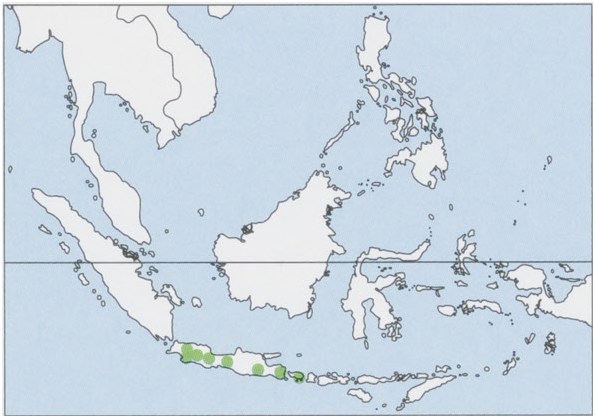
Foto: Russell A. Mittermeier;Don E. Wilson
Otoritas penamaan: Jentink, 1888 (1888)
Status taksonomi: ACCEPTED
Status konservasi (IUCN): LC Risiko Rendah
Dipublikasikan dalam: Notes Leyden Mus. vol.10 p.164
Total Catatan di Indonesia
0
Provinsi Ditemukan
0
dari 38 provinsi
Catatan Pertama
0
tahun pertama tercatat
Tren Tahunan
-0%
-66.7% vs 2015
Thick-tailed Shrew (Crocidura brunnea) termasuk dalam famili Soricidae, ordo Soricomorpha, kelas Mammalia. Berdasarkan data yang terhimpun, spesies ini telah tercatat sebanyak 183 kali di Indonesia, tersebar di 3 provinsi. Catatan pertama tercatat pada tahun 1867.
Jawa Barat merupakan provinsi dengan catatan observasi terbanyak untuk spesies ini, dengan 77 catatan (42.1% dari total). Data distribusi ini mencerminkan akumulasi dari berbagai kegiatan survei, penelitian, dan kontribusi citizen science. Pola distribusi yang tercatat mungkin tidak sepenuhnya menggambarkan persebaran alami spesies, karena dipengaruhi oleh intensitas pengamatan di masing-masing wilayah.
Tren observasi tahunan Crocidura brunnea menunjukkan penurunan signifikan (-67%) pada periode terakhir dibanding tahun sebelumnya, dengan catatan pertama pada tahun 1867.
Catatan deskriptif tentang Crocidura brunnea dari sumber literatur primer (via GBIF).
DISTRIBUTION: Java; Sumatra; Moluccas; Sulawesi.
Sumber: Order Insectivora
Habitat. The Thick-tailed White-toothed Shrew is predominantly a lowland species found from near sea level up to 1500 m; most habitats in the plains are now heavily modified by humans, and recentsightings report it at altitudes of 700 - 1600 m. At medium altitudes of ¢. 1500 m, can be found in sympatry with the similar-sized Oriental White-toothed Shrew, but otherwise they are segregated by altitude.
Sumber: Soricidae
Movements, Home range and Social organization. The Thick-tailed White-toothed Shrew can be relatively common in semi-montane habitats where it co-occurs with a range of other terrestrial insectivores, but no precise data are available.
Sumber: Soricidae
Status and Conservation. Classified as Least Concern on The IUCN Red List in view of its occurrence in all kinds of forest, and secondary habitats with dense ground vegetation such as gardens. Now possibly extirpated from the lowlands ofJava by intensive anthropic modifications of habitats. Its current distribution might therefore be considerably reduced, and new information on status of lowland populations is needed. The Thick-tailed White-toothed Shrew occurs in protected areas such as Mount Gede, Mount Salak, or Mount Slamet.
Sumber: Soricidae
Descriptive notes. Head-body 72 - 104 mm, tail 42 - 67 mm, ear 7 - 10 mm, hindfoot 13 - 5 - 17 mm; weight 13 - 17 g. Medium-sized shrew with dark brown pelage, almost black close to the hair bases but more reddish-brown toward the tips. Lower parts somewhat paler with more pronounced brownish tinge. Tail rather short (clearly shorter than head-body length) and hairy, with numerous bristles appearing along its proximal third. Tail shape conical (enlarged base tapering toward tip), reminiscent of that of the Asian House Shrew (Suncus murinus) but unlike the cylindricaltail of other similarsized Crocidura. Race pudjonica is slightly smaller than nominate. Chromosomal complement has 2 n = 38 and FN = 56, with submetacentric X and acrocentric Y chromosomes. Chromosomal complement very similar to those of most other Crocidura from the Sunda Shelf, including the Oriental White-toothed Shrew (C. orientalis).
Sumber: Soricidae
| # | Provinsi | Catatan | % |
|---|---|---|---|
| 1 | Jawa Barat | 77 | 42.1% |
| 2 | Jawa Tengah | 16 | 8.7% |
| 3 | Jawa Timur | 9 | 4.9% |
Jumlah catatan observasi Crocidura brunnea di Indonesia per tahun
Crocidura brunnea
Foto: Russell A. Mittermeier;Don E. Wilson
Crocidura brunnea
Foto: Russell A. Mittermeier;Don E. Wilson
| Nama | Bahasa | Sumber |
|---|---|---|
| Crocidure brune | Prancis | Soricidae |
| Dickschwanz-WeiRzahnspitzmaus | Jerman | Catalogue of Life |
| Musarana de cola gruesa | - | Soricidae |
| Thick-tailed Shrew | Inggris | Order Soricomorpha |
| Thick-tailed White-toothed Shrew | Inggris | Soricidae |
| zębiełek gruboogonowy | pol | Catalogue of Life |
| オブトジネズミ | Jepang | Catalogue of Life |
Berdasarkan data 183 observasi, Jawa Barat adalah provinsi dengan catatan Thick-tailed Shrew (Crocidura brunnea) terbanyak — 77 observasi (42.1% dari total catatan di Indonesia). Spesies ini tersebar di 3 provinsi.
Catatan pertama Thick-tailed Shrew (Crocidura brunnea) di Indonesia tercatat pada tahun 1867. Hingga kini terdapat 183 catatan dari 3 provinsi, yang dihimpun dari survei lapangan, koleksi museum, dan platform citizen science.
Menurut IUCN Red List, Thick-tailed Shrew (Crocidura brunnea) berstatus "Risiko Rendah" (kode LC). Status ini mencerminkan tingkat risiko kepunahan global spesies, bukan khusus Indonesia.
Crocidura brunnea diklasifikasikan sebagai berikut: Kingdom Animalia, Phylum Chordata, Class Mammalia, Order Soricomorpha, Family Soricidae, Genus Crocidura. Spesies ini dideskripsikan oleh Jentink, 1888.
59 titik observasi Crocidura brunnea di Indonesia
Memuat peta...
Setiap titik merepresentasikan satu lokasi observasi yang tercatat. Klik titik untuk melihat detail.