
Konservasieng
Conservation: IUCN – Vulnerable.
Sumber: Order Soricomorpha
Family Soricidae · Order Soricomorpha
Data diperbarui secara berkala dari berbagai sumber observasi biodiversitas.
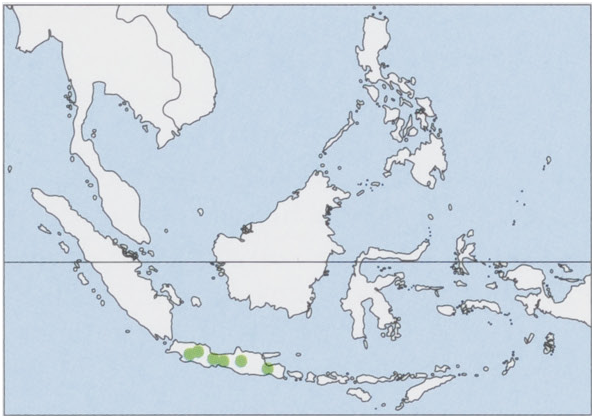
Foto: Russell A. Mittermeier;Don E. Wilson
Otoritas penamaan: Jentink, 1890 (1890)
Status taksonomi: ACCEPTED
Status konservasi (IUCN): LC Risiko Rendah
Dipublikasikan dalam: Zool. Ergebn. Reis. Ned. Ost. Ind. vol.I p.124
Total Catatan di Indonesia
0
Provinsi Ditemukan
0
dari 38 provinsi
Catatan Pertama
0
tahun pertama tercatat
Tren Tahunan
-0%
-92.3% vs 2012
Oriental Shrew (Crocidura orientalis) termasuk dalam famili Soricidae, ordo Soricomorpha, kelas Mammalia. Berdasarkan data yang terhimpun, spesies ini telah tercatat sebanyak 79 kali di Indonesia, tersebar di 4 provinsi. Catatan pertama tercatat pada tahun 1888.
Jawa Barat merupakan provinsi dengan catatan observasi terbanyak untuk spesies ini, dengan 19 catatan (24.1% dari total). Data distribusi ini mencerminkan akumulasi dari berbagai kegiatan survei, penelitian, dan kontribusi citizen science. Pola distribusi yang tercatat mungkin tidak sepenuhnya menggambarkan persebaran alami spesies, karena dipengaruhi oleh intensitas pengamatan di masing-masing wilayah.
Tren observasi tahunan Crocidura orientalis menunjukkan penurunan signifikan (-92%) pada periode terakhir dibanding tahun sebelumnya, dengan catatan pertama pada tahun 1888.
Catatan deskriptif tentang Crocidura orientalis dari sumber literatur primer (via GBIF).
Conservation: IUCN – Vulnerable.
Sumber: Order Soricomorpha
Distribution: Mountains of Java.
Sumber: Order Soricomorpha
Habitat. Primary and secondary montane forests in an altitudinal range of 1500 - 2700 m. At mid-elevations (¢ c. 1600 m on Mount Gede), the Oriental White-toothed Shrew occurs in sympatry with two small species (Javan Ghost White-toothed Shrew, C. umbra; and Sunda White-toothed Shrew, C. monticola), one large species (Thicktailed White-toothed Shrew, C. brunnea), and one scansorial species (Javan Long-tailed White-toothed Shrew). May also be found together in the same habitat with the Thicktailed White-toothed Shrew at Mount Ciremai and Mount Slamet, although these two are usually segregated by altitude.
Sumber: Soricidae
Movements, Home range and Social organization. The Oriental White-toothed Shrew is a common shrew found in montane forests. Relatively high numbers were trapped in the forest floor in western Java, and in grassy areas surrounding gardens in the Bromo — - Semeru region of EastJava, suggesting small or overlapping territories, but no specific data available.
Sumber: Soricidae
Status and Conservation. Classified as Least Concern on The IUCN Red List in view of its widespread occurrence in montane forests and secondary habitats. The Oriental White-toothed Shrew is found in high densities in gardens, indicating that it can be tolerant of human disturbance. Present in many protected areas. The eastern form lawuana is geographically much more restricted to a few areas in EastJava and may yet prove to be a distinct species.
Sumber: Soricidae
Descriptive notes. Head-body 73 - 100 mm, tail 62 - 86 mm, ear 7 mm, hindfoot 14 - 17 - 1 mm; weight 9 - 5 - 18 - 2 g. The Oriental White-toothed Shrew is a medium-sized dark brown shrew with long (over 4 mm mid-dorsum), dense fur. Color slightly lighter ventrally; some individuals have a noticeably browner throat. Ears and feet light brown. Tail cylindrical, brown, comparable in length to head-body, essentially naked, except for very short hairs that leave the scales visible. In nominate, the tail is devoid of the bristle hairs typical of other Javan shrews, including the smaller race lawuana. Typical white ring of bare skin around base oftail is present in most Oriental Whitetoothed Shrews. The smaller Javan Long-tailed White-toothed Shrew (C. abscondita), endemic to West Java, has an even longer tail (significantly longer than its head — body length), holding very sparse bristle hairs near its base, and has grayer fur; the similarsized Thick-tailed White-toothed Shrew (C. brunnea) is browner, with a shorter, more conical tail bearing numerous bristles. Chromosomal complement has 2 n = 38 and FN = 56, with subtelocentric X and submetacentric / metacentric Y chromosomes. Chromosomal complement very similar to those of most other Crocidura from the Sunda Shelf, including the Thick-tailed White-toothed Shrew.
Sumber: Soricidae
Nama-nama ilmiah lain yang pernah digunakan untuk Crocidura orientalis dalam literatur taksonomi.
| Nama Sinonim | Otoritas | Status |
|---|---|---|
| Crocidura lawuana | Sody, 1936 | SYNONYM |
| # | Provinsi | Catatan | % |
|---|---|---|---|
| 1 | Jawa Barat | 19 | 24.1% |
| 2 | Jawa Tengah | 10 | 12.7% |
| 3 | Jawa Timur | 8 | 10.1% |
| 4 | Jambi | 1 | 1.3% |
Jumlah catatan observasi Crocidura orientalis di Indonesia per tahun
Crocidura orientalis
Foto: Russell A. Mittermeier;Don E. Wilson
Crocidura orientalis
Foto: Russell A. Mittermeier;Don E. Wilson
| Nama | Bahasa | Sumber |
|---|---|---|
| Crocidure de Java | Prancis | Soricidae |
| Musarana oriental | - | Soricidae |
| Oriental Shrew | Inggris | Order Soricomorpha |
| Oriental White-toothed Shrew | Inggris | Catalogue of Life |
| Orientalische Weil | Jerman | Soricidae |
| Orientalische Weil 3 zahnspitzmaus | Inggris | Soricidae |
| zębiełek orientalny | pol | Catalogue of Life |
| Восточная белозубка | rus | Catalogue of Life |
| トウヨウジネズミ | Jepang | Catalogue of Life |
Berdasarkan data 79 observasi, Jawa Barat adalah provinsi dengan catatan Oriental Shrew (Crocidura orientalis) terbanyak — 19 observasi (24.1% dari total catatan di Indonesia). Spesies ini tersebar di 4 provinsi.
Catatan pertama Oriental Shrew (Crocidura orientalis) di Indonesia tercatat pada tahun 1888. Hingga kini terdapat 79 catatan dari 4 provinsi, yang dihimpun dari survei lapangan, koleksi museum, dan platform citizen science.
Menurut IUCN Red List, Oriental Shrew (Crocidura orientalis) berstatus "Risiko Rendah" (kode LC). Status ini mencerminkan tingkat risiko kepunahan global spesies, bukan khusus Indonesia.
Ya, Crocidura orientalis memiliki 1 nama sinonim ilmiah, di antaranya: Crocidura lawuana. Nama sinonim adalah nama-nama lain yang pernah digunakan untuk spesies yang sama dalam literatur taksonomi.
Crocidura orientalis diklasifikasikan sebagai berikut: Kingdom Animalia, Phylum Chordata, Class Mammalia, Order Soricomorpha, Family Soricidae, Genus Crocidura. Spesies ini dideskripsikan oleh Jentink, 1890.
12 titik observasi Crocidura orientalis di Indonesia
Memuat peta...
Setiap titik merepresentasikan satu lokasi observasi yang tercatat. Klik titik untuk melihat detail.