
Distribusieng
DISTRIBUTION: S., E., and N. C. Borneo; Labuan Isl.; Peninsular Thailand; Malay Peninsula; Sumatra.
Sumber: Order Insectivora
Family Erinaceidae · Order Erinaceomorpha
Data diperbarui secara berkala dari berbagai sumber observasi biodiversitas.
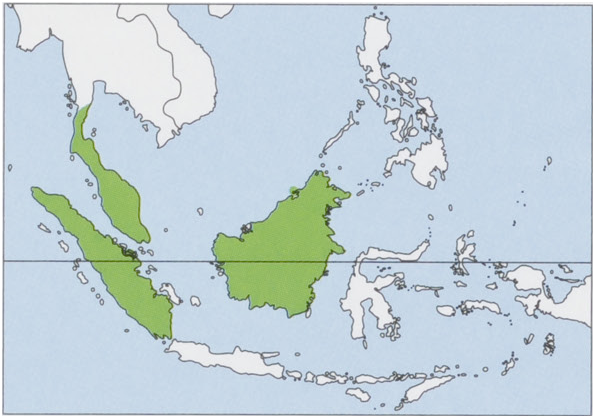
Foto: Russell A. Mittermeier;Don E. Wilson
Otoritas penamaan: (Raffles, 1822) (1822)
Status taksonomi: ACCEPTED
Status konservasi (IUCN): LC Risiko Rendah
Dipublikasikan dalam: Trans. Linn. Soc. London vol.13 p.272
Total Catatan di Indonesia
0
Provinsi Ditemukan
0
dari 38 provinsi
Catatan Pertama
0
tahun pertama tercatat
Tren Tahunan
+0%
+200.0% vs 2025
Rindil Bulan (Echinosorex gymnura) termasuk dalam famili Erinaceidae, ordo Erinaceomorpha, kelas Mammalia. Berdasarkan data yang terhimpun, spesies ini telah tercatat sebanyak 108 kali di Indonesia, tersebar di 9 provinsi. Catatan pertama tercatat pada tahun 1849.
Kalimantan Barat merupakan provinsi dengan catatan observasi terbanyak untuk spesies ini, dengan 10 catatan (9.3% dari total). Data distribusi ini mencerminkan akumulasi dari berbagai kegiatan survei, penelitian, dan kontribusi citizen science. Pola distribusi yang tercatat mungkin tidak sepenuhnya menggambarkan persebaran alami spesies, karena dipengaruhi oleh intensitas pengamatan di masing-masing wilayah.
Tren observasi tahunan Echinosorex gymnura menunjukkan peningkatan signifikan (+200%) pada periode terakhir dibanding tahun sebelumnya, dengan catatan pertama pada tahun 1849.
Catatan deskriptif tentang Echinosorex gymnura dari sumber literatur primer (via GBIF).
DISTRIBUTION: S., E., and N. C. Borneo; Labuan Isl.; Peninsular Thailand; Malay Peninsula; Sumatra.
Sumber: Order Insectivora
Conservation: IUCN – Lower Risk (lc).
Sumber: Order Erinaceomorpha
Distribution: Malayan Peninsula, Borneo and Sumatra, Labuan Isl.
Sumber: Order Erinaceomorpha
Habitat. Tropical lowlands and foothills, including primary, secondary, logged, and mangrove forests, rubber plantations, cultivated areas, and especially areas near streams and mangrove swamps.
Sumber: Erinaceidae
Movements, Home range and Social organization. Moonrats are generally solitary and highly intolerant and aggressive toward conspecifics. Captive individuals emit hiss-puffs and low roars during encounters. The Moonrat engages in scent-marking behavior using strong, characteristic odor that emanates from two small glands near its anus; odor has been described as resembling rotten onions, ammonia, and stale sweat. It uses this potent scent to mark home ranges and deter predators; captive individuals use the odor to mark openings of nest boxes. On Borneo, Moonrats often forage in pairs at night along small muddy streams and damp areas in lowland primary and logged forests. Strange sounds cause a Moonrat to react suddenly and seek cover. When frightened, it freezes into hunched, open-mouthed postures, uttering a loud hissing cough.
Sumber: Erinaceidae
Status and Conservation. Classified as Least Concern on The IUCN Red List. The Moonrat has a wide distribution and is abundant in suitable habitat. It occurs in many protected areas, including Kubah National Park and Kuching Wetlands National Park on Borneo.
Sumber: Erinaceidae
Nama-nama ilmiah lain yang pernah digunakan untuk Echinosorex gymnura dalam literatur taksonomi.
| Nama Sinonim | Otoritas | Status |
|---|---|---|
| Echinosorex birmanica | (Trouessart, 1879) | SYNONYM |
| Echinosorex borneotica | (Fitzinger, 1868) | SYNONYM |
| Echinosorex candida | (Günther, 1876) | SYNONYM |
| Echinosorex minor | (Lyon, 1909) | SYNONYM |
| Echinosorex rafflesii | (Lesson, 1827) | SYNONYM |
| Viverra gymnura | Raffles, 1822 | SYNONYM |
| # | Provinsi | Catatan | % |
|---|---|---|---|
| 1 | Kalimantan Barat | 10 | 9.3% |
| 2 | Riau | 8 | 7.4% |
| 3 | Sumatera Utara | 5 | 4.6% |
| 4 | Kalimantan Tengah | 3 | 2.8% |
| 5 | Sumatera Selatan | 2 | 1.9% |
| 6 | Aceh | 1 | 0.9% |
| 7 | Sumatera Barat | 1 | 0.9% |
| 8 | Jambi | 1 | 0.9% |
| 9 | Kalimantan Timur | 1 | 0.9% |
Jumlah catatan observasi Echinosorex gymnura di Indonesia per tahun
Echinosorex gymnura
Foto: Russell A. Mittermeier;Don E. Wilson
Echinosorex gymnura
Foto: Russell A. Mittermeier;Don E. Wilson
| Nama | Bahasa | Sumber |
|---|---|---|
| Gimnuro | - | Erinaceidae |
| Grand Gymnure | Prancis | Erinaceidae |
| Grol | Jerman | Erinaceidae |
| Grol 3 er Rattenigel | Inggris | Erinaceidae |
| Malayan Moonrat | Inggris | Erinaceidae |
| Moonrat | - | Phthiraptera.myspecies.info |
| Moonrat | Inggris | Integrated Taxonomic Information System (ITIS) |
| Raffles’ Gymnure | Inggris | Erinaceidae |
| moonrat | Inggris | The Paleobiology Database |
| Gymnure | Inggris | The IUCN Red List of Threatened Species |
| Rindil Bulan | Indonesia | The IUCN Red List of Threatened Species |
Berdasarkan data 108 observasi, Kalimantan Barat adalah provinsi dengan catatan Rindil Bulan (Echinosorex gymnura) terbanyak — 10 observasi (9.3% dari total catatan di Indonesia). Spesies ini tersebar di 9 provinsi.
Catatan pertama Rindil Bulan (Echinosorex gymnura) di Indonesia tercatat pada tahun 1849. Hingga kini terdapat 108 catatan dari 9 provinsi, yang dihimpun dari survei lapangan, koleksi museum, dan platform citizen science.
Menurut IUCN Red List, Rindil Bulan (Echinosorex gymnura) berstatus "Risiko Rendah" (kode LC). Status ini mencerminkan tingkat risiko kepunahan global spesies, bukan khusus Indonesia.
Di Indonesia dan Malaysia, Echinosorex gymnura dikenal dengan beberapa nama lokal: Rindil Bulan. Penamaan dapat berbeda antardaerah dan bahasa.
Ya, Echinosorex gymnura memiliki 6 nama sinonim ilmiah, di antaranya: Echinosorex birmanica, Echinosorex borneotica, Echinosorex candida. Nama sinonim adalah nama-nama lain yang pernah digunakan untuk spesies yang sama dalam literatur taksonomi.
Echinosorex gymnura diklasifikasikan sebagai berikut: Kingdom Animalia, Phylum Chordata, Class Mammalia, Order Erinaceomorpha, Family Erinaceidae, Genus Echinosorex. Spesies ini dideskripsikan oleh (Raffles, 1822).
55 titik observasi Echinosorex gymnura di Indonesia
Memuat peta...
Setiap titik merepresentasikan satu lokasi observasi yang tercatat. Klik titik untuk melihat detail.