
Konservasieng
PROTECTED STATUS: CITES - Appendix II as Order Primates.
Sumber: Order Primates
Family Cercopithecidae · Order Primates
Data diperbarui secara berkala dari berbagai sumber observasi biodiversitas.
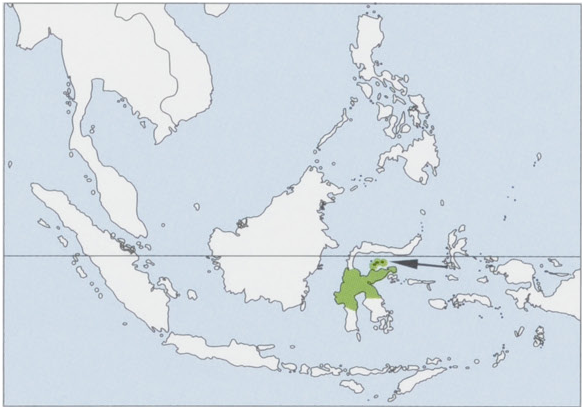
Foto: Russell A. Mittermeier;Anthony B. Rylands;Don E. Wilson
Otoritas penamaan: (Meyer, 1899) (1899)
Status taksonomi: ACCEPTED
Status konservasi (IUCN): VU Rentan
Dipublikasikan dalam: Abh. Zool. Anthrop.-Ethnology. Mus. Dresden vol.7 7 p.3
Total Catatan di Indonesia
0
Provinsi Ditemukan
0
dari 38 provinsi
Catatan Pertama
0
tahun pertama tercatat
Tren Tahunan
-0%
-59.1% vs 2025
Boti (Macaca tonkeana) termasuk dalam famili Cercopithecidae, ordo Primates, kelas Mammalia. Berdasarkan data yang terhimpun, spesies ini telah tercatat sebanyak 125 kali di Indonesia, tersebar di 3 provinsi. Catatan pertama tercatat pada tahun 1916.
Sulawesi Tengah merupakan provinsi dengan catatan observasi terbanyak untuk spesies ini, dengan 67 catatan (53.6% dari total). Data distribusi ini mencerminkan akumulasi dari berbagai kegiatan survei, penelitian, dan kontribusi citizen science. Pola distribusi yang tercatat mungkin tidak sepenuhnya menggambarkan persebaran alami spesies, karena dipengaruhi oleh intensitas pengamatan di masing-masing wilayah.
Tren observasi tahunan Macaca tonkeana menunjukkan penurunan signifikan (-59%) pada periode terakhir dibanding tahun sebelumnya, dengan catatan pertama pada tahun 1916.
Catatan deskriptif tentang Macaca tonkeana dari sumber literatur primer (via GBIF).
PROTECTED STATUS: CITES - Appendix II as Order Primates.
Sumber: Order Primates
DISTRIBUTION: C. Sulawesi, south to Latimojong, northeast to Gorontolo; Togean Isis.
Sumber: Order Primates
Habitat. Primary and secondary tropical rainforest at predominantly hill (400 - 850 m) and upland (850 - 1500 m) elevations, but also in montane forest (1500 - 2500 m). Tonkean Macaques can also exist in anthropogenically altered environments, incorporating agricultural areas into their usable habitat. Rainfall and the availability of forest fruit show fairly uniform temporal distributions in Lore Lindu National Park. Figs (Ficus, Moraceae), an important food resource for much of the Sulawesi fauna, are very abundant in Lore Lindu (34 - 8 figs / ha) compared with other Indonesian forests (6 - 6 figs / ha, East Kalimantan Province and 7 - 10 figs / ha, North Sulawesi Province). Tonkean Macaques are frequently found in association with the endemic yellow-billed malkoha (Phaenicophaeus calyorhynchus). Malkohas benefit from insect prey flushed from the forest canopy by moving macaques.
Sumber: Cercopithecidae
Movements, Home range and Social organization. Tonkean Macaques live in multimale-multifemale groups. Mean group size is 24 individuals (range 6 - 35), with an adult male to adult female sex ratio of 1: 0 - 6 - 1 - 3. Subgrouping has been observed. Females form linear dominance hierarchies, but they show relaxed relationships characterized by low levels of intense aggression, bidirectionality when agonistic behavior occurs (either female in a dyad may initiate the interaction), frequent post-conflict affiliative contacts, and an overall high degree of social tolerance (e. g. feeding together). Adult males also show social tolerance as exemplified by low levels of agonistic behavior and frequent grooming interactions. Adult males (typically the highest ranked) emit a birdlike vocalization called a “ loud call. ” These calls appear to function primarily to influence intragroup cohesion, i. e. to communicate information with regard to location and movement within the social group. Home range size is 45 - 143 ha, and the ranges of neighboring groups often overlap. Tonkean Macaques are flexible in response to habitat alteration by intensively using particular areas within their home range where known resources are present and predictably available (e. g. A. pinnata palms). Individuals also increase their home range size under such conditions. Mean daily movement is 1175 m. Densities of Tonkean Macaques are 20 - 67 ind / km? across their distribution.
Sumber: Cercopithecidae
Status and Conservation. CITES Appendix II. Classified as Vulnerable on The IUCN Red List. Overall population size of the Tonkean Macaque is ¢. 150,000 individuals. It has the largest distribution of all Sulawesi macaques. It is known to occurin at least three protected areas: Lore Lindu National Park, Morowali Nature Reserve, and Faruhumpenai Nature Reserve, totaling at least 544,000 ha of protected area. Separate conservation management of eastern and western populations of Tonkean Macaques has been suggested, given their genetic distinctiveness. The greatest threat is large-scale conversion of forest for commercial logging and the development of cash-crop plantations, such as oil palm and cacao. Recent reports indicate that 80 % of Sulawesi’s forests have been altered and destroyed, and only 30 % of the remaining forest is in good condition (i. e. forest canopy unbroken by large clearings and with only scattered signs of human activity). A key concern is that much of the remaining forest is montane (e. g. 90 % in Lore Lindu National Park is montane forest ranging up to elevations of 2355 m), and itis not yet certain if forest above 2000 m provides habitat that can sustain Tonkean Macaques throughout the year. Tonkean Macaques are hunted for food in some areas, particularly in non-Muslim areas where consumption of macaques is not taboo. There is also evidence of hunting in Central Sulawesi for local consumption and bushmeat markets in Manado, North Sulawesi. In many areas, and regardless ofreligion, Tonkean Macaques are poisoned or trapped as crop pests. They are also often trapped to sell as pets. Pet ownership is linked to disease transmission between macaques and people. For example, pet Tonkean Macaques from the eastern peninsula of Central Sulawesi showed evidence of exposure (seropositivity for antibodies) to endemic human pathogens, including measles, influenza A, and parainfluenza 1, 2, and 3. The fact that the same human pathogens have been detected in wild populations suggests that pet macaques may act as vectors from human to wild populations because wild macaques are often attracted to pet animals (e. g. when females are receptive), therefore putting wild populations at risk. Human-macaque folklore in the Lindu highlands serves to protect local macaques from retaliation by farmers bacause of crop raiding. It remains unknown, however, at what threshold crop losses will no longer be tolerated, and social taboos, and the conservation outcomes they afford, will be abandoned.
Sumber: Cercopithecidae
Descriptive notes. Head — body 58 - 68 cm (males) and 50 - 57 cm (females), tail 4 - 7 cm (males) and 3 - 6 cm (females); weight 10 - 12 kg (males) and 8: 6 - 10.4 kg (females). The Tonkean Macaque has black pelage, with white hair on the rump, dorsal parts of hindlimbs, and parts of the ventrum. Cheek tufts are prominent and range in color from pale brownish-gray to a pale brownish-yellow. Supraorbital ridges are strongly developed. There is a sagittal crest, and the muzzle is elongated, with lateral ridges. Ischial callosities are oval-shaped and orange-toned, and they have recently been characterized (along with those of the Moor Macaque, M. maura) as Type 1: oval without bending. Some show graying or whitening on their face, particularly around their eyes, head, and back, or entire bodies.
Sumber: Cercopithecidae
Nama-nama ilmiah lain yang pernah digunakan untuk Macaca tonkeana dalam literatur taksonomi.
| Nama Sinonim | Otoritas | Status |
|---|---|---|
| ? tonkeana | Meyer, 1899 | HOMOTYPIC_SYNONYM |
| Cynopithecus togeanus | Sody, 1949 | SYNONYM |
| Macaca hypomelanus | (Matschie, 1901) | SYNONYM |
| Macaco tonkeana | (Meyer, 1899) | HOMOTYPIC_SYNONYM |
| Papio hypomelanus | Matschie, 1901 | SYNONYM |
| Papio tonsus | Matschie, 1901 | SYNONYM |
| # | Provinsi | Catatan | % |
|---|---|---|---|
| 1 | Sulawesi Tengah | 67 | 53.6% |
| 2 | Sulawesi Selatan | 8 | 6.4% |
| 3 | Jawa Barat | 1 | 0.8% |
Jumlah catatan observasi Macaca tonkeana di Indonesia per tahun
Macaca tonkeana
Foto: Russell A. Mittermeier;Anthony B. Rylands;Don E. Wilson
Macaca tonkeana
Foto: Russell A. Mittermeier;Anthony B. Rylands;Don E. Wilson
| Nama | Bahasa | Sumber |
|---|---|---|
| Boti | Indonesia | Catalogue of Life |
| Macaca De Tonkean | Spanyol | Catalogue of Life |
| Macaco de Togian | - | Cercopithecidae |
| Macaco di Tonkean | Italia | Catalogue of Life |
| Macaque De Tonkea | Prancis | Catalogue of Life |
| Macaque De Tonkean | Prancis | Catalogue of Life |
| Macaque tonkéen | Prancis | Catalogue of Life |
| Tonkea Adası şebeği | tur | Catalogue of Life |
| Tonkean Black Macaque | Inggris | Cercopithecidae |
| Tonkean Macaque | - | Phthiraptera.myspecies.info |
| Tonkean Macaque | Inggris | Catalogue of Life |
| Tonkean-Makak | Jerman | Catalogue of Life |
| Tonkeanmakaak | Belanda | Catalogue of Life |
| Tonkeanmakak | Jerman | Catalogue of Life |
| Tonkinmakak | nob | Catalogue of Life |
| makak sulaweski | pol | Catalogue of Life |
| makak tonkeánský | ces | Catalogue of Life |
| togiansaartenmakaki | fin | Catalogue of Life |
| مكاك تونكيني | ara | Catalogue of Life |
| トンケアンモンキー | Jepang | Catalogue of Life |
Berdasarkan data 125 observasi, Sulawesi Tengah adalah provinsi dengan catatan Boti (Macaca tonkeana) terbanyak — 67 observasi (53.6% dari total catatan di Indonesia). Spesies ini tersebar di 3 provinsi.
Catatan pertama Boti (Macaca tonkeana) di Indonesia tercatat pada tahun 1916. Hingga kini terdapat 125 catatan dari 3 provinsi, yang dihimpun dari survei lapangan, koleksi museum, dan platform citizen science.
Menurut IUCN Red List, Boti (Macaca tonkeana) berstatus "Rentan" (kode VU). Status ini mencerminkan tingkat risiko kepunahan global spesies, bukan khusus Indonesia.
Di Indonesia dan Malaysia, Macaca tonkeana dikenal dengan beberapa nama lokal: Boti, Boti (Poso), Lesang (Pinrang), Seba (Tana Toraja), Kaleja (Lindi), Ibo (Kaili). Penamaan dapat berbeda antardaerah dan bahasa.
Ya, Macaca tonkeana memiliki 6 nama sinonim ilmiah, di antaranya: ? tonkeana, Cynopithecus togeanus, Macaca hypomelanus. Nama sinonim adalah nama-nama lain yang pernah digunakan untuk spesies yang sama dalam literatur taksonomi.
Macaca tonkeana diklasifikasikan sebagai berikut: Kingdom Animalia, Phylum Chordata, Class Mammalia, Order Primates, Family Cercopithecidae, Genus Macaca. Spesies ini dideskripsikan oleh (Meyer, 1899).
63 titik observasi Macaca tonkeana di Indonesia
Memuat peta...
Setiap titik merepresentasikan satu lokasi observasi yang tercatat. Klik titik untuk melihat detail.