
Konservasieng
Conservation: IUCN – Lower Risk (lc). Common.
Sumber: Order Diprotodontia
Family Petauridae · Order Diprotodontia
Data diperbarui secara berkala dari berbagai sumber observasi biodiversitas.
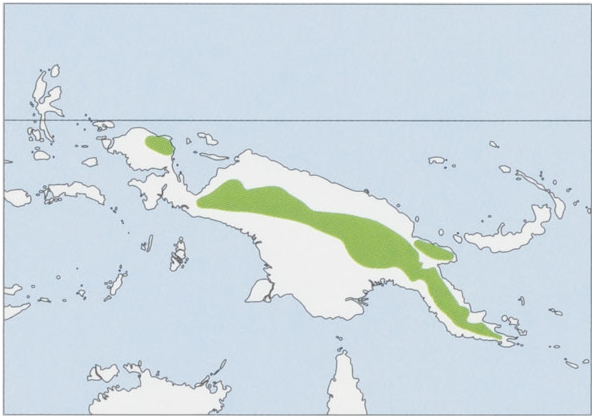
Foto: Russell A. Mittermeier;Don E. Wilson
Otoritas penamaan: Waterhouse, 1838 (1838)
Status taksonomi: ACCEPTED
Status konservasi (IUCN): LC Risiko Rendah
Dipublikasikan dalam: Proc. Zool. Soc. Lond. vol.1838 p.152
Total Catatan di Indonesia
0
Provinsi Ditemukan
0
dari 38 provinsi
Catatan Pertama
0
tahun pertama tercatat
Tren Tahunan
-0%
-50.0% vs 2018
Wupih sirsik (Petaurus breviceps) termasuk dalam famili Petauridae, ordo Diprotodontia, kelas Mammalia. Berdasarkan data yang terhimpun, spesies ini telah tercatat sebanyak 130 kali di Indonesia, tersebar di 3 provinsi. Catatan pertama tercatat pada tahun 1858.
Papua Barat merupakan provinsi dengan catatan observasi terbanyak untuk spesies ini, dengan 25 catatan (19.2% dari total). Data distribusi ini mencerminkan akumulasi dari berbagai kegiatan survei, penelitian, dan kontribusi citizen science. Pola distribusi yang tercatat mungkin tidak sepenuhnya menggambarkan persebaran alami spesies, karena dipengaruhi oleh intensitas pengamatan di masing-masing wilayah.
Tren observasi tahunan Petaurus breviceps menunjukkan penurunan signifikan (-50%) pada periode terakhir dibanding tahun sebelumnya, dengan catatan pertama pada tahun 1858.
Catatan deskriptif tentang Petaurus breviceps dari sumber literatur primer (via GBIF).
Conservation: IUCN – Lower Risk (lc). Common.
Sumber: Order Diprotodontia
Distribution: SE South Australia to Cape York Peninsula (Queensland), Tasmania (introduction), N Northern Territory, NE Western Australia; New Guinea and adjacent small islands, including Bismarck Arch.; Aru Isls and N Moluccas (Indonesia).
Sumber: Order Diprotodontia
DISTRIBUTION: S. E. South Australia to Cape York Peninsula (Queensland); Tasmania (introduction); N. Northern Territory; N. E. Western Australia; New Guinea and adjacent small islands; Bismarck Arch.; Aru Isis.; N. Moluccas.
Sumber: Order Marsupialia
Habitat. In New Guinea this glider inhabits most forest types, from floodplain-forest to savanna woodland and to lower montane forest, and even secondary regrowth in disused garden areas; absent from highest montane areas. Habitat preferences in Australia are broad and include rainforests, moist eucalypt forests, dry eucalypt forests, and woodlands; some authors suggest that optimum habitat is tall open eucalypt forest or woodland. The species’ occurrence is often associated with various species of Acacia (Fabaceae) and Banksia (Proteaceae). Found from sea level to 3000 m elevation. The Sugar Glider is sympatric with nearly all other Petaurus species, in Australia including the Yellow-bellied Glider (P. australis), the Mahogany Glider (P. gracilis), and the Squirrel Glider, and in New Guinea the Northern Glider (P. abidi) in North Coastal Ranges.
Sumber: Petauridae
Movements, Home range and Social organization. Home ranges are typically between 0 - 5 ha and 4 - 7 ha in size. Sugar Gliders live in social groups of up to seven adults and their young of the current season, sharing a nest in the hollow of a eucalypt tree. They show little social interaction when not in the nest. The sex ratio of these groups in the wild is generally female-biased, and all females in the group breed; a polygynous mating system has been proposed. Sugar Gliders utilize several calls, including a shrill yapping that warns other individuals of danger, a sharp threatening scream that can occasionally be heard when they fight, and a gurgling chatter when handled or disturbed in the nest.
Sumber: Petauridae
Status and Conservation. Classified as Least Concern on The IUCN Red List. This species has the widest distribution of any of the marsupial gliders, indeed of any marsupial in the Australasian region. In addition, it has a large population size, occurs in a number of protected areas, and is tolerant of a broad range of habitats, including degraded ones. Its population numbers are probably stable. Within ideal habitat it can be locally common, with 6 ind / ha recorded, but in other areas (such as northern Australia) it has been recorded at much lower densities of less than one animal per hectare. In South Australia it is known only from the south-east, and two records near Adelaide; it is considered rare in that State. In Tasmania, where it is widespread, it is thought to have been introduced. There are no major threats facing this petaurid, although, as with many other species, it is susceptible to bushfires and to habitat clearance for expanding agriculture.
Sumber: Petauridae
| # | Provinsi | Catatan | % |
|---|---|---|---|
| 1 | Papua Barat | 25 | 19.2% |
| 2 | Maluku | 10 | 7.7% |
| 3 | Papua | 7 | 5.4% |
Jumlah catatan observasi Petaurus breviceps di Indonesia per tahun
Petaurus breviceps
Foto: Russell A. Mittermeier;Don E. Wilson
| Nama | Bahasa | Sumber |
|---|---|---|
| Coastal Sugar Glider | Inggris | Catalogue of Life |
| Falangero Planeador del Azúcar | Spanyol | Catalogue of Life |
| Falangero planeador del azucar | - | Petauridae |
| Kurzkopf-Gleithérnchenbeutler | Jerman | Catalogue of Life |
| Kurzkopfgleitbeutler | Jerman | Catalogue of Life |
| Lesser Flying Phalanger | - | Phthiraptera.myspecies.info |
| Lesser Flying Phalanger | Inggris | Petauridae |
| Lesser Flying Squirrel | Inggris | Petauridae |
| Lesser Glider | Inggris | Catalogue of Life |
| Petauro del azúcar | Spanyol | Catalogue of Life |
| Petauro dello zucchero | Italia | Catalogue of Life |
| Planador-de-Açúcar | Portugis | Catalogue of Life |
| Possum a sucre | Prancis | Petauridae |
| Short-headed Flying Phalanger | Inggris | Petauridae |
| Sokeriorava | fin | Catalogue of Life |
| Sugar Glider | - | Phthiraptera.myspecies.info |
| Sugar Glider | Inggris | Mammal Species of the World |
| Sugar Squirrel | Inggris | Petauridae |
| Suikereekhoorn | Belanda | Catalogue of Life |
| Tasmania | Inggris | Catalogue of Life |
Berdasarkan data 130 observasi, Papua Barat adalah provinsi dengan catatan Wupih sirsik (Petaurus breviceps) terbanyak — 25 observasi (19.2% dari total catatan di Indonesia). Spesies ini tersebar di 3 provinsi.
Catatan pertama Wupih sirsik (Petaurus breviceps) di Indonesia tercatat pada tahun 1858. Hingga kini terdapat 130 catatan dari 3 provinsi, yang dihimpun dari survei lapangan, koleksi museum, dan platform citizen science.
Menurut IUCN Red List, Wupih sirsik (Petaurus breviceps) berstatus "Risiko Rendah" (kode LC). Status ini mencerminkan tingkat risiko kepunahan global spesies, bukan khusus Indonesia.
Di Indonesia dan Malaysia, Petaurus breviceps dikenal dengan beberapa nama lokal: Wupih sirsik. Penamaan dapat berbeda antardaerah dan bahasa.
Petaurus breviceps diklasifikasikan sebagai berikut: Kingdom Animalia, Phylum Chordata, Class Mammalia, Order Diprotodontia, Family Petauridae, Genus Petaurus. Spesies ini dideskripsikan oleh Waterhouse, 1838.
13 titik observasi Petaurus breviceps di Indonesia
Memuat peta...
Setiap titik merepresentasikan satu lokasi observasi yang tercatat. Klik titik untuk melihat detail.