
Konservasieng
Conservation: CITES – Appendix II; IUCN – Lower Risk (nt).
Sumber: Order Primates
Family Cercopithecidae · Order Primates
Data diperbarui secara berkala dari berbagai sumber observasi biodiversitas.
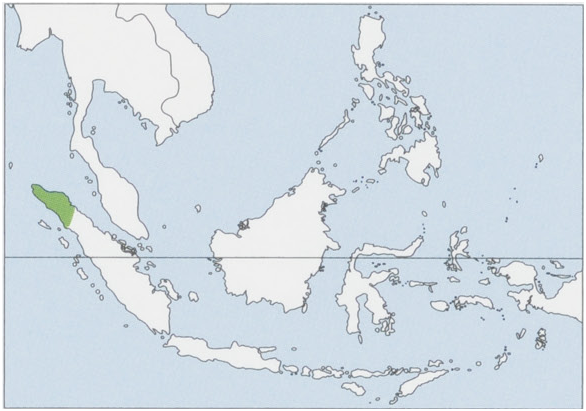
Foto: Russell A. Mittermeier;Anthony B. Rylands;Don E. Wilson
Otoritas penamaan: (Collett, 1893) (1893)
Status taksonomi: ACCEPTED
Status konservasi (IUCN): VU Rentan
Dipublikasikan dalam: Proc. Zool. Soc. Lond. vol.1892 p.613
Total Catatan di Indonesia
0
Provinsi Ditemukan
0
dari 38 provinsi
Catatan Pertama
0
tahun pertama tercatat
Tren Tahunan
-0%
-39.3% vs 2025
Kedih (Presbytis thomasi) termasuk dalam famili Cercopithecidae, ordo Primates, kelas Mammalia. Berdasarkan data yang terhimpun, spesies ini telah tercatat sebanyak 507 kali di Indonesia, tersebar di 3 provinsi. Catatan pertama tercatat pada tahun 1888.
Sumatera Utara merupakan provinsi dengan catatan observasi terbanyak untuk spesies ini, dengan 335 catatan (66.1% dari total). Data distribusi ini mencerminkan akumulasi dari berbagai kegiatan survei, penelitian, dan kontribusi citizen science. Pola distribusi yang tercatat mungkin tidak sepenuhnya menggambarkan persebaran alami spesies, karena dipengaruhi oleh intensitas pengamatan di masing-masing wilayah.
Tren observasi tahunan Presbytis thomasi menunjukkan penurunan signifikan (-39%) pada periode terakhir dibanding tahun sebelumnya, dengan catatan pertama pada tahun 1888.
Catatan deskriptif tentang Presbytis thomasi dari sumber literatur primer (via GBIF).
Conservation: CITES – Appendix II; IUCN – Lower Risk (nt).
Sumber: Order Primates
Distribution: Sumatra: Aceh, south to about 3 ° 50 ' N.
Sumber: Order Primates
PROTECTED STATUS: CITES - Appendix II as Order Primates.
Sumber: Order Primates
Habitat. Primary and secondary lowland rainforest, swamp forest, lowland alluvial (riparian) forest, and fruit and rubber tree plantations. The highest densities of Thomas’s Langurs have been recorded in swamp forest, with densities somewhat lower in lowland alluvial and lowland forests. They are also found in mosaics of rubber plantations and primary hill dipterocarp forest, and they tolerate selectively logged forest. Thomas’s Langur prefers the understory. They occur at elevations of 1500 - 2400 m and in lower parts of the subalpine zones up to 3400 m in the Leuser Ecosystem. Rainfall is high where they occur (3288 - 4575 mm / year), and forests are humid throughout the year. They were studied in a forest-plantation mosaic at Bohorok (1981 - 1984) and alluvial lowland rainforest at Ketambe Research Station, Aceh (1987 - 2001).
Nama-nama ilmiah lain yang pernah digunakan untuk Presbytis thomasi dalam literatur taksonomi.
| Nama Sinonim | Otoritas | Status |
|---|---|---|
| Presbytis aygula thomasi | (Collett, 1893) | SYNONYM |
| Presbytis nubilus | Miller, 1942 | SYNONYM |
| Presbytis thomasi nubilus | Miller, 1942 | SYNONYM |
| Semnopithecus thomasi | (Collett, 1893) | HOMOTYPIC_SYNONYM |
| # | Provinsi | Catatan | % |
|---|---|---|---|
| 1 | Sumatera Utara | 335 | 66.1% |
| 2 | Aceh | 124 | 24.5% |
| 3 | Riau | 2 | 0.4% |
Jumlah catatan observasi Presbytis thomasi di Indonesia per tahun
Presbytis thomasi
Foto: Russell A. Mittermeier;Anthony B. Rylands;Don E. Wilson
Presbytis thomasi
Foto: Russell A. Mittermeier;Anthony B. Rylands;Don E. Wilson
| Nama | Bahasa | Sumber |
|---|---|---|
| Kedih | Indonesia | Catalogue of Life |
| Langur De Thomas | Spanyol | Catalogue of Life |
| Langur de Thomas | Prancis | Cercopithecidae |
| North Sumatran Leaf Monkey | Inggris | Catalogue of Life |
| Presbite di Thomas | Italia | Catalogue of Life |
| Semnopithèque De Thomas | Prancis | Catalogue of Life |
| Sumatran Grizzled Langur | Inggris | Cercopithecidae |
| Surili del Norte de Sumatra | Spanyol | Catalogue of Life |
| Surili-grisalho-de-Sumatra |
Berdasarkan data 507 observasi, Sumatera Utara adalah provinsi dengan catatan Kedih (Presbytis thomasi) terbanyak — 335 observasi (66.1% dari total catatan di Indonesia). Spesies ini tersebar di 3 provinsi.
Catatan pertama Kedih (Presbytis thomasi) di Indonesia tercatat pada tahun 1888. Hingga kini terdapat 507 catatan dari 3 provinsi, yang dihimpun dari survei lapangan, koleksi museum, dan platform citizen science.
Menurut IUCN Red List, Kedih (Presbytis thomasi) berstatus "Rentan" (kode VU). Status ini mencerminkan tingkat risiko kepunahan global spesies, bukan khusus Indonesia.
Di Indonesia dan Malaysia, Presbytis thomasi dikenal dengan beberapa nama lokal: Kedih. Penamaan dapat berbeda antardaerah dan bahasa.
Ya, Presbytis thomasi memiliki 4 nama sinonim ilmiah, di antaranya: Presbytis aygula thomasi, Presbytis nubilus, Presbytis thomasi nubilus. Nama sinonim adalah nama-nama lain yang pernah digunakan untuk spesies yang sama dalam literatur taksonomi.
Presbytis thomasi diklasifikasikan sebagai berikut: Kingdom Animalia, Phylum Chordata, Class Mammalia, Order Primates, Family Cercopithecidae, Genus Presbytis. Spesies ini dideskripsikan oleh (Collett, 1893).
Sumber: Cercopithecidae
Movements, Home range and Social organization. Thomas’s Langurslive in unimale — multifemale groups of 2 - 16 individuals, and they also form all-male groups. Two-male groups were recorded at Bohorok, and they were always larger (9 - 21 individuals). Both males and females disperse from their natal groups, and females also transfer among groups. Sometimes all females leave a group and transfer to another, resulting in an all-male group being left behind. Sometimes females leave a group to join a solitary male. Home ranges averaged 27 ha at Ketambe, but they were smaller at Borohok at 14 ha. The largest home range was 53 ha (at Ketambe). Home ranges tend to be larger in groups that have been stable for some years. Newly established groups have small home ranges, independent of the group’s size. At Ketambe, male group tenure was five days to 72 months, with a median of 60 months. Males are typically resident in only one mixed-sex group; establishing their residency at c ¢. 7 years old and maintaining their status until they are c. 13 years old. Daily distance traveled was smaller at Bohorok (average 683 m / day) than at Ketambe (average 1068 m / day). Thomas’s Langurs have very distinct long calls, which distinguish them from all other langurs on Sumatra, especially neighboring Black-crested Sumatran Langur (P. melalophos). These calls show age, individualism, and contextual variation. Thomas’s Langurs utter different calls depending on whether or not other individuals are present and whether or not they give alarm calls. Loud calls are uttered in the morning before leaving their sleeping trees, during encounters with other groups, and as an alarm call after spotting a predator. Males give loud calls and chase each other when groups meet; females of each group generally ignore each other. The aggressive behavior is believed to result from the male’s defense of his females rather than defense of the territory itself.
Sumber: Cercopithecidae
Status and Conservation. CITES Appendix II. Classified as Vulnerable on The IUCN Red List. Thomas’s Langur is protected by Indonesian law. It is threatened mainly by habitat loss. Hunting does not seem to be a significant threat, but loss of primary habitat due to logging and conversion to oil palm plantations is probably displacing some populations. Thomas’s Langurs are sacred to the Batak people and consequently not hunted by them, although some marginal hunting occurs elsewhere in its distribution. Thomas’s Langurs occur in Gunung Leuser National Park, Sumatra.
Sumber: Cercopithecidae
| Portugis |
| Catalogue of Life |
| Thomas Langur | Inggris | Cercopithecidae |
| Thomas s Langur | Inggris | Mammal Species of the World |
| Thomas' Langur | Inggris | Integrated Taxonomic Information System (ITIS) |
| Thomas's Langur | Inggris | Catalogue of Life |
| Thomas's Leaf Monkey | Inggris | Cercopithecidae |
| Thomas's Leaf-monkey | - | Phthiraptera.myspecies.info |
| Thomas's langur | Inggris | The Paleobiology Database |
| Thomas-Langur | Jerman | Cercopithecidae |
| Thomaslangoer | Belanda | Catalogue of Life |
| Thomas’s Langur | Inggris | Catalogue of Life |
| hulman ebenový | ces | Catalogue of Life |
150 titik observasi Presbytis thomasi di Indonesia
Memuat peta...
Setiap titik merepresentasikan satu lokasi observasi yang tercatat. Klik titik untuk melihat detail.