
Biologi & Ekologieng
Habitat. Coastal mangrove forests on offshore islands and villages and bamboo on coast and inland from sea level up to elevations of ¢. 1500 m.
Sumber: Pteropodidae
Family Pteropodidae · Order Chiroptera
Data diperbarui secara berkala dari berbagai sumber observasi biodiversitas.
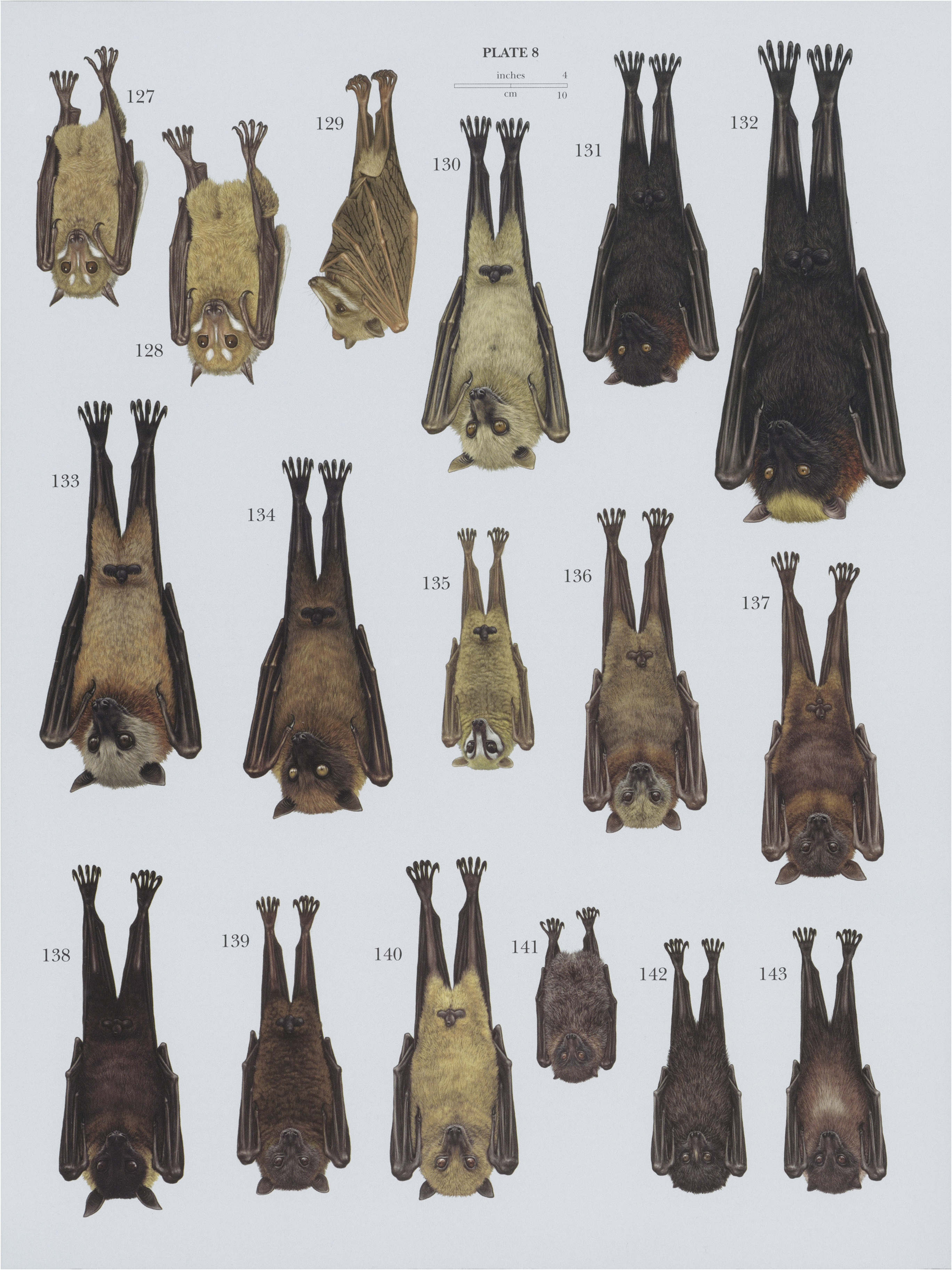
Foto: Don E. Wilson;Russell A. Mittermeier
Otoritas penamaan: (Peters, 1867) (1867)
Status taksonomi: ACCEPTED
Status konservasi (IUCN): VU Rentan
Dipublikasikan dalam: Monatsb. K. Preuss. Akad. Wiss. Berlin vol.1867 p.333
Total Catatan di Indonesia
0
Provinsi Ditemukan
0
dari 38 provinsi
Catatan Pertama
0
tahun pertama tercatat
Tren Tahunan
-0%
-50.0% vs 2025
Kalong Sulawesi (Acerodon celebensis) termasuk dalam famili Pteropodidae, ordo Chiroptera, kelas Mammalia. Berdasarkan data yang terhimpun, spesies ini telah tercatat sebanyak 143 kali di Indonesia, tersebar di 4 provinsi. Catatan pertama tercatat pada tahun 1864.
Sulawesi Selatan merupakan provinsi dengan catatan observasi terbanyak untuk spesies ini, dengan 11 catatan (7.7% dari total). Data distribusi ini mencerminkan akumulasi dari berbagai kegiatan survei, penelitian, dan kontribusi citizen science. Pola distribusi yang tercatat mungkin tidak sepenuhnya menggambarkan persebaran alami spesies, karena dipengaruhi oleh intensitas pengamatan di masing-masing wilayah.
Tren observasi tahunan Acerodon celebensis menunjukkan penurunan signifikan (-50%) pada periode terakhir dibanding tahun sebelumnya, dengan catatan pertama pada tahun 1864.
Catatan deskriptif tentang Acerodon celebensis dari sumber literatur primer (via GBIF).
Habitat. Coastal mangrove forests on offshore islands and villages and bamboo on coast and inland from sea level up to elevations of ¢. 1500 m.
Sumber: Pteropodidae
Movements, Home range and Social organization. The Sulawesi Flying Fox is generally gregarious and roosts in large colonies in mangroves with low levels of disturbance. Individuals and small groups have been found in areas with higher levels of disturbance (e. g. nearvillages or roadsides), but it is unclearif these roosts are temporary or not. It often co-roosts with other species offlying foxes, particularly the Black Flying Fox (Pteropus alecto).
Sumber: Pteropodidae
Status and Conservation. CITES Appendix II. Classified as Vulnerable on The IUCN Red List. The Sulawesi Flying Fox is endemic and increasingly pressured by hunting for bushmeat. It has been locally extirpated from North Sulawesi, where bushmeattrade is centralized, with hunting causing an inferred population reduction greater than 30 % in the past three generations. Known colonies are under constantly threat of being extirpated, but there are no legal protections. Mangrove forests have declined due to conversion for shrimp aquaculture. As mangroves disappear, large roosting colonies will probably decrease because they are some of the only habitats left with low levels of human disturbance. Deforestation and logging also threaten stability of foraging sites.
Sumber: Pteropodidae
Descriptive notes. Head-body 190 - 225 mm (tailless), ear 30 - 34 mm, hindfoot 37 - 44 mm, forearm 130 - 145 mm; weight 374 g (mean). Greatest lengths of skulls are 62 - 63 mm. Males are larger than females and have glandular neck tufts with strong musk that are rich tawny at base and produce thick ocherous orange band around shoulder. Muzzle of the Sulawesi Flying Fox is short and narrow, rhinarium is black with large nostrils, and philtrum has side furrow. Eyes are large, with brown irises. Ears are longer than muzzle from front of eye to tip of nose, wide at base, and pointed. Pelage on crown, mantle, and underside is generally golden or yellowish buffy, with chocolate-brown backside and small patch of brown fur on throat with sprinkles of longer silvery whitish hairs. Belly is slightly lighter. Fur is short and thin around crown and mantle to expose buffy and brown head and muzzle. Sides of head are sprinkled with long whitish silvery hairs. Golden buffy tips of fur generally hide brown bases. Tibia is dark and not furred; femur is furred. Fur is woollier on underside of lateral membrane between humerus and femur. Genitals are black and concealed in fur. Uropatagium is reduced; calcar is small. Wing membranes are black and originate from sides of body, slightly above medial plane. Skull is typical pteropine and moderately robust, with short narrow rostrum, small orbits, low and broad sagittal crest, and rather thick mandible. Dental formula for most species of Acerodonis 12 / 2, C 1 / 1, P 3 / 3, M 2 / 3 (x 2) = 34.1, and last lower molars are small, and P' is early deciduous. Canine cingula and posterior basal ledges on premolars and molars are strong, especially compared with congeners. Caninesare slightly larger in males. Dentition is weak in general; P? lacks posterointernal cusp. Anterointernal basal tubercle is more sharply obvious in M, than in P ,, and there is no distinct anterointernal cusp in P,. Basal ledge of P ,, M ,, and M, do not extend as far forward on innerside ofteeth as in other species of Acerodon.
Sumber: Pteropodidae
Conservation: CITES – Appendix II. IUCN / SSC Action Plan (1992) – No data. IUCN 2003 – Lower Risk (nt).
Sumber: Order Chiroptera - Family Pteropodidae
Distribution: Sulawesi, Saleyer Isl, Sangihe Isls, Sula Isls (Indonesia).
Sumber: Order Chiroptera - Family Pteropodidae
Nama-nama ilmiah lain yang pernah digunakan untuk Acerodon celebensis dalam literatur taksonomi.
| Nama Sinonim | Otoritas | Status |
|---|---|---|
| Pteropus celebensis | Peters, 1867 | SYNONYM |
| # | Provinsi | Catatan | % |
|---|---|---|---|
| 1 | Sulawesi Selatan | 11 | 7.7% |
| 2 | Sulawesi Tengah | 4 | 2.8% |
| 3 | Sulawesi Tenggara | 4 | 2.8% |
| 4 | Sulawesi Utara | 3 | 2.1% |
Jumlah catatan observasi Acerodon celebensis di Indonesia per tahun
Acerodon celebensis
Foto: Don E. Wilson;Russell A. Mittermeier
Acerodon celebensis
Foto: Don E. Wilson;Russell A. Mittermeier
| Nama | Bahasa | Sumber |
|---|---|---|
| Acerodon sulaweski | pol | Catalogue of Life |
| Acérodon de Sulawesi | Prancis | Pteropodidae |
| Celebesschijnkalong | Belanda | Catalogue of Life |
| Kalong Sulawesi | Indonesia | Catalogue of Life |
| Sulawesi Acerodon | Inggris | Catalogue of Life |
| Sulawesi Flying Fox | Inggris | Pteropodidae |
| Sulawesi Flying-fox | Inggris | Catalogue of Life |
| Sulawesi Fruit Bat | Inggris | Catalogue of Life |
| Sulawesi-Flughund | Jerman | Catalogue of Life |
| Volpe volante di Sulawesi | Italia | Catalogue of Life |
| Zorro Volador De Las C | Spanyol | Catalogue of Life |
| Zorro Volador De Las Célebes | Spanyol | Catalogue of Life |
| Zorro volador de Célebes | - | Pteropodidae |
| celebesinakerohekko | fin | Catalogue of Life |
| kaloň celebeský | ces | Catalogue of Life |
| Целебесский ацеродон | rus | Catalogue of Life |
| セレベスオオコウモリ | Jepang | Catalogue of Life |
| 술라웨시과일박쥐 | kor | Catalogue of Life |
Berdasarkan data 143 observasi, Sulawesi Selatan adalah provinsi dengan catatan Kalong Sulawesi (Acerodon celebensis) terbanyak — 11 observasi (7.7% dari total catatan di Indonesia). Spesies ini tersebar di 4 provinsi.
Catatan pertama Kalong Sulawesi (Acerodon celebensis) di Indonesia tercatat pada tahun 1864. Hingga kini terdapat 143 catatan dari 4 provinsi, yang dihimpun dari survei lapangan, koleksi museum, dan platform citizen science.
Menurut IUCN Red List, Kalong Sulawesi (Acerodon celebensis) berstatus "Rentan" (kode VU). Status ini mencerminkan tingkat risiko kepunahan global spesies, bukan khusus Indonesia.
Di Indonesia dan Malaysia, Acerodon celebensis dikenal dengan beberapa nama lokal: Kalong Sulawesi. Penamaan dapat berbeda antardaerah dan bahasa.
Ya, Acerodon celebensis memiliki 1 nama sinonim ilmiah, di antaranya: Pteropus celebensis. Nama sinonim adalah nama-nama lain yang pernah digunakan untuk spesies yang sama dalam literatur taksonomi.
Acerodon celebensis diklasifikasikan sebagai berikut: Kingdom Animalia, Phylum Chordata, Class Mammalia, Order Chiroptera, Family Pteropodidae, Genus Acerodon. Spesies ini dideskripsikan oleh (Peters, 1867).
21 titik observasi Acerodon celebensis di Indonesia
Memuat peta...
Setiap titik merepresentasikan satu lokasi observasi yang tercatat. Klik titik untuk melihat detail.