Distribusieng
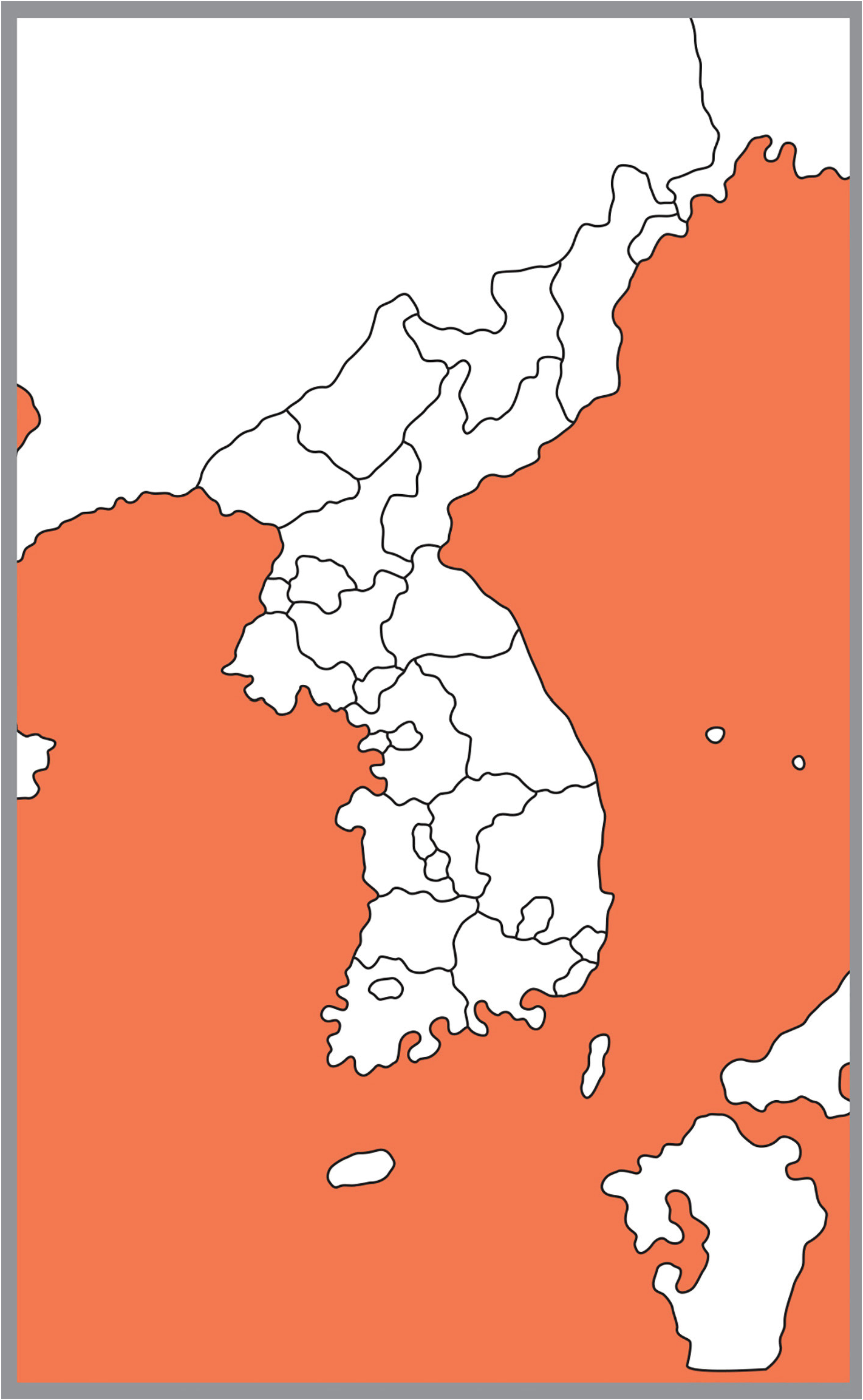
Range: Balaenoptera musculus has rarely been encountered in the East Sea (Fig. 78). Whalers harvested a total of 20 blue whales in the waters of Korea during 1911 to 1944 (Park 1987). There has been no record of this whale in Korean waters since 1944.
Sumber: Mammals of Korea: a review of their taxonomy, distribution and conservation status
Biologi & Ekologieng
Habitat. Epipelagic regions of all ocean basins, except the Arctic, and sometimes in neritic coastal areas of continental shelves. Blue Whales occur in coastal areas of continental shelves such as the Gulf of Saint Lawrence, Gulf of California, and Southern California Bight and in submerged oceanic plateaus and volcanoes (Madagascar Plateau, Crozet Plateau, and Kerguelen Plateau). Habitat preferences of Blue Whales are related to feeding grounds, which appear to be localized and the consequence of strong oceanographic interactions between currents and seafloor topographic features or convergence of surface currents that form cyclonic circulation and a shallow thermocline. This pattern is reflected in the population of Blue Whales that summers in the eastern North Pacific Ocean off central California, where individuals appear to prefer coastal habitats marked by steep submarine topographic features that enhance upwelling (shelfsslope break, borderland basin margins, etc.). These Blue Whales feed almost exclusively on krill during boreal summer and early autumn as far north as the Farallon Islands and Monterey Bay before moving south to waters around the Channel Islands to continue feeding during autumn. During boreal winter, individuals move further south into the Gulf of California and continue to feed on krill in protected waters of Bahia de Loreto. Some members of this population are even reported to migrate during boreal winter to the Costa Rica Dome (10 ° N) in the tropical eastern Pacific Ocean, where upwelling and a shallow thermocline result from a combination of cyclonic surface current circulation and large-scale wind patterns. In contrast, austral summer foraging habitat of the Blue Whale in high-latitude regions of the Southern Ocean is generally associated with areas of sharp oceanographic density interfaces, such as those caused by convergence of cold, northward flowing surface waters from Antarctica and relatively warmer surface waters of the subantarctic region (Antarctic Convergence). Whaling records indicate that the neritic waters off the south-western coast of South Africa were formerly frequented by Blue Whales during austral winter.
Sumber: Balaenopteridae
Biologi & Ekologieng
Movements, Home range and Social organization. Worldwide, Blue Whales have a cosmopolitan distribution, occurring in all major ocean basins except the Arctic. Precise information on migration routes and home ranges is limited and comes from a variety of data sources including historical whaling records, stranding records, and results of modern sighting and acoustic surveys. Data for some subspecies and populations are more extensive than for others, and general biogeographic patterns have undoubtedly been altered by intense, worldwide exploitation of Blue Whales that occurred from 1904 to 1973. Extremely depleted populations of Antarctic Blue Whales retain a nearly circumpolar distribution in Antarctic waters during austral summer and early autumn feeding season in November — March. During this period, their distribution appears to be strongly linked to latitude, with feeding individuals concentrated along latitudinal bands south of 60 ° S (generally south of the Antarctic Polar Front). In contrast, distribution of Antarctic Blue Whales during austral winter seems to be more clustered, localized, and compressed along low-latitude continental margins and offshore submerged volcanic platforms in areas associated with upwelling. Historical whaling records suggest that during austral winter, Antarctic Blue Whales formerly were concentrated in the eastern South Atlantic Ocean off the western coast of Africa from South Africa to DR Congo, with their distribution likely linked to waters of high primary and secondary production associated with the upwelling system of the north-flowing Benguela Current. A similar distribution of Blue Whales is proposed in the eastern South Pacific Ocean off Chile and Peru. Although clearly most Antarctic Blue Whales migrate into low latitudes during austral winter, it is not certain if they all do. In fact a close examination of whaling records suggests that there may have been a resident population of Antarctic Blue Whales in and around South Georgia Island (54 ° S) that routinely overwintered in the high-productivity waters surrounding this oceanic island. Migratory patterns of Pygmy Blue Whales are poorly known. It appears, however, based on historical whaling records and sighting and acoustic surveys, that the population of these whales in the south-western Indian Ocean south of Madagascar moves southward during austral winter and then disperses longitudinally across the subantarctic region from Africa to Australia. Evidence indicates that some of these individuals may migrate northward to Diego Garcia (6 ° S) in the central Indian Ocean during austral winter. Additional evidence, however, suggests occurrence of a year-round resident population of Pygmy Blue Whales in the northern Indian Ocean, another year-round resident population off southern Madagascar, and a possible third year-round resident population in waters around Australia and New Zealand. In the Northern Hemisphere, different populations of Blue Whales have been recognized in eastern and western parts of the Atlantic and Pacific oceans. The western North Atlantic population of Blue Whales ranges from Greenland (60 - 70 ° N) in boreal summerto South Carolina (34 ° N) in winter, while the eastern population has its boreal summer range as far north as the Barents Sea and Svalbard (80 ° N) and winters in the region around the Cape Verde Islands (15 ° N). The population of Blue Whales in the eastern North Pacific Ocean appears to spend boreal winter in waters off Baja California (25 ° N), south to the Costa Rica Dome (10 ° N), and in the summer, it ranges north to the Aleutian Islands (55 ° N), with some resident individuals remaining off the central California coast (34 ° N). The population of Blue Whales in the western North Pacific Ocean spends boreal summer feeding in waters off Kamchatka and the Kuriles Islands (45 - 60 ° N) and migrates south in winter to the area south ofJapan around the Bonin Islands (27 ° N). Social structure of Blue Whales is largely unknown. Most observations at sea are solitary individuals or pairs. Aggregations of 50 or more individuals have been reported on summer feeding grounds, but these concentrations are most likely because of the high productivity of polar seas. With the advent of new technologies, such as digital tagging, satellite tracking, and biopsy sampling of living whales, the opportunity for answering a number of basic questions concerning population structure and identity of Blue Whales may be at hand. Another method potentially useful in understanding population structure involves acoustic studies of vocal sounds of Blue Whales, which may represent the most powerful (188 dB) and lowest frequency (16 — - 100 Hz) sounds produced by animals in nature. These vocal sounds can be classified as either songs or calls, with songs representing a limited number of stereotypic sound types produced in a regular sequence and forming a recognizable pattern, while calls are sounds consisting of individual short-lived vocalizations produced at irregular intervals or as reciprocal calls and counter-calls between two or more individuals. Songs of Blue Whales can be detected for hundreds and perhaps even thousands of kilometers, and researchers have distinguished nine song types worldwide, each associated with a different geographical region. Four song types are recognized in the Pacific Ocean, at least three in the Indian Ocean, and one each in the Atlantic Ocean and Southern Ocean. These song types, some of which have remained stable for more than 30 years, probably reflect distinct populations and thus serve as another potential means for characterizing population structure. Although functions of Blue Whale songs are currently unknown, it is likely that, at a minimum, they serve as social signals between interacting individuals.
Sumber: Balaenopteridae
Konservasieng
Status and Conservation. CITES Appendix I. Classified as Endangered on The IUCN Red List. The Antarctic Blue Whaleis listed as Critically Endangered and the Pygmy Blue Whale as Data Deficient. Causes of population decline are obvious and well documented in kill records kept by the whaling industry. During the first one-half of the 20 " century, more than 330,000 Antarctic Blue Whales were killed in the Southern Ocean alone. Another 13,000 Pygmy Blue Whales were reported killed in the Southern Hemisphere. Whaling records for the Northern Hemisphere document kills of at least 11,000 Northern Blue Whales in the North Atlantic Ocean and 9500 in the North Pacific Ocean. It is estimated that the pre-exploitation population of the Antarctic Blue Whale was ¢. 239,000 individuals and at the peak of what can be termed the exploitation bottleneck, the population had been reduced to as few as 400 individuals. Eventually, the unsustainable nature of this overexploitation was realized, and beginning in 1939, Blue Whales in parts of the Southern Hemisphere were finally afforded international protection from hunting. This move was followed by complete protection in the North Atlantic Ocean in 1955, protection of all remaining Blue Whales in the Antarctic Ocean in 1965, and protection in the North Pacific Ocean in 1966. Thirty years later, in 1996, it was estimated that the population of Antarctic Blue Whales had recovered to c. 1700 individuals, with a proposed rate of increase of 7 -: 3 % / year. Population estimates for the Pygmy Blue Whale are uncertain, but they suggest a minimum of 424 whales in the Southern Indian Ocean. Sizes of other Southern Hemisphere populations are unknown, although some data suggest as many as 1000 Blue Whales may now live in the South Pacific Ocean. Populations of Northern Blue Whales in the North Atlantic are thought to be recovering at a rate of 5 - 2 % / year, and based on 2004 and 2006 data, stand at 1000 - 2000 individuals in the central North Atlantic Ocean and c. 400 in the western North Atlantic Ocean, respectively. Northern Blue Whales are still rare in the eastern North Atlantic Ocean, where they have been largely extirpated from the site of their initial commercial exploitation. In the North Pacific Ocean, it is estimated that the population (based on 2004 data) is ¢. 3000 Northern Blue Whales. Although size of the current global population of Blue Whales is uncertain, a figure of 10,000 - 25,000 seems reasonable. If correct, this suggests a population decline of 89 - 97 % from the estimated 1911 world population. Today, protected from all types of commercial exploitation, populations of Blue Whale continue to increase, bringing this largest of all mammals back from the brink of extinction. Ongoing threats include entanglement in fishing gear (bycatch), fatal encounters with vessels (ship strikes), anthropogenic impacts (shipping traffic noise), and habitat decline. Additional threats from climate change and potential loss of prey base and shifts in critical habitat are of unknown impact to the recovery of populations of Blue Whales.
Sumber: Balaenopteridae
Deskripsieng
Descriptive notes. Total length 3170 - 3260 cm; weight 113,000 - 150,000 kg. Adult female Blue Whales are larger than males and represent the largest animals, past and present, to ever live on Earth. Total body length and weight estimates are up to 3260 cm and 145,000 kg for the “ Antarctic Blue Whale ” (B. m. intermedia), 2800 cm and 113,000 kg for the “ Northern Blue Whale ” (B. m. musculus), and 2300 cm and 69,000 kg for the “ Pygmy Blue Whale ” (B. m. brevicauda). Although older scientific literature reports total body lengths of up to 3300 cm for Antarctic Blue Whales, these measurements are questionable because they were taken by nonstandard methods at whaling stations. The same can be said for body weights of 190,000 kg in some reports. Computing accurate weights of animals as large as Blue Whales is a challenge, and because an entire individual cannot be weighed at the same time, the most accurate estimates of weights have been made at whaling stations or onboard factory whaling ships where the different parts of a dead whale are weighed separately and then totaled. This method, however, also has problems because weight of body fluids, especially blood, is not included in the calculation. In general, head of the Blue Whale is uniformly gray, while body is generally light bluish-gray with extensive gray-to-grayish white mottling. Ventral surface is lighter gray to yellowish-white. Pectoral flippers are generally bluish-gray above and whitish below, with a thin white border. Caudal flukes are light bluish gray above and below, although a radial pattern of pale striations on undersurface of flukes is often present and has been used to identify different groups of individuals. In cold, high-latitude polar waters, some foraging Blue Whales have a yellow-green — to — brown hue during summer, which is caused by a surface film of diatoms (Cocconeis ceticola). This diatom film is responsible for the name “ sulfur-bottom whale, ” a term that is variably applied to Blue Whales. A submerged individual seen from the deck of a ship appears to be slate gray on cloudy days and silvery or turquoise blue on sunny days. Head is 22 - 27 % of total body length. External surface of head has a single, prominent median rostral ridge, extending from blowholes to tip of rostrum. A prominent, fleshy “ splash guard ” is immediately in front of blowholes. This splash guard expands impressively when an individual is about to take a breath, and the blow that follows is typically tall, slender, and distinctly vertical (9 - 12 m high). Lateral margin of rostrum is broadly rounded and U-shaped as viewed from above, in contrast to the more sharply triangular rostra of other rorquals such as the Fin Whale (B. physalus) and the Sei Whale (B. borealis). In lateral view, rostrum of the Blue Whale has a distinctly flattened profile. Dorsal fin is proportionally tiny (¢. 35 cm) compared with other species of rorquals and is located well posterior on body, approximately three-quarters of the body length from tip of rostrum. Shape of dorsal fin varies from distinctly triangular to broadly rounded or smoothly falcate. Pectoral flippers are relatively long (c. 15 % of body length), slender, and bluntly pointed, with an anteriorly convex leading edge. As with all species of rorquals, there are only four elongate digits in the flipper (digit I is lost). Caudal flukes are broad (c. 24 % of body length) and can measure up to 700 cm across, with straight-to-slightly sinuous trailing edges marked by median notches. Fluke tips are distinctly pointed. Ventral groove blubber has 55 - 88 pleats that extend from chin to just posterior of umbilicus. Baleen plates are surprisingly thin for their length (up to 100 cm) and uniformly black, with numerous, coarse black bristles extending from lingual margins. Baleen laminae number 270 - 395 / side or rack. Individual baleen laminae are broadly triangular and relatively broad compared with those in Fin Whales. When observed at sea, Blue Whales slowly rise to the surface, first showing head and blowholes, then their broad back, and finally their diminutive dorsal fin. Unlike Fin Whales, Blue Whales sometimes raise their flukes above the water when sounding.
Sumber: Balaenopteridae
Distribusieng
Subspecies and Distribution. B. m. musculusLinnaeus, 1758 — NAtlanticandNPacific. B. m. brevicaudaIchihara, 1966 — IndianOceanandSWSouthPacificaroundAustralia. B. m. intermedia Burmeister, 1871 — Southern Ocean.
Sumber: Balaenopteridae