
Biologi & Ekologieng
Habitat. Lowland to montane primary rainforests from sea level up to ¢. 2100 m.
Sumber: Pteropodidae
Family Pteropodidae · Order Chiroptera
Data diperbarui secara berkala dari berbagai sumber observasi biodiversitas.
8 titik observasi Harpyionycteris celebensis di Indonesia
Memuat peta...
Setiap titik merepresentasikan satu lokasi observasi yang tercatat. Klik titik untuk melihat detail.
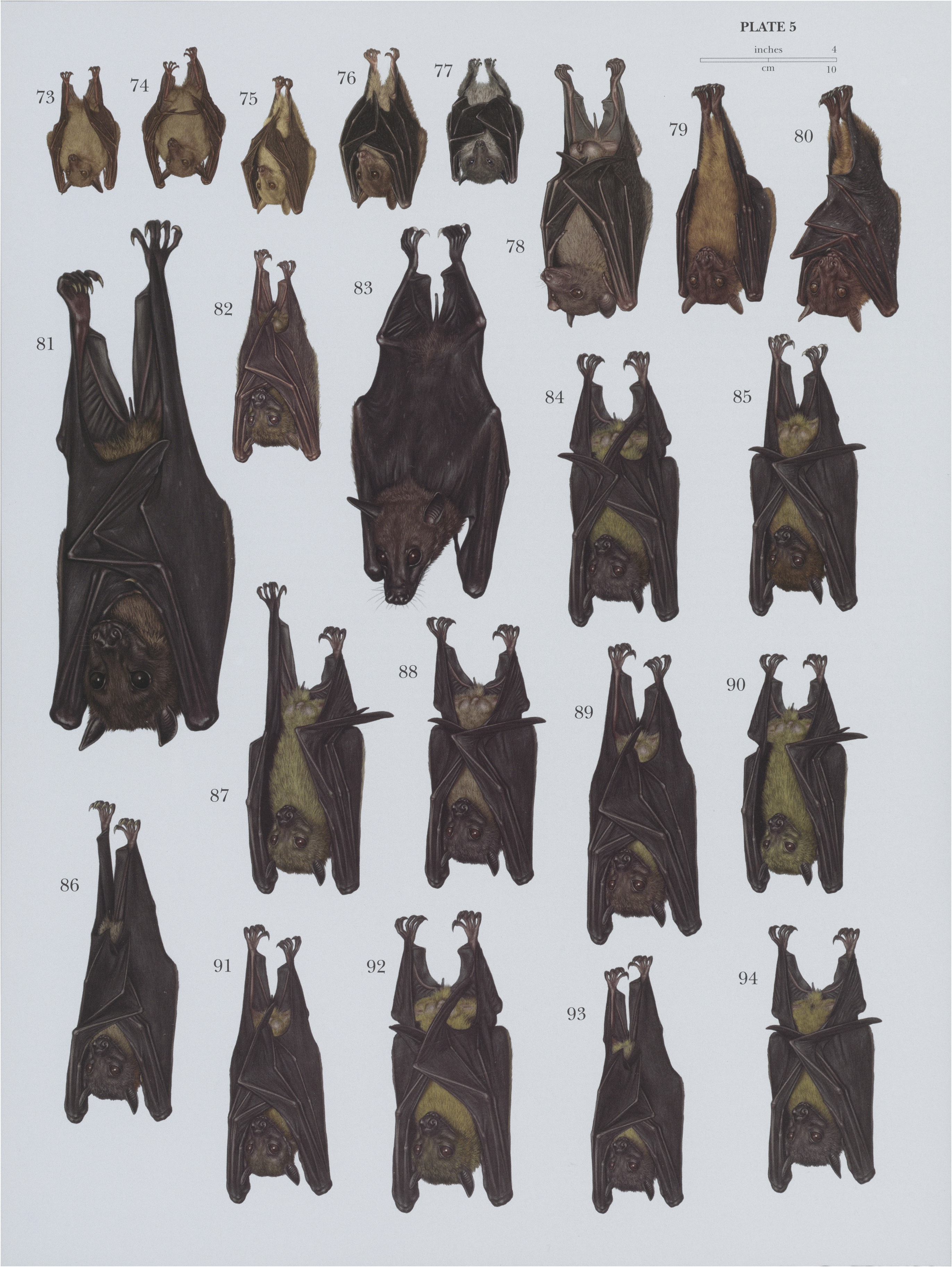
Foto: Don E. Wilson;Russell A. Mittermeier
Otoritas penamaan: Miller & Hollister, 1921 (1921)
Status taksonomi: ACCEPTED
Status konservasi (IUCN): NT Hampir Terancam
Dipublikasikan dalam: Proc. Biol. Soc. Wash. vol.34 p.99
Total Catatan di Indonesia
0
Provinsi Ditemukan
0
dari 38 provinsi
Catatan Pertama
0
tahun pertama tercatat
Tren Tahunan
+0%
+200.0% vs 2017
Codot Harpi Sulawesi (Harpyionycteris celebensis) termasuk dalam famili Pteropodidae, ordo Chiroptera, kelas Mammalia. Berdasarkan data yang terhimpun, spesies ini telah tercatat sebanyak 93 kali di Indonesia, tersebar di 4 provinsi. Catatan pertama tercatat pada tahun 1917.
Sulawesi Selatan merupakan provinsi dengan catatan observasi terbanyak untuk spesies ini, dengan 8 catatan (8.6% dari total). Data distribusi ini mencerminkan akumulasi dari berbagai kegiatan survei, penelitian, dan kontribusi citizen science. Pola distribusi yang tercatat mungkin tidak sepenuhnya menggambarkan persebaran alami spesies, karena dipengaruhi oleh intensitas pengamatan di masing-masing wilayah.
Tren observasi tahunan Harpyionycteris celebensis menunjukkan peningkatan signifikan (+200%) pada periode terakhir dibanding tahun sebelumnya, dengan catatan pertama pada tahun 1917.
Catatan deskriptif tentang Harpyionycteris celebensis dari sumber literatur primer (via GBIF).
Habitat. Lowland to montane primary rainforests from sea level up to ¢. 2100 m.
Sumber: Pteropodidae
Movements, Home range and Social organization. No information.
Sumber: Pteropodidae
Status and Conservation. Classified as Vulnerable on The IUCN Red List. The Sulawesi Harpy Fruit Bat is uncommon throughout its distribution, and its absence in active bushmeat markets (especially in northern Sulawesi) suggests that populations have declined. It occurs in some protected areas such as Lore Lindu National Park in central Sulawesi.
Sumber: Pteropodidae
Descriptive notes. Head-body 117 - 153 mm (tailless), ear 19 - 21 mm, hindfoot 22 - 27 mm, forearm 70 - 91 mm; weight 85 — 141 g. Head has strong, rather short muz: zle; nostrils are shortly tubular; philtrum has two separate deep grooves and one median groove; and lower lip has large triangular papillae. Eyes are moderately large; irises are brown. Ears are long and oval. Head pelage is short and dark brown. All body pelage is long, dense, and dark brown. Fur occurs over hindleg to dorsum offoot. Tibia is relatively short, calcar is very small, uropatagium is a narrow strip, and foot claws have whitish tips. Wing membranes are broad, from sides of body, blackish brown, with some small white spots, and inserted on second toes; index claw is present. Skull is heavy; rostrum is relatively short and broad; premaxillae are fused and project forward; nasal process is thin in lateral view; orbit is large, with obvious rim; zygomatic rootis slightly above upper alveolar line; zygoma is moderately arched; and braincase is rounded. Dorsally, premaxillae project anteriorly; rostrum is strong; paranasal recesses are much inflated, joined in midline, and reach root of thick, posterolaterally directed postorbital process; postorbital foramen is obliterated; postorbital constriction is very well-marked; braincase is oval; and sagittal and nuchalcrests are sharp and low. Ventrally, palate is long, flat, and narrow; tooth rows are almost parallel; post-dental palate is short, ending straight; and ectotympanicis small and narrow, with anterior extension and spine. Mandible has slanted, sharply distinct symphysis; body is arched; coronoid slopes; tip is rounded; condyle is level with lower alveolar line; and angle is large and round. Dental formula for all species of Harpyionycterisis 11 / 1, C 1 / 1, P 3 / 3, M 2 / 3 (x 2) = 30. I? (I' missing) is very large, with simple base, procumbent, and outer margin concave; C is extremely robust, with stout distal basal cusp, main cusp directed anteroventrally, and obvious inner cingulum; P' is very small, with secondary distal cusp; next premolar (P °) is stout, with noticeable basal distal cusp and sharp, denticulate lingual cingulum; next premolars and molars are multicuspidate; M * is small; cheekteeth are moderate in size; and occlusal outline is oval. Lower incisors, likely I, and I, missing, are obsolete or missing; C, is tricuspidated, procumbent, and almost straight, with sharp inner cingulum; P, is relatively very large and tricuspidated; and posterior cheekteeth are multicuspidated.
| # | Provinsi | Catatan | % |
|---|---|---|---|
| 1 | Sulawesi Selatan | 8 | 8.6% |
| 2 | Sulawesi Tengah | 2 | 2.2% |
| 3 | Sulawesi Utara | 1 | 1.1% |
| 4 | Sulawesi Tenggara | 1 | 1.1% |
Jumlah catatan observasi Harpyionycteris celebensis di Indonesia per tahun
Harpyionycteris celebensis
Foto: Don E. Wilson;Russell A. Mittermeier
Harpyionycteris celebensis
Foto: Don E. Wilson;Russell A. Mittermeier
| Nama | Bahasa | Sumber |
|---|---|---|
| Codot Harpi Sulawesi | Indonesia | Catalogue of Life |
| Harpiolot sulaweski | pol | Catalogue of Life |
| Harpyionicterio de Sulawesi | - | Pteropodidae |
| Harpyionyctére des Célébes | Prancis | Catalogue of Life |
| Sulawesi Harpy Fruit Bat | Inggris | Order Chiroptera - Family Pteropodidae |
| Sulawesi-Harpyien-Flughund | Jerman | Catalogue of Life |
| Sulawesi-Spitzzahnflughund | Jerman | Catalogue of Life |
| celebesinharpyijahekko | fin | Catalogue of Life |
| kaloň harpyjový |
Berdasarkan data 93 observasi, Sulawesi Selatan adalah provinsi dengan catatan Codot Harpi Sulawesi (Harpyionycteris celebensis) terbanyak — 8 observasi (8.6% dari total catatan di Indonesia). Spesies ini tersebar di 4 provinsi.
Catatan pertama Codot Harpi Sulawesi (Harpyionycteris celebensis) di Indonesia tercatat pada tahun 1917. Hingga kini terdapat 93 catatan dari 4 provinsi, yang dihimpun dari survei lapangan, koleksi museum, dan platform citizen science.
Menurut IUCN Red List, Codot Harpi Sulawesi (Harpyionycteris celebensis) berstatus "Hampir Terancam" (kode NT). Status ini mencerminkan tingkat risiko kepunahan global spesies, bukan khusus Indonesia.
Di Indonesia dan Malaysia, Harpyionycteris celebensis dikenal dengan beberapa nama lokal: Codot Harpi Sulawesi. Penamaan dapat berbeda antardaerah dan bahasa.
Harpyionycteris celebensis diklasifikasikan sebagai berikut: Kingdom Animalia, Phylum Chordata, Class Mammalia, Order Chiroptera, Family Pteropodidae, Genus Harpyionycteris. Spesies ini dideskripsikan oleh Miller & Hollister, 1921.
Sumber: Pteropodidae
Conservation: IUCN / SSC Action Plan (1992) – No Data as H. whiteheadi celebensis. IUCN 2003 – Not listed.
Sumber: Order Chiroptera - Family Pteropodidae
| ces |
| Catalogue of Life |
| Сулавесский крылан-гарпия | rus | Catalogue of Life |
| セレベスハルピュイアフルーツコウモリ | Jepang | Catalogue of Life |