
Konservasieng
PROTECTED STATUS: CITES - Appendix II as Order Primates.
Sumber: Order Primates
Family Cercopithecidae · Order Primates
Data diperbarui secara berkala dari berbagai sumber observasi biodiversitas.
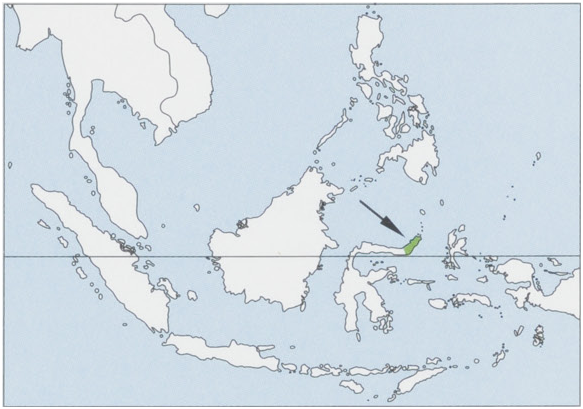
Foto: Russell A. Mittermeier;Anthony B. Rylands;Don E. Wilson
Otoritas penamaan: (Desmarest, 1822) (1822)
Status taksonomi: ACCEPTED
Status konservasi (IUCN): CR Kritis
Dipublikasikan dalam: Mammalogie, in Encyclop. Meth. vol.2(Suppl.) p.534
Total Catatan di Indonesia
0
Provinsi Ditemukan
0
dari 38 provinsi
Catatan Pertama
0
tahun pertama tercatat
Tren Tahunan
+0%
+45.9% vs 2025
Yaki (Macaca nigra) termasuk dalam famili Cercopithecidae, ordo Primates, kelas Mammalia. Berdasarkan data yang terhimpun, spesies ini telah tercatat sebanyak 628 kali di Indonesia, tersebar di 4 provinsi. Catatan pertama tercatat pada tahun 1829.
Sulawesi Utara merupakan provinsi dengan catatan observasi terbanyak untuk spesies ini, dengan 457 catatan (72.8% dari total). Data distribusi ini mencerminkan akumulasi dari berbagai kegiatan survei, penelitian, dan kontribusi citizen science. Pola distribusi yang tercatat mungkin tidak sepenuhnya menggambarkan persebaran alami spesies, karena dipengaruhi oleh intensitas pengamatan di masing-masing wilayah.
Tren observasi tahunan Macaca nigra menunjukkan peningkatan signifikan (+46%) pada periode terakhir dibanding tahun sebelumnya, dengan catatan pertama pada tahun 1829.
Catatan deskriptif tentang Macaca nigra dari sumber literatur primer (via GBIF).
PROTECTED STATUS: CITES - Appendix II as Order Primates.
Sumber: Order Primates
DISTRIBUTION: Sulawesi, northeast of Gorontolo; Bacan; adjacent islands.
Sumber: Order Primates
Habitat. Lowland and montane primary rainforests. Due to increased pressures of habitat destruction, Crested Macaques are also found in secondary forests, actively logged forests, and grassland and cultivated land if they are surrounded by primary forest.
Sumber: Cercopithecidae
Movements, Home range and Social organization. Crested Macaques live in multmale — multifemale, female philopatric groups, which are, in contrast to other Sulawesi macaques, quite large. Groups comprise 60 - 80 individuals (adult sex ratio: 1: 2 - 9), but they can grow up to more than 100 individuals. Smaller groups of only 25 individuals have also been observed. Home range size is 74 - 350 ha depending on group size and time of the year; home ranges are bigger during the rainy season. Home ranges of adjacent groups overlap significantly. Among macaques, Crested Macaques are among those that are the most socially tolerant, with conflicts being of lower intensity, often bidirectional and commonly reconciled. In contrast to more despotic species, female Crested Macaques often exchange affiliative interactions across matrilines. Males, however, fight fiercely over rank and can receive severe injuries. A typical demonstration of male social status is the loud call, which is emitted by all adult group males but significantly more often by high-ranking ones. Male dominance statusis also encoded in the acoustic structures of their loud calls. The red of the male’s scrotum and anus varies in intensity among individuals but also over time in the same individual. It also seems to be a sexual signal, but its precise function still remains unexplained. The extent of the red increases with male age. Males move several times between groups and also have been found roaming the forest solitarily or in small all-male groups. They emigrate from their natal group when reaching adulthood, often immediately trying to take over top dominance in neighboring groups.
Sumber: Cercopithecidae
Status and Conservation. CITES Appendix II. Classified as Critically Endangered on The IUCN Red List. The Crested Macaque is the most threatened of the seven species of macaques endemic to the island of Sulawesi. Crested Macaques have suffered severe hunting pressure and a widespread decline of their habitat. Consumption of monkeys and other wildlife is a longstanding tradition in ethnic groups of north-eastern Sulawesi and may have originally been sustainable. The human population in the area has substantially increased over the last decades, however, boosted by transmigration within Indonesia. This has increased hunting and led to the widespread conversion of rainforests for agricultural land and infrastructure. Legal and illegal logging and mining add to the rapid shrinking and fragmentation of natural forests, with an unknown effect on the separated small macaque populations remaining. Bushmeat hunting is not sustainable anymore and causes the rapid decline of all wildlife and, in particular, macaques. Tangkoko Batuangus Nature Reserve, although only ¢. 3600 ha, seems to be the home of the largest population of Crested Macaques within its native distribution. Nevertheless, recent surveys suggest that the population in this protected area has suffered a decline of almost 85 % since 1978. Current conservation and research activities, therefore, specifically focus on this population. A more viable population of Crested Macaques inhabits the island of Bacan, North Moluccas, where they have been introduced by humans. Given food taboos of the island’s people, the survival of this population may be better secured. The conservational value of the Bacan macaques is debatable because the island was not part of the species’ original distribution and, more importantly, the small founder population can be expected to have limited genetic variability.
Sumber: Cercopithecidae
Descriptive notes. Head-body 50 - 57 cm (males) and 44.5 - 55 cm (females), tail 1.5 - 2.5 cm; weight 10.2 - 13 kg (males) and 5.5 - 8 kg (females). Fur of the Crested Macaque is plain dark brown to blackish, as is the bare or short-haired facial skin. Infants are born with pinkish faces that turn black in the first months oflife. Hairs of the vertex are elongated (5 - 15 cm), forming an erectile crest. Ischial callosities are reniform, bright pinkish, and subdivided by a transverse furrow; in contrast, they are gray and form an elongated oval in the Gorontalo Macaque (M. nigrescens). The skull exhibits strongly developed supramaxillary ridges that are most pronounced in adult males. Posterior roots of these ridges are broadened and elevated, which gives the face of the male Crested Macaque a distinct appearance among the Sulawesi macaques (but see the Gorontalo Macaque). Male scrota and anuses have a red coloration, which has never been described for other Sulawesi macaques but may exist in at least some of them (e. g. Moor Macaque, M. maura). The Gorontalo Macaque differs from the Crested Macaque in its general body color being medium to dark brown, and its head, arms, legs, and ventral surface being black, contrasting with the color of the body. They are the same color in the Crested Macaque.
Sumber: Cercopithecidae
Nama-nama ilmiah lain yang pernah digunakan untuk Macaca nigra dalam literatur taksonomi.
| Nama Sinonim | Otoritas | Status |
|---|---|---|
| Cynocephalus malayanus | Desmoulins, 1824 | SYNONYM |
| Cynocephalus niger | Desmarest, 1822 | HOMOTYPIC_SYNONYM |
| Cynopithecus lembicus | Miller, 1931 | SYNONYM |
| Cynopithecus niger | (Desmarest, 1822) | SYNONYM |
| Macaca lembicus | (Miller, 1931) | SYNONYM |
| Macaca malayanus | (Desmoulins, 1824) | SYNONYM |
| # | Provinsi | Catatan | % |
|---|---|---|---|
| 1 | Sulawesi Utara | 457 | 72.8% |
| 2 | Sulawesi Selatan | 1 | 0.2% |
| 3 | Gorontalo | 1 | 0.2% |
| 4 | Maluku Utara | 1 | 0.2% |
Jumlah catatan observasi Macaca nigra di Indonesia per tahun
Macaca nigra
Foto: Russell A. Mittermeier;Anthony B. Rylands;Don E. Wilson
Macaca nigra
Foto: Russell A. Mittermeier;Anthony B. Rylands;Don E. Wilson
| Nama | Bahasa | Sumber |
|---|---|---|
| Black Crested Macaque | Inggris | Cercopithecidae |
| Celebes Black "Ape" | - | Phthiraptera.myspecies.info |
| Celebes Black Ape | Inggris | Cercopithecidae |
| Celebes Black Macaque | Inggris | Cercopithecidae |
| Celebes Crested Macaque | Inggris | Mammal Species of the World |
| Celebes Macaque | Inggris | Cercopithecidae |
| Celebes crested macaque | Inggris | The Paleobiology Database |
| Celebesmakak | nob | Catalogue of Life |
| Cinopiteco | Italia | Catalogue of Life |
| Crested Black Macaque | Inggris | Catalogue of Life |
| Crested Macaque | Inggris | Cercopithecidae |
| Cynopithèque Nègre | Prancis | Catalogue of Life |
| Gorontalo Macaque | Inggris | Catalogue of Life |
| Kuifmakaak | Belanda | Catalogue of Life |
| Macaca Negra | Spanyol | Catalogue of Life |
| Macaco Negro | Spanyol | Catalogue of Life |
| Macaco crestado | - | Cercopithecidae |
| Macaco-negro | Portugis | Catalogue of Life |
| Macaque Des Célèbes | Prancis | Catalogue of Life |
| Macaque noir | Prancis | Cercopithecidae |
Berdasarkan data 628 observasi, Sulawesi Utara adalah provinsi dengan catatan Yaki (Macaca nigra) terbanyak — 457 observasi (72.8% dari total catatan di Indonesia). Spesies ini tersebar di 4 provinsi.
Catatan pertama Yaki (Macaca nigra) di Indonesia tercatat pada tahun 1829. Hingga kini terdapat 628 catatan dari 4 provinsi, yang dihimpun dari survei lapangan, koleksi museum, dan platform citizen science.
Menurut IUCN Red List, Yaki (Macaca nigra) berstatus "Kritis" (kode CR). Status ini mencerminkan tingkat risiko kepunahan global spesies, bukan khusus Indonesia.
Di Indonesia dan Malaysia, Macaca nigra dikenal dengan beberapa nama lokal: Yaki, monyet hitam. Penamaan dapat berbeda antardaerah dan bahasa.
Ya, Macaca nigra memiliki 6 nama sinonim ilmiah, di antaranya: Cynocephalus malayanus, Cynocephalus niger, Cynopithecus lembicus. Nama sinonim adalah nama-nama lain yang pernah digunakan untuk spesies yang sama dalam literatur taksonomi.
Macaca nigra diklasifikasikan sebagai berikut: Kingdom Animalia, Phylum Chordata, Class Mammalia, Order Primates, Family Cercopithecidae, Genus Macaca. Spesies ini dideskripsikan oleh (Desmarest, 1822).
150 titik observasi Macaca nigra di Indonesia
Memuat peta...
Setiap titik merepresentasikan satu lokasi observasi yang tercatat. Klik titik untuk melihat detail.