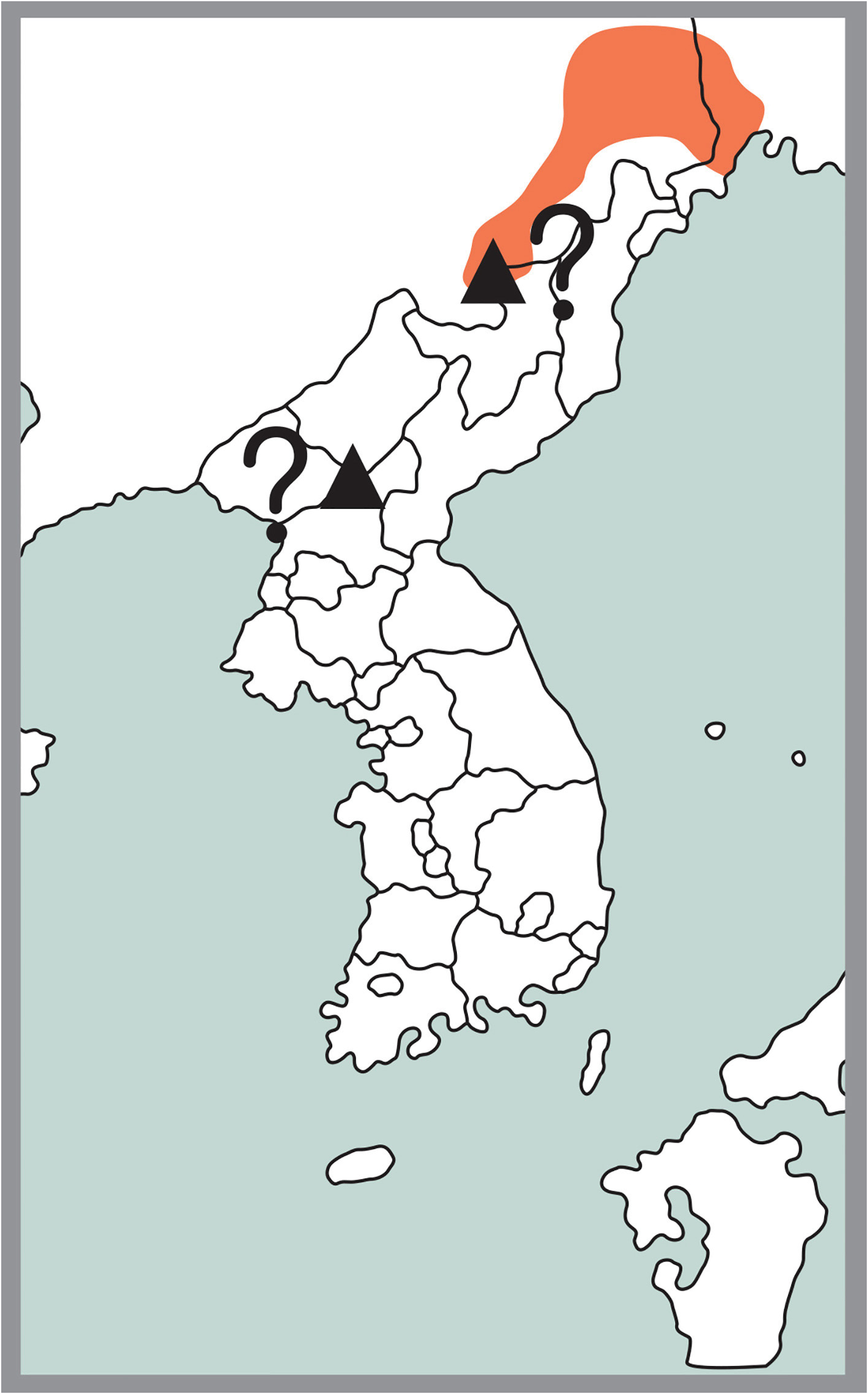
PROTECTED STATUS: CITES - Appendix I and U. S. ESA - Endangered.
Sumber: Order Carnivora
Family Felidae · Order Carnivora
Data diperbarui secara berkala dari berbagai sumber observasi biodiversitas.

Foto: Don E. Wilson;Russell A. Mittermeier
Otoritas penamaan: (Linnaeus, 1758) (1758)
Status taksonomi: ACCEPTED
Status konservasi (IUCN): VU Rentan
Dipublikasikan dalam: Syst. Nat., 10th ed. vol.1 p.41
Total Catatan di Indonesia
0
Provinsi Ditemukan
0
dari 38 provinsi
Catatan Pertama
0
tahun pertama tercatat
Tren Tahunan
+0%
+0.0% vs 2024
Harimau dahan (Panthera pardus) termasuk dalam famili Felidae, ordo Carnivora, kelas Mammalia. Berdasarkan data yang terhimpun, spesies ini telah tercatat sebanyak 146 kali di Indonesia, tersebar di 5 provinsi. Catatan pertama tercatat pada tahun 1821.
Jawa Barat merupakan provinsi dengan catatan observasi terbanyak untuk spesies ini, dengan 21 catatan (14.4% dari total). Data distribusi ini mencerminkan akumulasi dari berbagai kegiatan survei, penelitian, dan kontribusi citizen science. Pola distribusi yang tercatat mungkin tidak sepenuhnya menggambarkan persebaran alami spesies, karena dipengaruhi oleh intensitas pengamatan di masing-masing wilayah.
Tren observasi tahunan Panthera pardus relatif stabil pada periode terakhir dibanding tahun sebelumnya, dengan catatan pertama pada tahun 1821.
Catatan deskriptif tentang Panthera pardus dari sumber literatur primer (via GBIF).
PROTECTED STATUS: CITES - Appendix I and U. S. ESA - Endangered.
Sumber: Order Carnivora
DISTRIBUTION: N. Africa; S. W. Asia, north Caucasus and Kopet Dag, throughout Oriental region to Java, north to Korea and Amur region; Subsaharan Africa.
Sumber: Order Carnivora
Habitat. As might be predicted from its broad geographic distribution, Leopards are able to live in almost every type of habitat. In sub-Saharan Africa the cats are found in all habitats that have an annual rainfall above 50 mm. They are also found in true deserts, but only where river courses extend into this otherwise inhospitable habitat. In the Kalahari Gemsbok National Park, South Africa, Leopards inhabit arid, open-dune sandveld with scattered shrubs and trees. They escape the intense midday heat by sheltering in porcupine or aardvark burrows. Tracking studies in the Kalahari have shown that Leopards can survive without drinking for as long as ten days. In other hot, dry deserts such as the Namib, Sahara, Sinai, and Arabian, Leopards also use caves, burrows, or the shade of dense vegetation to survive daytime temperatures that may reach 70 ° C. In other parts of Africa Leopards occur in the wetter habitats, including savannas, acacia grasslands, evergreen and deciduous forests, and scrub woodlands. They also occur in the rain forest habitats of Central and West Africa, where annual rainfall typically exceeds 1500 mm. Leopards are common throughout the Indian subcontinent, from the moist deciduous, teak, and shola forests of the Western Ghats to the dry, deciduous, bamboo, and mixed forests of the rugged tableland in central India. In the north they live in sal forest and the tall grasslands on the outwash plains of the Himalaya as well as in the mountainous terrain of Pakistan and Kashmir to 5200 m. In Myanmar, Thailand, Peninsular Malaysia, and Java the cats are found in dense, primary rain forest and a variety of other forest types. In the Russian Far East Leopards inhabit mountainous forested regions. They prefer broken topography with Korean pine and second growth oak forest. In this area, a key limiting factor is snow depth. The cats prefer habitats where the average long-term snow cover does not exceed 15 cm. Whatever type of habitat they live in, Leopards are often able to persist in close proximity to people, as long as they are not persecuted and have access to secure den sites. Remarkably, three Leopards were discovered living in an abandoned engine at the railroad station in Kampala, Uganda. In India it is not uncommon to read newspaper accounts ofvillagers finding leopards hiding in sheds and outbuildings.
Sumber: Felidae
Movements, Home range and Social organization. Few studies have actually monitored the movements of Leopards, but in the interior dune areas of the Kalahari Desert, males traveled an average of 14 - 3 km / day. Females with cubs averaged 13 - 4 km / day. The maximum distances traveled by males were 27 - 3 km per day (non-mating period) and 33 km / day (mating period). The maximum distance traveled by a female with cubs was 24 - 6 km / day. In more productive habitats the distances traveled per day are considerably less. Leopards in Tsavo National Park averaged 2 - 6 km / day (range 0 - 9 - 4 - 2 km / day) and in the South-west Cape Province the distances traveled by three males were usually less than 3 km / day. There is great variation in home range sizes of Leopards. In high-quality habitats females can meet their needs within relatively small areas. The home range of an adult female living on the prey-rich floodplain of Nepal's Chitwan National Park measured only 8 km? while the ranges of two females living along the edge of the park were 6 - 13 km *. In Kruger National Park, females living in riparian habitats had similarly small ranges, averaging about 14 - 8 km *. The ranges of resident females on a livestock ranch in Kenya were about 14 km ®. Male ranges in these areas were two to three times larger than female ranges. The year-round home ranges of two female Leopards in the Russian Far East were 33 and 62 km? *; a male’s range was at least 280 km?. In areas of extremely low prey density, female ranges of 128 to 487 km? have been reported. The home range of a male in the interior dune area of the Kalahari Desert was estimated at 800 km ®. Leopardsare solitary, and outside of mating the only long-term association is a female and her young. Each male’s range usually overlaps the range of one or more adult females. The larger male ranges will often include areas ofless productive habitats; females compete for the best areas, because habitats with abundant resources enhance their reproductive success. In some parts of Africa, long-term sightings of individually-recognizable Leopards suggest that females are philopatric, in that daughters tend to establish ranges next to their mothers’. Density estimates of leopards vary from a low of 0 - 6 / 100 km ® in the interior dune area of the Kalahari Desert to 30 - 3 / 100 km? in the riparian forest areas of Kruger National Park. Estimates of 3 - 5 to 12: 5 / 100 km? appear to be more common.
Sumber: Felidae
Status and Conservation. CITES Appendix I. Four subspecies (Arabian, Amur, North African, and Anatolian Leopard) classified as Critically Endangered on The IUCN Red List. Four subspecies (Caucasus, Sri Lankan, North Chinese, and Javan Leopard) listed as Endangered. Otherwise classified as Near Threatened on The IUCN Red List. The Leopard is in the odd position of being endangered in some parts of its range and a pest in others. Leopards clearly have the ability to survive near humans. They can feed on almost any type of prey and do not have highly specific habitat requirements. However, they are vulnerable to persecution. The greatest threat to the Leopard's continued survival is the loss of habitat and wild prey as livestock activities expand.
Sumber: Felidae
Descriptive notes. Head-body 92 - 190 cm, tail 64 - 99 cm; weight 21 - 71 kg. Adult males are larger than adult females. There is considerable regional variation in body size and weight. Adult Leopards from Cape Province, South Africa, are among the smallest, with mean weight of males at 30 - 9 kg and females at 21 - 2 kg. However, adult males weighing 50 to 60 kg are reported from many regions of the Leopard’s range. Background coat color varies from bright golden yellow to a pale yellow to rusty-reddish yellow, depending on region. Underparts are white. Hair is short and coarse in cats from warmer climates, but winter coat of Leopards from Russian Far Eastis soft, long (3 - 7 cm), and dense. Black spots are found on head, neck, shoulders, limbs, and hindquarters. Black spots form broken circles or rosettes on sides and back. The rosettes typically lack a black spot in center, as seen on the Jaguar. Melanistic Leopards are known from several regions of Africa, but there is a much higher frequency of black Leopards from Thailand, Malaysia, and Java. Tail is relatively long, more than half the head-body length, and covered with dark spots, bands, and blobs; tip is black above and white below. Backs of ears are white on upper half and dark below. Pattern of markings on coat, head, and muzzle are individually unique.
Sumber: Felidae
Nama-nama ilmiah lain yang pernah digunakan untuk Panthera pardus dalam literatur taksonomi.
| Nama Sinonim | Otoritas | Status |
|---|---|---|
| Felis pardus | Linnaeus, 1758 | SYNONYM |
| # | Provinsi | Catatan | % |
|---|---|---|---|
| 1 | Jawa Barat | 21 | 14.4% |
| 2 | Jawa Timur | 4 | 2.7% |
| 3 | Jawa Tengah | 3 | 2.1% |
| 4 | DI Yogyakarta | 1 | 0.7% |
| 5 | Kalimantan Barat | 1 | 0.7% |
Jumlah catatan observasi Panthera pardus di Indonesia per tahun
Panthera pardus
Foto: Don E. Wilson;Russell A. Mittermeier
Panthera pardus
Foto: Don E. Wilson;Russell A. Mittermeier
Panthera pardus
Foto: Jo, Yeong-Seok;Baccus, John T.;Koprowski, John L.
| Nama | Bahasa | Sumber |
|---|---|---|
| Agwu | ibo | Catalogue of Life |
| Al nimr | ara | Catalogue of Life |
| Banterenn | bre | Catalogue of Life |
| Bao | Mandarin | Catalogue of Life |
| Bao, Jin-qian-bao | - | Phthiraptera.myspecies.info |
| Black Leopard | Inggris | Catalogue of Life |
| Báo hoa mai | vie | Catalogue of Life |
| Bəbir | aze | Catalogue of Life |
| Chakmool | - | Catalogue of Life |
| Chui | swa | Catalogue of Life |
| Common Leopard | Inggris | Catalogue of Life |
| Cyuo | - | Catalogue of Life |
| Gichi-gidagaa-bizhiw | oji | Catalogue of Life |
| Gwe | kin | Catalogue of Life |
| Harimau Bintang | Melayu | Catalogue of Life |
| Harimau dahan | Indonesia | Catalogue of Life |
| Hlébarði | isl | Catalogue of Life |
| Ingwe | - | Catalogue of Life |
| Lampart plamisty | pol | Catalogue of Life |
| Lehoinabar | eus | Catalogue of Life |
Berdasarkan data 146 observasi, Jawa Barat adalah provinsi dengan catatan Harimau dahan (Panthera pardus) terbanyak — 21 observasi (14.4% dari total catatan di Indonesia). Spesies ini tersebar di 5 provinsi.
Catatan pertama Harimau dahan (Panthera pardus) di Indonesia tercatat pada tahun 1821. Hingga kini terdapat 146 catatan dari 5 provinsi, yang dihimpun dari survei lapangan, koleksi museum, dan platform citizen science.
Menurut IUCN Red List, Harimau dahan (Panthera pardus) berstatus "Rentan" (kode VU). Status ini mencerminkan tingkat risiko kepunahan global spesies, bukan khusus Indonesia.
Di Indonesia dan Malaysia, Panthera pardus dikenal dengan beberapa nama lokal: Harimau dahan, Macan tutul, Macan-Tutul. Penamaan dapat berbeda antardaerah dan bahasa.
Ya, Panthera pardus memiliki 1 nama sinonim ilmiah, di antaranya: Felis pardus. Nama sinonim adalah nama-nama lain yang pernah digunakan untuk spesies yang sama dalam literatur taksonomi.
Panthera pardus diklasifikasikan sebagai berikut: Kingdom Animalia, Phylum Chordata, Class Mammalia, Order Carnivora, Family Felidae, Genus Panthera. Spesies ini dideskripsikan oleh (Linnaeus, 1758).
38 titik observasi Panthera pardus di Indonesia
Memuat peta...
Setiap titik merepresentasikan satu lokasi observasi yang tercatat. Klik titik untuk melihat detail.