
Konservasieng
Conservation: CITES – Appendix II. IUCN / SSC Action Plan (1992) – Not Threatened. IUCN 2003 – Lower Risk (lc).
Sumber: Order Chiroptera - Family Pteropodidae
Family Pteropodidae · Order Chiroptera
Data diperbarui secara berkala dari berbagai sumber observasi biodiversitas.
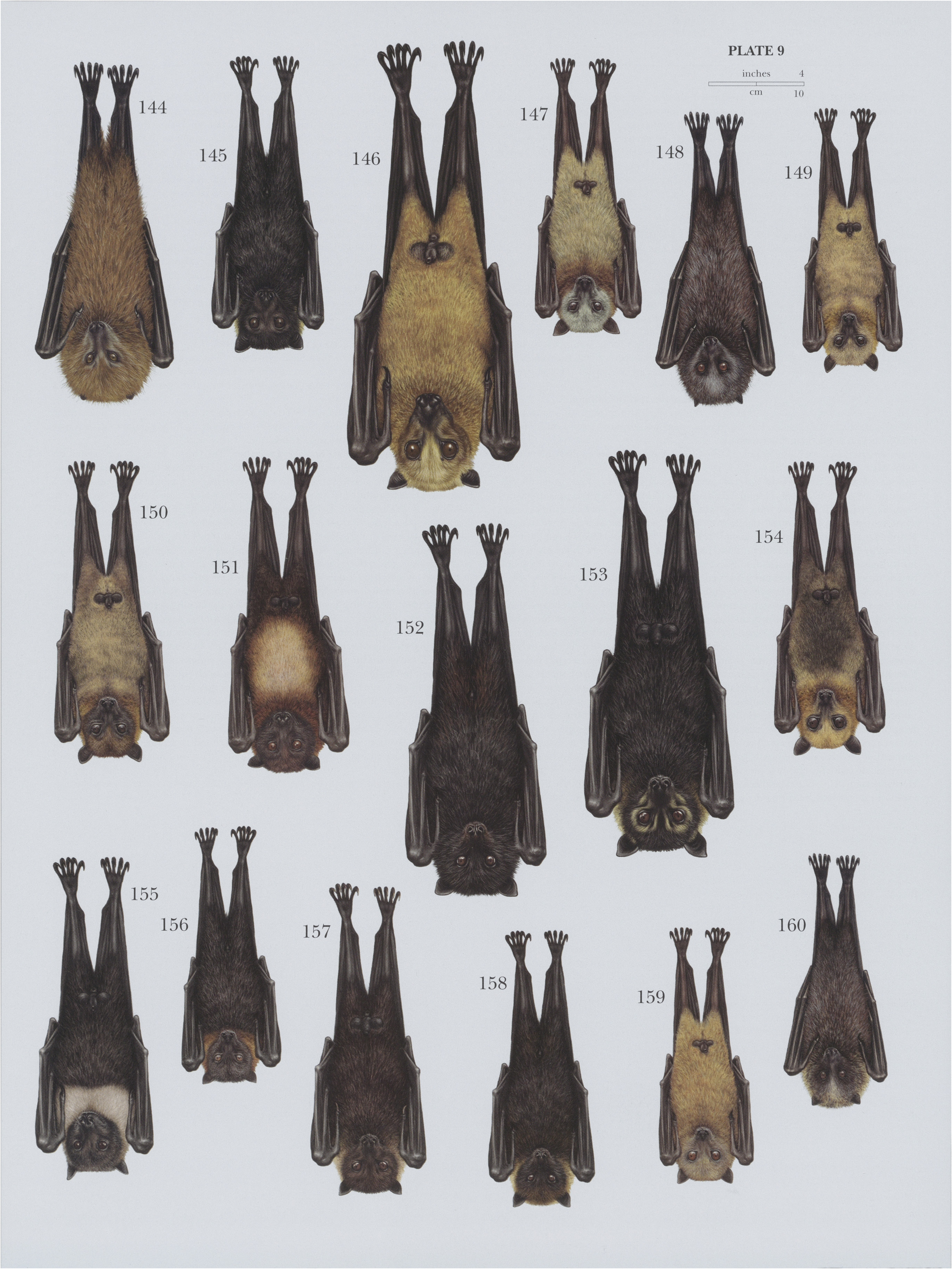
Foto: Don E. Wilson;Russell A. Mittermeier
Otoritas penamaan: Temminck, 1837 (1837)
Status taksonomi: ACCEPTED
Status konservasi (IUCN): LC Risiko Rendah
Dipublikasikan dalam: Monogr. Mamm. vol.2 p.75
Total Catatan di Indonesia
0
Provinsi Ditemukan
0
dari 38 provinsi
Catatan Pertama
0
tahun pertama tercatat
Tren Tahunan
+0%
+2000.0% vs 2011
Black Flying Fox (Pteropus alecto) termasuk dalam famili Pteropodidae, ordo Chiroptera, kelas Mammalia. Berdasarkan data yang terhimpun, spesies ini telah tercatat sebanyak 504 kali di Indonesia, tersebar di 6 provinsi. Catatan pertama tercatat pada tahun 1841.
Sulawesi Utara merupakan provinsi dengan catatan observasi terbanyak untuk spesies ini, dengan 56 catatan (11.1% dari total). Data distribusi ini mencerminkan akumulasi dari berbagai kegiatan survei, penelitian, dan kontribusi citizen science. Pola distribusi yang tercatat mungkin tidak sepenuhnya menggambarkan persebaran alami spesies, karena dipengaruhi oleh intensitas pengamatan di masing-masing wilayah.
Tren observasi tahunan Pteropus alecto menunjukkan peningkatan signifikan (+2000%) pada periode terakhir dibanding tahun sebelumnya, dengan catatan pertama pada tahun 1841.
Catatan deskriptif tentang Pteropus alecto dari sumber literatur primer (via GBIF).
Conservation: CITES – Appendix II. IUCN / SSC Action Plan (1992) – Not Threatened. IUCN 2003 – Lower Risk (lc).
Sumber: Order Chiroptera - Family Pteropodidae
Distribution: Sulawesi, Saleyer Isl, Lombok, Bawean Isl, Kangean Isls, Sumba Isl, and Savu Isl (Indonesia); N and E Australia; S New Guinea.
Sumber: Order Chiroptera - Family Pteropodidae
DISTRIBUTION: Sulawesi, Saleyer Isl, Lombok, Bawean Isl, Kangean Isis, Sumba Isl, and Savu Isl (Indonesia); N and E Australia; S New Guinea.
Sumber: Order Chiroptera
DISTRIBUTION: Sulawesi; N. and E. Australia; Saleyer Isl.; Lombok; Bawean Isl.; Kangean Isis.; Sumba Isl.; Savu Isl.; S. New Guinea.
Sumber: Order Chiroptera
Habitat. Coastal tropical and tropical moist broadleaf forests, mangroves, swamp forests, eucalypt open forests, bamboo groves, savanna woodlands, and modified landscapes (e. g. orchards or urban areas) from sea level up to elevations of ¢. 1000 m. The Black Flying Fox prefers coastal areas Food and Feeding. The Black Flying Fox feeds on fruits, flowers, nectar, and pollen. Major dietary items in Australia, including flowers, come from at least 16 plant genera in 12 families including figs (Ficus, Moraceae). In urban settings in Brisbane, Australia, it fed on Ficus; Oreodoxa and Syagrus (both Arecaceae); Celtis (Cannabaceae); Schefflera (Araliaceae); Mangifera (Anacardiaceae); and Eriobotrya (Rosaceae). It also ate nectar and pollen of native hybrid Grevillea (Proteaceae) and Callistemon (Myrtaceae). In Indonesia, it eats nectar from durian (Durio zibethinus, Malvaceae). It feeds primarily at canopies in rainforest sites, demonstrating some site fidelity although visitation to foraging sites can shift with seasonal resource shifts. Gut passage rate of under an hour combined with flying between foraging and roosting sites suggests that it is likely an important seed disperser for disjunct forest fragments.
Sumber: Pteropodidae
Movements, Home range and Social organization. The Black Flying Fox is generally gregarious and roosts colonially. In Papua New Guinea, colonies can contain several hundred up to 3000 individuals. In Australia, total population estimates vary widely (e. g. 108,000 - 250,000 individuals in 2016). In Sulawesi, it is the most common flying fox, but the population is threatened by repeated hunting events, and no total population estimates are available. Genetic evidence suggests that the Sulawesi nominate form is a single panmictic population. Using satellite telemetry, it has been recorded to fly 150 km between Papua New Guinea and Indonesia, with a maximum of 220 km covered in two days between roosts. Average nightly movement between roosts is 20 km. Movements vary greatly, and some individuals remain relatively sedentary where food is abundant. In Brisbane, individuals moved ¢. 26 km during nightly foraging. It roosts with other flying fox species, with some degree of physical segregation among species. Colonies leave roosts in a loose stream. During the day, it rests at roosts and exhibits typical pteropodine activity, such as wing flapping and occasional conspecific territorial interactions. In a study in Australia, active territorial defense was recorded by late January, with males scent-marking territories by rubbing neck glands on branches and tree trunks throughout the day. Territorial defense including displays (vocalizations or brief pursuits) or physical contact (wrestling or wing slapping) occurs in response to encroachment on defended branches.
Sumber: Pteropodidae
Nama-nama ilmiah lain yang pernah digunakan untuk Pteropus alecto dalam literatur taksonomi.
| Nama Sinonim | Otoritas | Status |
|---|---|---|
| Pteropus banakrisi | Richards & Hall, 2002 | SYNONYM |
| # | Provinsi | Catatan | % |
|---|---|---|---|
| 1 | Sulawesi Utara | 56 | 11.1% |
| 2 | Sulawesi Selatan | 22 | 4.4% |
| 3 | Nusa Tenggara Timur | 21 | 4.2% |
| 4 | Sulawesi Tengah | 4 | 0.8% |
| 5 | Gorontalo | 2 | 0.4% |
| 6 | Jawa Timur | 1 | 0.2% |
Jumlah catatan observasi Pteropus alecto di Indonesia per tahun
Pteropus alecto
Foto: Don E. Wilson;Russell A. Mittermeier
Pteropus alecto
Foto: Don E. Wilson;Russell A. Mittermeier
| Nama | Bahasa | Sumber |
|---|---|---|
| Black Flying Fox | Inggris | Mammal Species of the World |
| Black Flying-fox | Inggris | Catalogue of Life |
| Black flying fox | Inggris | The Paleobiology Database |
| Central Flying Fox | Inggris | Pteropodidae |
| Central Flying-fox | Inggris | Catalogue of Life |
| Kara Kanatayak | tur | Catalogue of Life |
| Raposa-Voadora-Negra | Portugis | Catalogue of Life |
| Renard volant noir | Prancis | Catalogue of Life |
| Roussette alecto | Prancis | Pteropodidae |
| Rudawka żałobna | pol | Catalogue of Life |
| Schwarzer Flughund | Jerman | Catalogue of Life |
| Volpe volante nera | Italia | Catalogue of Life |
| Zorro Volador Negro | Spanyol | Catalogue of Life |
| Zorro volador negro | - | Pteropodidae |
| fekete repülőkutya | hun | Catalogue of Life |
| kaloň vábivý | ces | Catalogue of Life |
| mustalenkko | fin | Catalogue of Life |
| Μαύρη Ιπτάμενη Αλεπού | ell | Catalogue of Life |
| Бавеанская летучая лисица | rus | Catalogue of Life |
| الثعلب الطائر الأسود | ara | Catalogue of Life |
Berdasarkan data 504 observasi, Sulawesi Utara adalah provinsi dengan catatan Black Flying Fox (Pteropus alecto) terbanyak — 56 observasi (11.1% dari total catatan di Indonesia). Spesies ini tersebar di 6 provinsi.
Catatan pertama Black Flying Fox (Pteropus alecto) di Indonesia tercatat pada tahun 1841. Hingga kini terdapat 504 catatan dari 6 provinsi, yang dihimpun dari survei lapangan, koleksi museum, dan platform citizen science.
Menurut IUCN Red List, Black Flying Fox (Pteropus alecto) berstatus "Risiko Rendah" (kode LC). Status ini mencerminkan tingkat risiko kepunahan global spesies, bukan khusus Indonesia.
Ya, Pteropus alecto memiliki 1 nama sinonim ilmiah, di antaranya: Pteropus banakrisi. Nama sinonim adalah nama-nama lain yang pernah digunakan untuk spesies yang sama dalam literatur taksonomi.
Pteropus alecto diklasifikasikan sebagai berikut: Kingdom Animalia, Phylum Chordata, Class Mammalia, Order Chiroptera, Family Pteropodidae, Genus Pteropus. Spesies ini dideskripsikan oleh Temminck, 1837.
91 titik observasi Pteropus alecto di Indonesia
Memuat peta...
Setiap titik merepresentasikan satu lokasi observasi yang tercatat. Klik titik untuk melihat detail.