Distribusieng
Subspecies and Distribution. C. p. prevostiiDesmarest, 1822 — SPeninsularMalaysia, fromSPahangandNegeriSembilanstatesextendingS. C. p. atricapillusSchlegel, 1863 — CBorneo, EWestKalimantanProvince, SoftheRajangRiver, andNCentralKalimantanProvince, Indonesia. C. p. atroxMiller, 1913 — EBorneo, NorthandEastKalimantanprovinces, Indonesia. C. p. borneoensisS. Miller & Schlegel, 1842 — WBorneo, inWestKalimantan, Indonesia, andadjoiningSWSarawak, Malaysia. C. p. caedisChasen & Kloss, 1932 — BanggiandBalembanganIs (offNBorneo), Malaysia. C. p. coomansiSody, 1949 — WBorneo, anislandintheKapuasRiverDelta, Indonesia. C. p. humeiBonhote, 1901 — WCPeninsularMalaysia, inSPerakandSelangorstates. C. p. melanopsMiller, 1902 — ESumatra, andlikelyRupatI (offEcoast). C. p. palustrisLyon, 1907 — WBorneo, justNoftheKapuasRiverinWestKalimantanProvince, Indonesia. C. p. piceusPeters, 1867 — NSumatra. C. p. plutoGray, 1867 — NBorneo, SabahandlikelyBrunei. C. p. rafflesiiVigors & Horsfield, 1828 — SSumatra. C. p. rufonigraGray, 1842 — LabuanI (offNWBorneo), Malaysia. C. p. sanggausLyon, 1907 — SWBorneo, WestKalimantanProvince, SoftheKapuasRiver, Indonesia. C. p. sarawakensisGray, 1867 — NWBorneo, Sarawak, Malaysia. C. p. waringensisSody, 1949 — CSBorneo, WCentralKalimantanProvince, Indonesia. C. p. wrayi Kloss 1910 — N Malay Peninsula, from theThai border into N Pahang and N Perak in Peninsular Malaysia. Subspecific affinities of the forms on SE Borneo mainland, Karimata I (off SW Borneo), Natuna and Belitung Is are unknown.
Sumber: Sciuridae
Deskripsieng
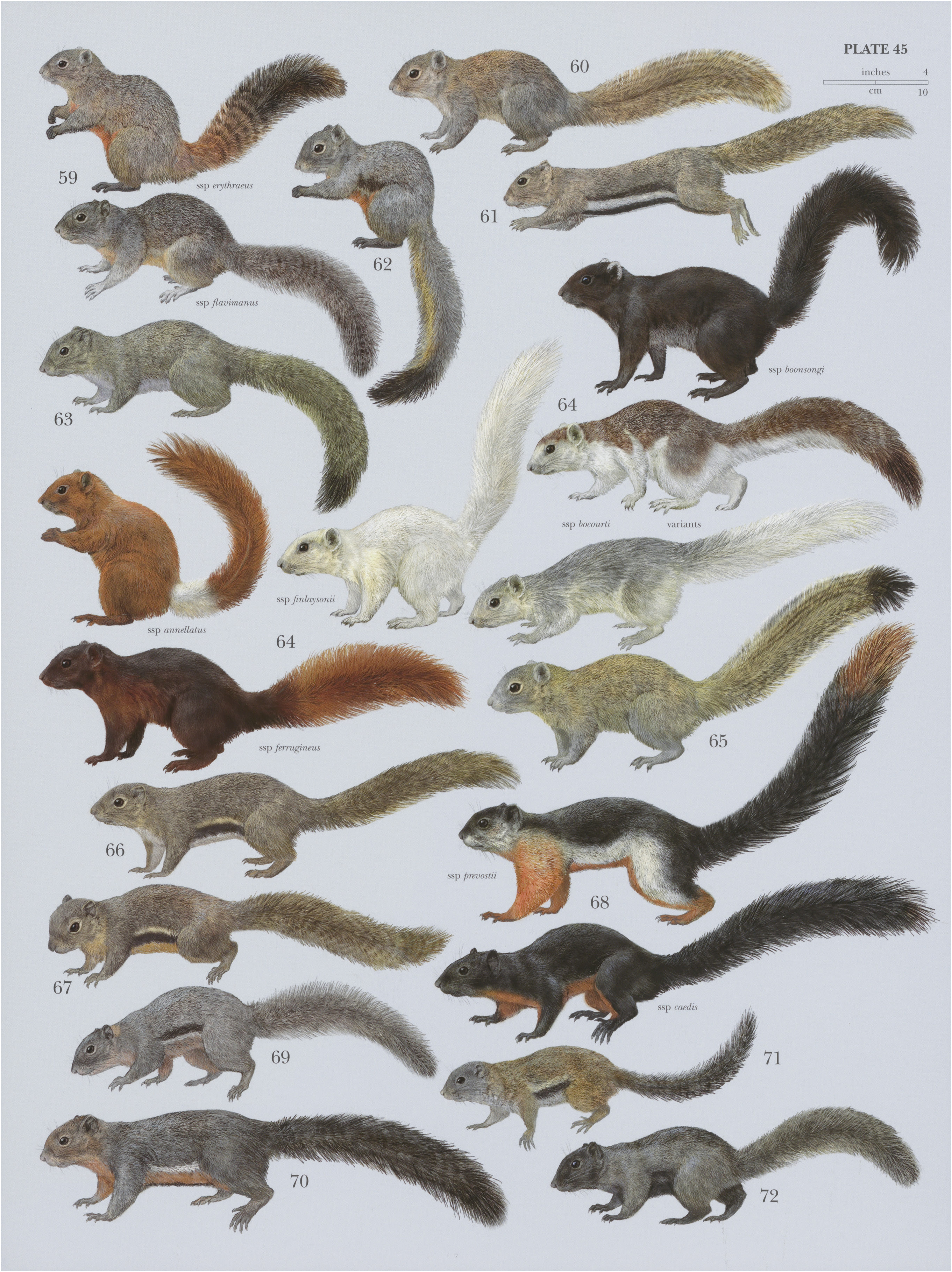
Descriptive notes. Head-body 237 - 241 mm, tail ¢. 230 mm; weight 353 - 403 g. Prevost’s squirrel is an exceedingly variable species, sometimes tricolored and sometimes bicolored, commonly with a red belly delineated from a black or dark dorsum by a white stripe. Nominate subspecies prevostii is black on dorsum, with a lateral white stripe extending uninterrupted from nose to white thigh; a thin black line, ventral to lateral white stripe, extends between limbs. White cheeks are slightly grizzled. Subspecies atricapillus has an olive buff dorsum, with a black head and rump. Subspecies atrox has a black tail, with dorsum grizzled olive-buff. Subspecies borneoensis has a black dorsum, with shoulders tinged with red; thighs are gray, and both thighs and tail are grizzled. It has a distinct white lateral stripe. Subspecies caedis is all black on dorsum, without a lateral white stripe. It is similar to but geographically disjunct from pluto and rufonigra. Subspecies coomansi has a black dorsum, with shoulders tinged bright rufus; thighs are gray, and both thighs and tail are grizzled. It has a distinct white lateral stripe. Subspecies humei has red on venter that spreads over entire forelimb and shoulder to black on dorsum, interrupting the white lateral stripe, which extends from shoulder onto thigh and down to heel. Subspecies melanops has black cheeks; a black dorsum; and a bright brownish red venter, extending as more rufous-orange onto forelimb, shoulder and onto black back; buffy white lateral stripe extends from shoulder onto thigh and down to heel. Subspecies palustris resembles borneoensis, butit lacks reddish tinge on shoulders. Subspecies piceus is black on dorsum and red on venter, with no lateralstripe. Subspecies pluto is all black on dorsum, without a lateral white stripe. It is similar to but geographically disjunct from caedis and rufonigra. Subspecies rafflesii is black dorsally and chestnut ventrally and on forelimb and shoulder; it has a white lateral stripe extending from shoulder and broadening posteriorly to thigh; cheeks are grizzled gray, with a white spot on sides of nose. Subspecies rufonigra is all black on dorsum, without a lateral white stripe. It is similar to, but geographically disjunct from, caedis and pluto. Subspecies sanggaus resembles borneoensis, but with paler shoulders and a completely black tail. Subspecies sarawakensis is grizzled gray over entire dorsum, usually with a reddish tinge anteriorly. Subspecies waringensis resembles sanggaus, but with paler thighs and less reddish shoulders. Subspecies wrayi is frequently considered to be the same as humei, because it differs only in having a less intense shoulder coloration.