
Distribusi
Breeding regions are PAL, AF, OR, AU. Breeding subregions are widespread.
Sumber: IOC World Bird List, v
Family Accipitridae · Order Accipitriformes
Data diperbarui secara berkala dari berbagai sumber observasi biodiversitas.
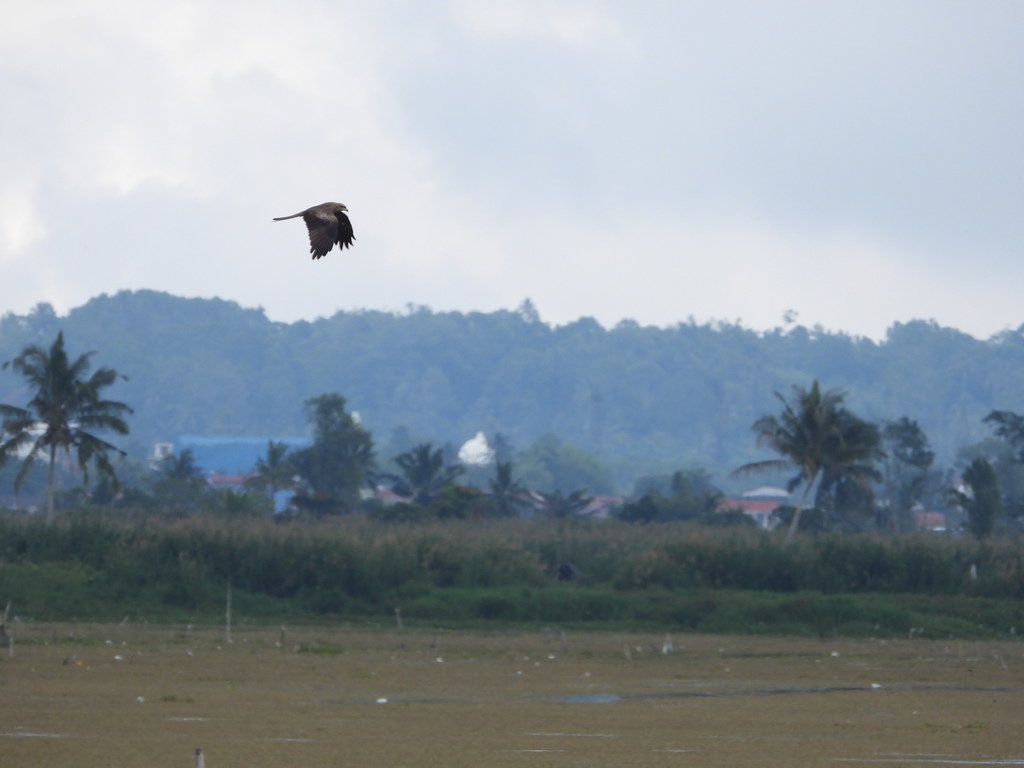
Foto: Светлана Царахова | http://creativecommons.org/publicdomain/zero/1.0/
Otoritas penamaan: (Boddaert, 1783) (1783)
Status taksonomi: ACCEPTED
Status konservasi (IUCN): LC Risiko Rendah
Dipublikasikan dalam: Table Planches Enlum. p. 28
Total Catatan di Indonesia
0
Provinsi Ditemukan
0
dari 38 provinsi
Catatan Pertama
0
tahun pertama tercatat
Tren Tahunan
-0%
-33.3% vs 2025
Elang paria (Milvus migrans) termasuk dalam famili Accipitridae, ordo Accipitriformes, kelas Aves. Berdasarkan data yang terhimpun, spesies ini telah tercatat sebanyak 1.144 kali di Indonesia, tersebar di 8 provinsi. Catatan pertama tercatat pada tahun 1916.
Sulawesi Selatan merupakan provinsi dengan catatan observasi terbanyak untuk spesies ini, dengan 34 catatan (3.0% dari total). Data distribusi ini mencerminkan akumulasi dari berbagai kegiatan survei, penelitian, dan kontribusi citizen science. Pola distribusi yang tercatat mungkin tidak sepenuhnya menggambarkan persebaran alami spesies, karena dipengaruhi oleh intensitas pengamatan di masing-masing wilayah.
Tren observasi tahunan Milvus migrans menunjukkan penurunan signifikan (-33%) pada periode terakhir dibanding tahun sebelumnya, dengan catatan pertama pada tahun 1916.
Catatan deskriptif tentang Milvus migrans dari sumber literatur primer (via GBIF).
Breeding regions are PAL, AF, OR, AU. Breeding subregions are widespread.
Sumber: IOC World Bird List, v
occurs in almost the entire Old Word and Australasia, and the nominotypical subspecies is highly migratory. It breeds in continental Europe, northwestern Africa and western Asia, and overwinters mainly south of the Sahara in Africa (Ferguson-Lees & Christie, 2001). Vagrant individuals have been recorded in New Zealand and on Hawaiian islands in the Pacific. One adult individual was recently recorded in the Saint Peter and Saint Paul Archipelago, 1,100 km away from the Brazilian coast, between April 16 th and May 17 th 2014, probably by following winds from northwestern Africa (Nunes et al., 2015) that are tangent to the main flyway used by this species when moving between the wintering and breeding areas in western Europe (Sergio et al., 2014).
Sumber: An overview of migratory birds in Brazil
Nama-nama ilmiah lain yang pernah digunakan untuk Milvus migrans dalam literatur taksonomi.
| Nama Sinonim | Otoritas | Status |
|---|---|---|
| Accipiter korschun | Gmelin, 1771 | SYNONYM |
| Falco ater | Gmelin | SYNONYM |
| Falco migrans | Boddaert, 1783 | HOMOTYPIC_SYNONYM |
| Milvus ater | — | SYNONYM |
| Milvus korschun | (Gmelin, 1771) | SYNONYM |
| Milvus korshun | Gmelin, 1770 | SYNONYM |
| # | Provinsi | Catatan | % |
|---|---|---|---|
| 1 | Sulawesi Selatan | 34 | 3.0% |
| 2 | Sulawesi Utara | 26 | 2.3% |
| 3 | Sulawesi Tengah | 7 | 0.6% |
| 4 | Papua | 7 | 0.6% |
| 5 | Nusa Tenggara Timur | 5 | 0.4% |
| 6 | Sumatera Selatan | 3 | 0.3% |
| 7 | Gorontalo | 3 | 0.3% |
| 8 | Maluku | 1 | 0.1% |
Jumlah catatan observasi Milvus migrans di Indonesia per tahun
Milvus migrans
Foto: Светлана Царахова
http://creativecommons.org/publicdomain/zero/1.0/Milvus migrans
Foto: Светлана Царахова
http://creativecommons.org/publicdomain/zero/1.0/Milvus migrans
Foto: Светлана Царахова
http://creativecommons.org/publicdomain/zero/1.0/Milvus migrans
Foto: Светлана Царахова
http://creativecommons.org/publicdomain/zero/1.0/Milvus migrans
Foto: Светлана Царахова
http://creativecommons.org/publicdomain/zero/1.0/Milvus migrans
Foto: Светлана Царахова
http://creativecommons.org/publicdomain/zero/1.0/Milvus migrans
Foto: achmadjaelani
http://creativecommons.org/licenses/by-nc/4.0/Milvus migrans
Foto: Yash Bhagwanji
http://creativecommons.org/licenses/by-nc/4.0/Milvus migrans
Foto: Rui Ribeiro
http://creativecommons.org/licenses/by/4.0/Milvus migrans
Foto: Rui Ribeiro
http://creativecommons.org/licenses/by/4.0/Milvus migrans
Foto: Rui Ribeiro
http://creativecommons.org/licenses/by/4.0/Milvus migrans
Foto: Rui Ribeiro
http://creativecommons.org/licenses/by/4.0/| Nama | Bahasa | Sumber |
|---|---|---|
| Alforocho negro | arg | Catalogue of Life |
| Astun Iswed | mlt | Catalogue of Life |
| BLKI | Inggris | Catalogue of Life |
| Barcud clustddu | cym | Catalogue of Life |
| Barcutiaid Du | cym | Catalogue of Life |
| Barged du | bre | Catalogue of Life |
| Barna kánya | hun | EUNIS Biodiversity Database |
| Bemanana | mlg | Catalogue of Life |
| Black Kite | Inggris | Integrated Taxonomic Information System (ITIS) |
| Black Kite (Black) | Inggris | The Clements Checklist |
| Brun glada | swe | EUNIS Biodiversity Database |
| Burung Helang Kembara Hitam | Melayu | Catalogue of Life |
| Crna lunja | srp | Catalogue of Life |
| Cúr Dhubh | gle | Catalogue of Life |
| Cúr cluadubh | gle | Catalogue of Life |
| Cúr dubh | gle | Catalogue of Life |
| Diều hâu đen | vie | Catalogue of Life |
| Elang paria | Indonesia | Catalogue of Life |
| Falcão | Portugis | Catalogue of Life |
| Fammanmooar doo | glv | Catalogue of Life |
Berdasarkan data 1.144 observasi, Sulawesi Selatan adalah provinsi dengan catatan Elang paria (Milvus migrans) terbanyak — 34 observasi (3.0% dari total catatan di Indonesia). Spesies ini tersebar di 8 provinsi.
Catatan pertama Elang paria (Milvus migrans) di Indonesia tercatat pada tahun 1916. Hingga kini terdapat 1.144 catatan dari 8 provinsi, yang dihimpun dari survei lapangan, koleksi museum, dan platform citizen science.
Menurut IUCN Red List, Elang paria (Milvus migrans) berstatus "Risiko Rendah" (kode LC). Status ini mencerminkan tingkat risiko kepunahan global spesies, bukan khusus Indonesia.
Di Indonesia dan Malaysia, Milvus migrans dikenal dengan beberapa nama lokal: Elang paria. Penamaan dapat berbeda antardaerah dan bahasa.
Ya, Milvus migrans memiliki 6 nama sinonim ilmiah, di antaranya: Accipiter korschun, Falco ater, Falco migrans. Nama sinonim adalah nama-nama lain yang pernah digunakan untuk spesies yang sama dalam literatur taksonomi.
Milvus migrans diklasifikasikan sebagai berikut: Kingdom Animalia, Phylum Chordata, Class Aves, Order Accipitriformes, Family Accipitridae, Genus Milvus. Spesies ini dideskripsikan oleh (Boddaert, 1783).
150 titik observasi Milvus migrans di Indonesia
Memuat peta...
Setiap titik merepresentasikan satu lokasi observasi yang tercatat. Klik titik untuk melihat detail.