Distribusieng
Range: The northern limit reaches the South Sea of Korea. The species is seldom observed around the coast of Korea (Kim 2004; Fig. 107).
Sumber: Mammals of Korea: a review of their taxonomy, distribution and conservation status
Family Delphinidae · Order Cetacea
Data diperbarui secara berkala dari berbagai sumber observasi biodiversitas.
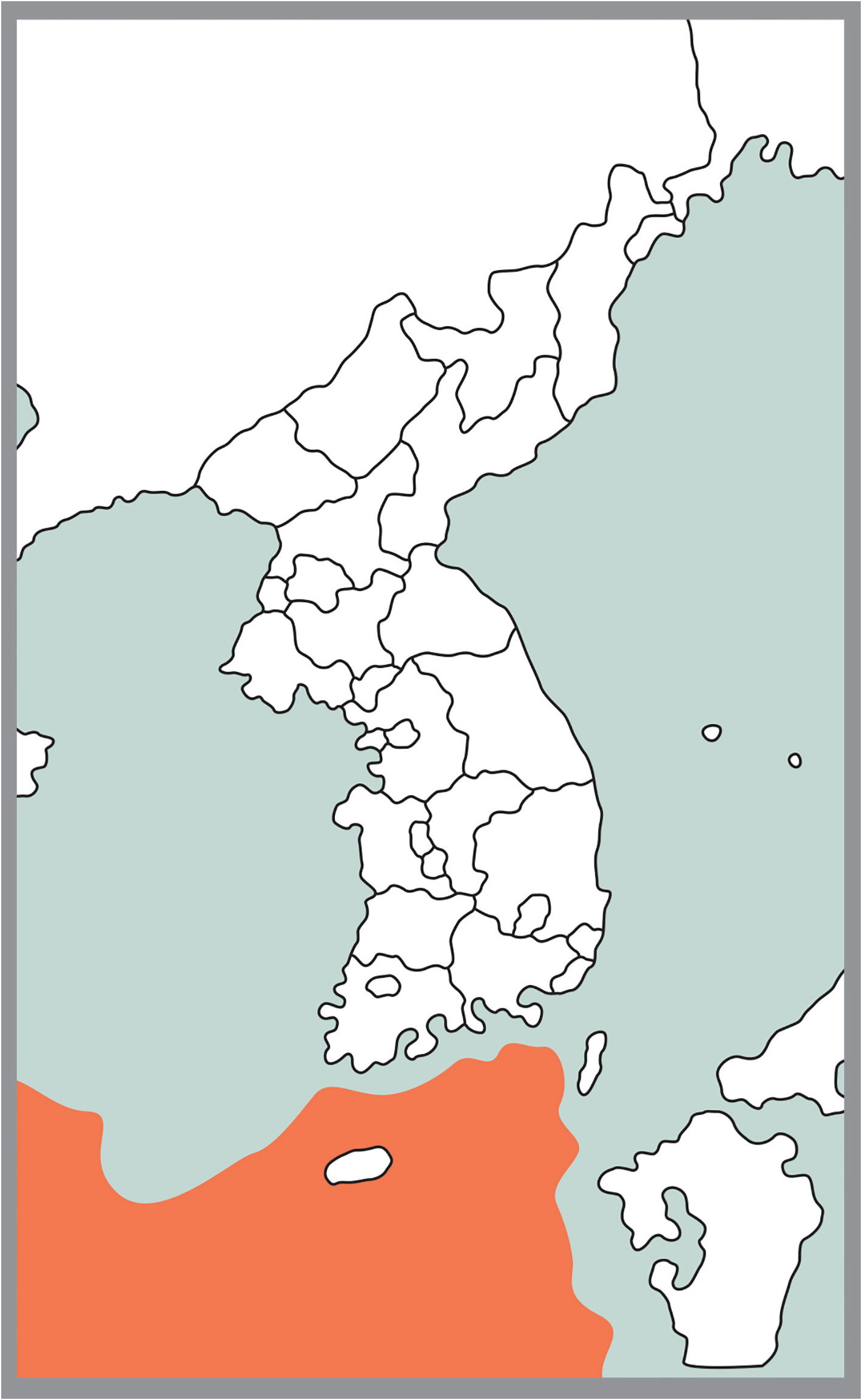
Foto: Jo, Yeong-Seok;Baccus, John T.;Koprowski, John L.
Otoritas penamaan: (Gray, 1828) (1828)
Status taksonomi: ACCEPTED
Status konservasi (IUCN): LC Risiko Rendah
Dipublikasikan dalam: Gray, J. E. (1828-1830). <i>Spicilegia zoologica; or, original figures and short systematic descriptions of new and unfigured animals</i>. Treüttel, Würtz & Co. & Wood. Parts I & II: part I, 1–8, pls. 1–6 (1 July 1828); part II, 9–12, pls. 7–11 (August 1830).
Total Catatan di Indonesia
0
Provinsi Ditemukan
0
dari 38 provinsi
Catatan Pertama
0
tahun pertama tercatat
Tren Tahunan
-0%
-44.4% vs 2025
Lumba-Lumba Moncong Panjang (Stenella longirostris) termasuk dalam famili Delphinidae, ordo Cetacea, kelas Mammalia. Berdasarkan data yang terhimpun, spesies ini telah tercatat sebanyak 182 kali di Indonesia, tersebar di 11 provinsi. Catatan pertama tercatat pada tahun 1903.
Bali merupakan provinsi dengan catatan observasi terbanyak untuk spesies ini, dengan 50 catatan (27.5% dari total). Data distribusi ini mencerminkan akumulasi dari berbagai kegiatan survei, penelitian, dan kontribusi citizen science. Pola distribusi yang tercatat mungkin tidak sepenuhnya menggambarkan persebaran alami spesies, karena dipengaruhi oleh intensitas pengamatan di masing-masing wilayah.
Tren observasi tahunan Stenella longirostris menunjukkan penurunan signifikan (-44%) pada periode terakhir dibanding tahun sebelumnya, dengan catatan pertama pada tahun 1903.
Catatan deskriptif tentang Stenella longirostris dari sumber literatur primer (via GBIF).
Range: The northern limit reaches the South Sea of Korea. The species is seldom observed around the coast of Korea (Kim 2004; Fig. 107).
Sumber: Mammals of Korea: a review of their taxonomy, distribution and conservation status
DISTRIBUTION: Worldwide: warm-temperate to tropical waters.
Sumber: Order Cetacea
Habitat. Inshore waters ofislands and banks in tropical areas. In Hawaii, Spinner Dolphins are known to use shallow bays for resting during the day. In the eastern tropical Pacific Ocean, they prefer warm pools on high seas. These are warm water masses characterized by a shallow mixed layer overlying a thermocline, high sea-surface temperatures that vary little throughout the year, and high primary productivity. The Dwarf Spinner Dolphin prefers shallow coral reefs, and the white-belly form prefers habitat similar to the Pantropical Spotted Dolphin (S. attenuata).
Sumber: Delphinidae
Movements, Home range and Social organization. In French Polynesia, groups of Spinner Dolphins consist of a few dozen to more than 100 individuals, but groups of more than 1000 individuals have been documented. In the eastern tropical Pacific Ocean, Spinner Dolphins travel in large mixed-species groups with the Pantropical Spotted Dolphin and yellowfin tuna (Thunnus albacares). Interactions with Pantropical Spotted Dolphins include traveling, aggression, and sexual activity. Social structure of the Spinner Dolphin appears, at least in some cases, to be based on family units with more fluid associations among unrelated individuals. In this fission — fusion structure, large groups will often break apart and reform with different subgroup memberships throughout the day and for different activities. A population of Spinner Dolphins off the south-eastern Hawaiian Archipelago seems to be structured this way. This contrasts with another population in the north-western part of the Archipelago that is characterized by highly stable, long-term associations. These more stable associations have been linked to greater gene flow and may be influenced by habitat and resource variability throughout the Archipelago. This population appears to be isolated from other populations of Spinner Dolphins in the Pacific Ocean and demonstrates that there can be variable genetic and social structures even between closely related populations. In offshore waters of the eastern Pacific Ocean, there is some evidence of segregation by sex and age classes. Movements of Spinner Dolphins may be associated with warm-water currents, such as the Kuroshiro Current offJapan. Site fidelity of Spinner Dolphins is high off Hawaii and in French Polynesia.
Nama-nama ilmiah lain yang pernah digunakan untuk Stenella longirostris dalam literatur taksonomi.
| Nama Sinonim | Otoritas | Status |
|---|---|---|
| Champsodelphis longirostris | Keferst, 1834 | SYNONYM |
| Champsodelphis renoui | (Laurillard, 1844) | SYNONYM |
| Champsodelphis renovi | (Laurillard, 1844) | SYNONYM |
| Champsodelphis stenorhynchus | (Holl, 1829) | SYNONYM |
| Clymene stenorhynchus | Gray, 1866 | SYNONYM |
| Clymenia longirostris | Flower, 1884 | SYNONYM |
| Clymenia roseiventris | Flower, 1884 | SYNONYM |
| Clymenia stenorhynchus |
| # | Provinsi | Catatan | % |
|---|---|---|---|
| 1 | Bali | 50 | 27.5% |
| 2 | Nusa Tenggara Timur | 28 | 15.4% |
| 3 | Sulawesi Utara | 8 | 4.4% |
| 4 | Maluku | 7 | 3.8% |
| 5 | Papua Barat | 7 | 3.8% |
| 6 | Nusa Tenggara Barat | 5 | 2.7% |
| 7 |
Jumlah catatan observasi Stenella longirostris di Indonesia per tahun
Stenella longirostris
Foto: Jo, Yeong-Seok;Baccus, John T.;Koprowski, John L.
Stenella longirostris
Foto: Russell A. Mittermeier;Don E. Wilson
Stenella longirostris
Foto: Russell A. Mittermeier;Don E. Wilson
| Nama | Bahasa | Sumber |
|---|---|---|
| Central American Spinner Dolphin | Inggris | Catalogue of Life |
| Central American spinner | Inggris | Catalogue of Life |
| Dauphin a long bec | Prancis | Delphinidae |
| Dauphin à long bec | Prancis | Catalogue of Life |
| Delfin girador | - | Delphinidae |
| Delfín Tornillón | Spanyol | Catalogue of Life |
| Delfín girador | Spanyol | Mamíferos de Colombia |
| Delfín tornillo | Spanyol | Integrated Taxonomic Information System (ITIS) |
| Dwarf Spinner Dolphin |
Berdasarkan data 182 observasi, Bali adalah provinsi dengan catatan Lumba-Lumba Moncong Panjang (Stenella longirostris) terbanyak — 50 observasi (27.5% dari total catatan di Indonesia). Spesies ini tersebar di 11 provinsi.
Catatan pertama Lumba-Lumba Moncong Panjang (Stenella longirostris) di Indonesia tercatat pada tahun 1903. Hingga kini terdapat 182 catatan dari 11 provinsi, yang dihimpun dari survei lapangan, koleksi museum, dan platform citizen science.
Menurut IUCN Red List, Lumba-Lumba Moncong Panjang (Stenella longirostris) berstatus "Risiko Rendah" (kode LC). Status ini mencerminkan tingkat risiko kepunahan global spesies, bukan khusus Indonesia.
Di Indonesia dan Malaysia, Stenella longirostris dikenal dengan beberapa nama lokal: Lumba-Lumba Moncong Panjang, lumba-lumba paruh panjang, lumba-lumba peruh panjang, lumba-lumba perut marah. Penamaan dapat berbeda antardaerah dan bahasa.
Ya, Stenella longirostris memiliki 12 nama sinonim ilmiah, di antaranya: Champsodelphis longirostris, Champsodelphis renoui, Champsodelphis renovi. Nama sinonim adalah nama-nama lain yang pernah digunakan untuk spesies yang sama dalam literatur taksonomi.
Stenella longirostris diklasifikasikan sebagai berikut: Kingdom Animalia, Phylum Chordata, Class Mammalia, Order Cetacea, Family Delphinidae, Genus Stenella. Spesies ini dideskripsikan oleh (Gray, 1828).
Sumber: Delphinidae
Status and Conservation. CITES Appendix II. Classified as Data Deficient on The IUCN Red List. The Eastern Spinner Dolphin is listed as Vulnerable, and the Central American Spinner Dolphin and the Dwarf Spinner Dolphin have not been assessed. There are ¢. 801,000 Spinner Dolphins in the eastern tropical Pacific Ocean. The Eastern Spinner Dolphin has been impacted tuna purse-seine fisheries in the eastern tropical Pacific Ocean and currently numbers ¢. 613,000 individuals; it is recovering only at a growth rate of 1 - 1 % / year. There are 11,971 Spinner Dolphins in the northern Gulf of Mexico and 3351 individuals in Hawaiian waters. There are currently no abundance estimates for the Dwarf Spinner Dolphin. In the Philippines and Malaysia, there are ¢. 35,000 Spinner Dolphins. Many regions in the Pacific, Indian, and Atlantic oceans have not yet been surveyed, but known abundances add up to more than 1,000,000 individuals overall. Gray’s Spinner Dolphin is likely composed of several distinct populations; genetics has revealed limited gene flow among neighboring island communities in the western tropical Pacific Ocean, and even among the Hawaiian Islands gene flow is limited. The Spinner Dolphin is susceptible to tuna purse-seine fisheries in the eastern tropical Pacific Ocean. The Eastern Spinner Dolphin is estimated to have been depleted by c. 65 % since 1959 as a result of kills in this fishery. Mortality has been greatly reduced since the introduction of mortality limits by the Inter-American Tropical Tuna Commission, but the Eastern Spinner Dolphin appears to be recovering very slowly. Stress from continued fisheries encounters and mortality due to offspring separation or orphaning may be having long-term negative effects on the population. Spinner Dolphins also are taken incidentally in gillnet, trawl, and purse-seine fisheries throughout their distribution. They are the most abundant delphinid in the Indian Ocean, and annual takes in fisheries number in the hundreds per year off India and up to several thousand per year off Sri Lanka. Catch rates are unknown in other areas, including the Atlantic Ocean, especially in fisheries operating off West Africa. Incidental catches off the Philippines and Venezuela are used for shark bait and human consumption. The Spinner Dolphin is intentionally caught for these purposes in the Caribbean and off Sri Lanka, Philippines, Indonesia, and Taiwan. The Spinner Dolphin is also vulnerable to shrimp trawlers in the Gulf of Thailand. Spinner Dolphins rest in shallow bays during the day in some areas off Brazil, Hawaii, Bali, and Indonesia, and they may be increasingly susceptible to harassment from growing dolphin-watching activity.
Sumber: Delphinidae
Descriptive notes. Total length 129 - 280 cm (males) and 138 - 211 cm (females); weight up to 80 kg (males) and up to 63 kg (females). Neonates are 50 - 80 cm long and weigh 5 - 10 kg. Generally, “ Gray’s Spinner Dolphin ” (S. I. longirostris) and the “ Central American Spinner Dolphin ” (S. L centroamericana) are heavier and longer than the “ Eastern Spinner Dolphin ” (S. L orientalis). The “ Dwarf Spinner Dolphin ” (S. I. rosetventris) is smallest subspecies, as the name implies. The Spinner Dolphin has slender build; very long, thin beak; and slender curved flippers. Depending on subspecies and sex, moderately sized dorsal fins vary from falcate to triangular, with males tending to have more triangular dorsal fins. In the Eastern Spinner Dolphin, dorsal fin may be recurved, giving a look of backward placement — especially prominent in older males. Older males also have post-anal protrusion or keel, which is particularly sexually dimorphic in the Eastern Spinner Dolphin and the Central American Spinner Dolphin, but less so in Gray’s Spinner Dolphin. Adult male Eastern Spinner Dolphins and Central American Spinner Dolphins may also have upturned fluke tips. Beak tips and lips are dark gray, and bodyis three-toned, comprising a dark-gray dorsal cape, paler gray flanks, and white (pink-tinged) belly, throat, and lower jaw. The Eastern Spinner Dolphin and the Central American Spinner Dolphin are not three-toned but instead are monotone dark gray, with white patches around urogenital area and in “ armpit ” areas. There is also usually dark strip extending from eye posteroventrally to flipper joint. Another form, called the white-belly Spinner Dolphin, seems to be a hybrid between Gray’s Spinner Dolphin and the Eastern Spinner Dolphin. It is characterized by more robust build and two-tone color pattern, but sexual dimorphism is not as exaggerated as it is in the Eastern Spinner Dolphin. There may be other, more subtle morphological differences among populations. Neonates have more muted color patterns that are otherwise similar to adult patterns. There are 40 - 60 pairs of small, conical teeth in each jaw, except the Dwarf Spinner Dolphin has only 40 - 52 teeth in each jaw.
Sumber: Delphinidae
| Gray, 1868 |
| SYNONYM |
| Delphinus longirostris | Gray, 1828 | HETEROTYPIC_SYNONYM |
| Delphinus renoui | (Laurillard, 1844) | SYNONYM |
| Delphinus renovi | (Laurillard, 1844) | SYNONYM |
| Delphinus stenorhynchus | Gray, 1866 | SYNONYM |
| Sulawesi Tengah |
| 5 |
| 2.7% |
| 8 | Maluku Utara | 4 | 2.2% |
| 9 | Aceh | 2 | 1.1% |
| 10 | Sumatera Barat | 1 | 0.5% |
| 11 | Papua | 1 | 0.5% |
| Inggris |
| Delphinidae |
| Eastern Spinner Dolphin | Inggris | Delphinidae |
| Golfinho-fiandeiro | Portugis | Catalogue of Life |
| Golfinho-rotador | Portugis | Catalogue of Life |
| Gray's Spinner Dolphin | Inggris | Catalogue of Life |
| Gray's spinner | Inggris | Catalogue of Life |
| Langnæbbet delfin | dan | Catalogue of Life |
| Langschnauzen-Delfin | Jerman | Catalogue of Life |
| Long-beaked Dolphin | Inggris | Delphinidae |
| Long-snouted Dolphin | Inggris | Catalogue of Life |
| Lumba-Lumba Moncong Panjang | Indonesia | Catalogue of Life |
| Naiʻa | - | Catalogue of Life |
150 titik observasi Stenella longirostris di Indonesia
Memuat peta...
Setiap titik merepresentasikan satu lokasi observasi yang tercatat. Klik titik untuk melihat detail.