Biologi & Ekologieng
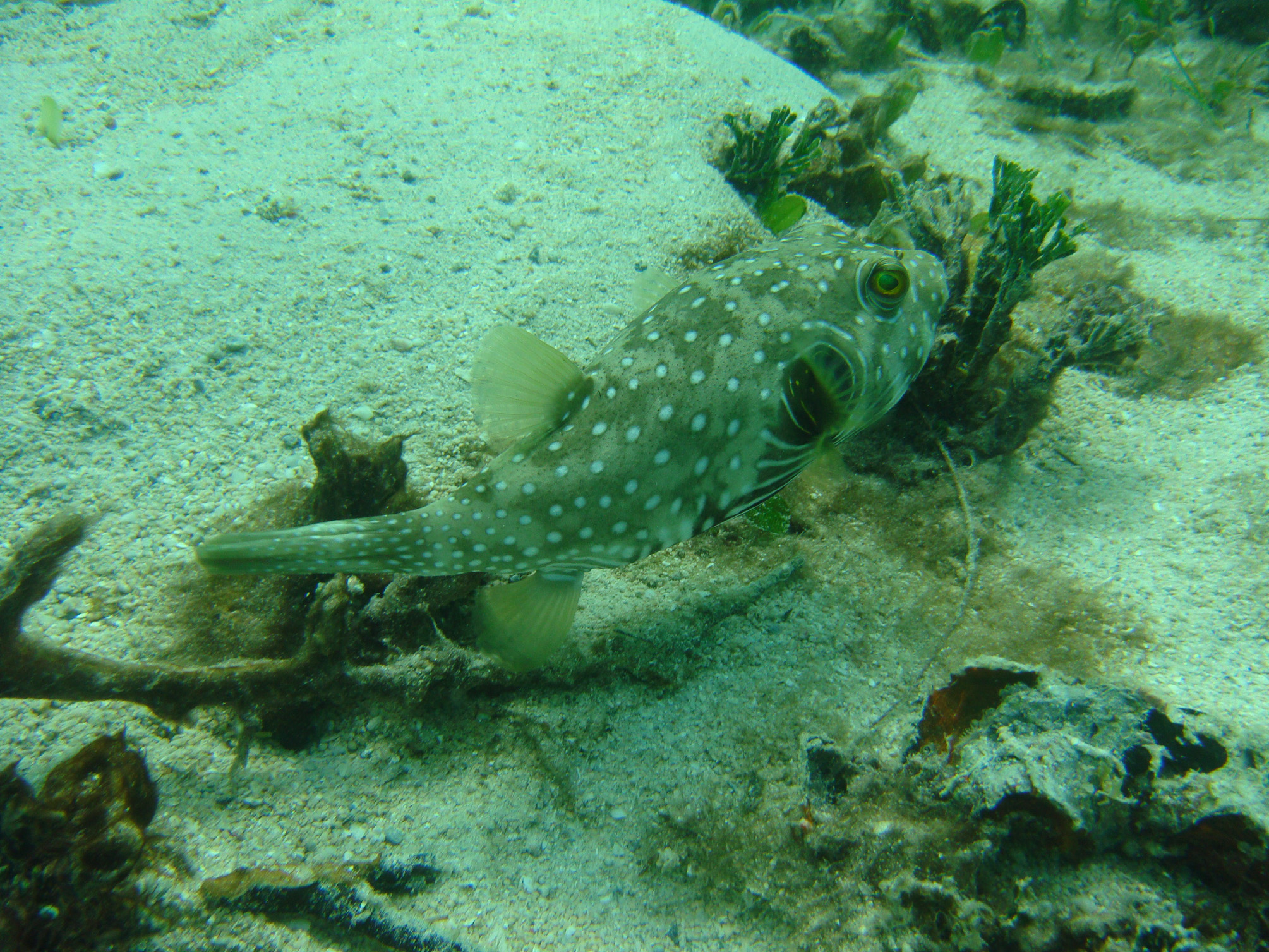
Biology and fishery. Epibenthic, benthopelagic and mainly marine. Inhabit outer reef slopes to depths of at least 50 m, inner reef flats and lagoons. Juveniles are common in weedy areas of estuaries. Also found in coastal bays and estuaries, usually near rocky reefs or on sand-stretches between reefs with algae-rubble to about 20 meters depth, or in shallow areas with sparse sea grass growth. Usually solitary and territorial on sandy to rubble areas. Feed on fleshy, calcareous, or coralline algae, detritus, mollusks, tunicates, sponges, corals, zoanthid anemones, crabs, tube worms and echinoderms. Length ranged from 12.5 to 55 cm TL male / unsexed, generally caught with fishing trawls.
Sumber: Distribution of Tetraodontiformes (Family: Tetraodontidae) along the Parangipettai Coast, Southeast coast of India
Deskripsieng
Description of species. Dorsal soft spines (total): 10 – 11; Pectoral soft spines: 16 – 17; Anal soft spines: 11 – 12; Caudal soft spines: 8 The body is generally greenish-brown in color, the back, sides and caudal fin profusely speckled with white spots, and the belly marked with white bars. A single bent lateral line. Entire body covered with small spines except around snout and caudal peduncle and each nostril with two fleshy solid tentacles. Restricted gill opening.
Sumber: Distribution of Tetraodontiformes (Family: Tetraodontidae) along the Parangipettai Coast, Southeast coast of India
Deskripsieng
Stripebelly Puffer or White-spotted Pufferfish. To 52 cm (20.5 in) TL (Kulbicki et al. 2005). Indo-Pacific; western Pacific Ocean north to Yonaguni-jima Island, Japan (Koeda et al. 2016); Todos Santos area (23 ° 24.6 ’ N, 110 ° 13.8 ’ W) (Personal communication: Scripps Institution of Oceanography Fish Collection, La Jolla, California) and tip of Baja California to Colombia (Robertson and Allen 2015), including Islas Galápagos (Grove and Lavenberg 1997); not in Gulf of California (Robertson and Allen 2015). Benthic; depth: intertidal to 122 m (400 ft) (min.: Kwun et al. 2017; max.: Weijerman et al. 2019).
Sumber: Checklist of marine and estuarine fishes from the Alaska-Yukon Border, Beaufort Sea, to Cabo San Lucas, Mexico
Distribusieng
Distribution and habitat. New Ireland: 1, 2. — General distribution: Red Sea, East and South Africa, Madagascar and western Mascarenes east to Panama, north to southern Japan, Ogasawara and Hawaiian islands, south to Lord Howe and Rapa islands. Found in seaward coral reef slopes, inner reef flats and lagoons; juveniles in seagrass areas including estuaries, 1 – 50 m depth. Transitional water and marine.
Sumber: Checklist of the marine and estuarine fishes of New Ireland Province, Papua New Guinea, western Pacific Ocean, with 810 new records