Deskripsieng
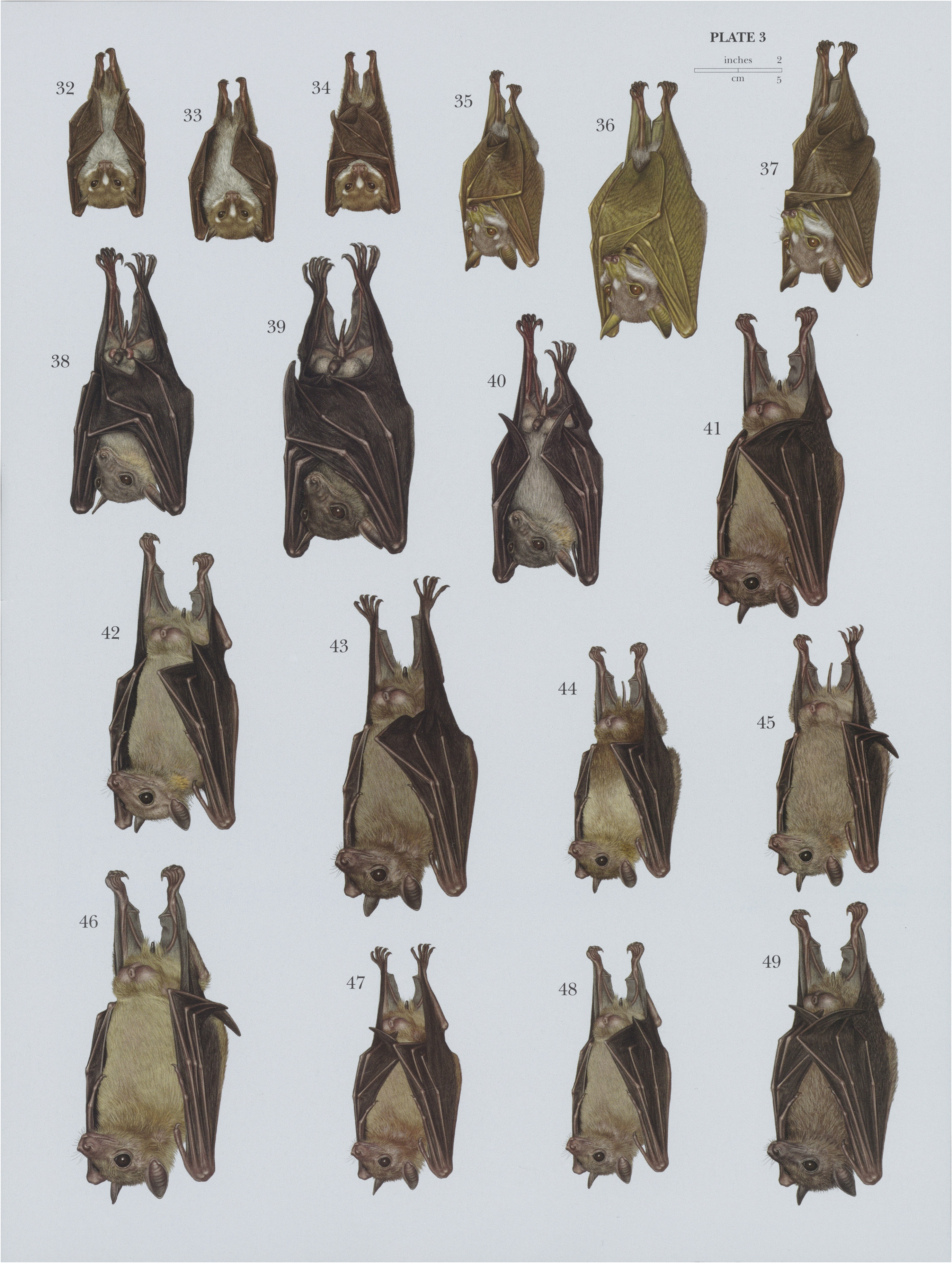
Descriptive notes. Head — body 79 - 5 - 130 mm, tail 11 - 25 mm, ear 17 - 24 mm, hindfoot 15 - 24 mm, forearm 61 - 80 mm; weight 40 - 79 - 5 g. The Lesser Dawn Bat is small to medium-sized, with elongated narrow snout and head, a long-pointed tongue with papillae at tip, and no claw on second finger. Males are generally larger (¢. 20 % larger by weight) than females and have ruff of elongated hairs on side of neck. Size is the primary distinction between subspecies; winnyaeis smallest. Pelage is short and velvety. Dorsal pelage ranges from brownish gray to dark brown and rarely blackish brown, is relatively uniform in color from head to rump, and often tinged with yellow or orange around neck. Ventral pelage is generally lighter and grayer than dorsum and darker around genitals. Ears are bluntly pointed, medium in length, and dark brown; eyes are large, with dark reddish-brown irises. Wings, legs, and uropatagium are dark brown. Arms are lightly covered in brown hairs. Both sexes have unique, well-developed, kidney-shaped anal glands on either side of anus, being smaller in younger individuals and largest in breeding males (with strong and distinct odor). Tail is short, covered sparsely with hairs, and dark brownish; uropatagium attaches at base of tail and short keel at ankles, giving V-shaped gap wheretail is. Second digit of wing lacks a claw, and metacarpals offifth digit are much shorter than metacarpals of third digit; skin over wing bones is pigmented. Skull is elongated, with long rostrum; anterior premaxillae are in contact or slightly divided; and braincaseis heavily deflected downward. Dental formula for all species of Eonycterisis 12 / 2, C 1 / 1, P 3 / 3, M 2 / 3 (x 2) = 34. Teeth are sharp and not as reduced as in some nectarfeeding bats, although molars and premolars have considerably reduced cusps and are narrow and elongated. M, is very small, and P, is occasionally missing. Upper incisors are small and triangular, C! is relatively long, and C, is small, simple, and heavily curved outward. Chromosomal complement has 2 n = 36 and FN = 68 (Java and Thailand) or 66 (Malaysia).
Sumber: Pteropodidae