
Distribusieng
Distribution. Red Sea, Indo-West Pacific: East Africa, South Africa and Socotra east to Wake Atoll, Marshall Islands and Pitcairn Group, north to southern Japan and Ogasawara Islands, south to Western Australia, Lord Howe Island, Norfolk Island, New Caledonia, Tonga and Rapa. Conservation. IUCN: Global (LC: 21 November 2016). Capture and threats: Unknown. Occurrence: Very rare. Non-indigenous species, no conservation action needed.
Sumber: The marine ichthyofauna of Lebanon: an annotated checklist, history, biogeography, and conservation status
Distribusieng
Distribution and habitat. New Ireland: 2. — General distribution: Red Sea, East and South Africa east to Wake Atoll, Marshall Islands and Pitcairn Group, north to southern Japan and Ogasawara Islands, south to Western Australia, Lord Howe Island, Norfolk Island, New Caledonia, Tonga and Rapa. Found in coastal and offshore reefs, 3 – 160 m depth. Transitional water, marine.
Sumber: Checklist of the marine and estuarine fishes of New Ireland Province, Papua New Guinea, western Pacific Ocean, with 810 new records
Deskripsieng
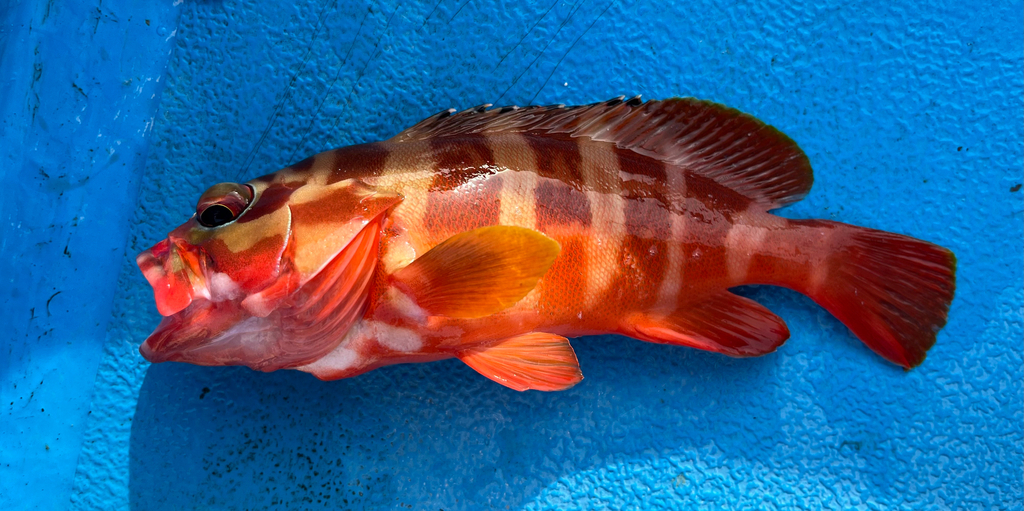
Epinephelus fasciatus: Báez et al., 2019: suppl. tab. (C) (as to be confirmed). An Indo-Pacific warm-affinity species, ranging from the Red Sea to Port Alfred, South Africa in the west, and throughout the western and central Pacific (Craig et al., 2011; Froese and Pauly, 2020). It is a single-record non-native species in the Canaries, from where it has been recently first recorded based on a 30 cm TL adult caught in June 2018 close to the Port of Las Palmas, Gran Canaria (Falcón et al., 2018).
Sumber: Review of the family Serranidae (Perciformes) from the Canary Islands (eastern-central Atlantic), with the first records of Serranus hepatus and Epinephelus aeneus