
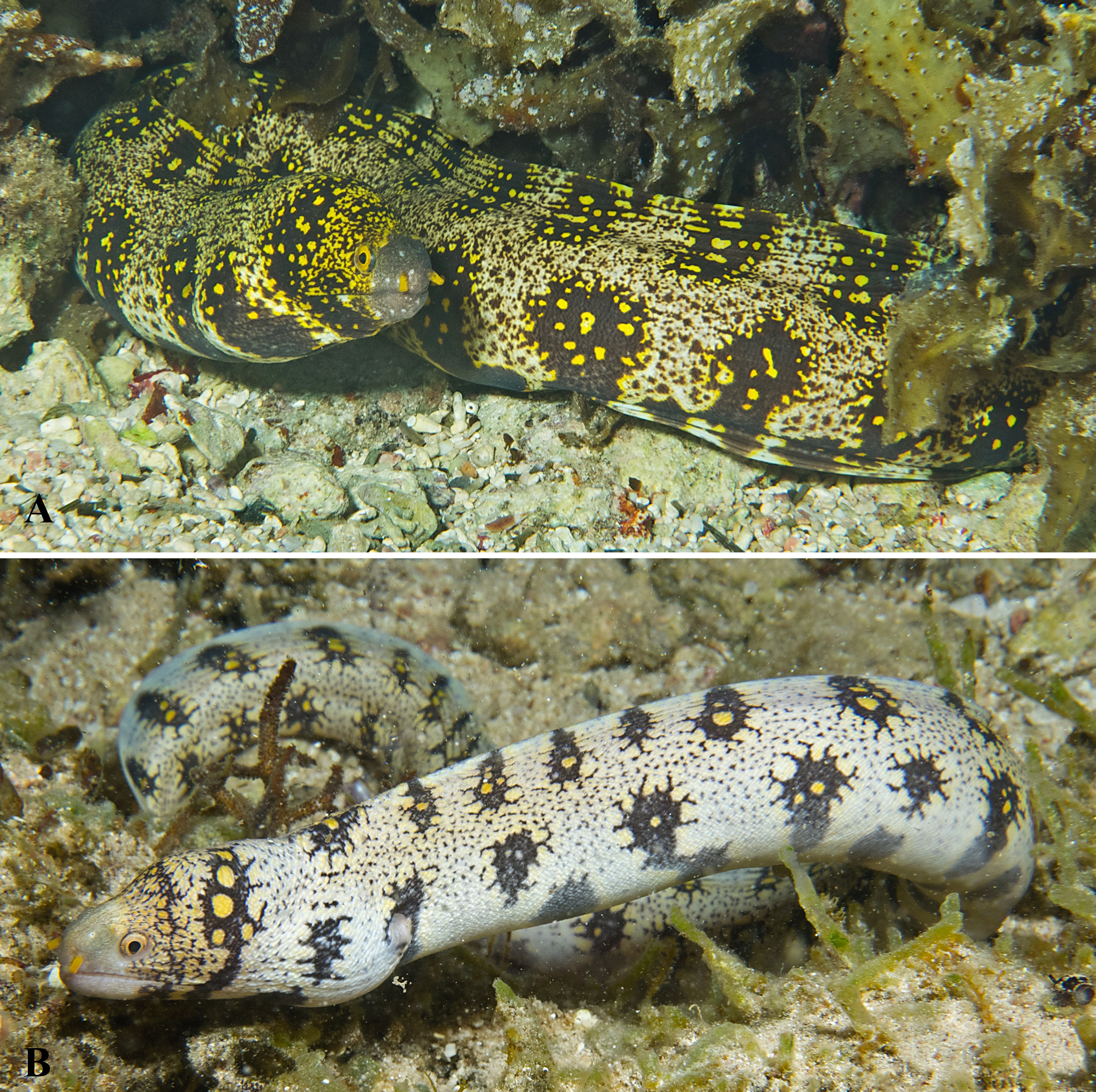
Description. In TL: preanal length 1.9 – 2.1, predorsal length 8.9 – 12, head length 8.1 – 11, body depth at anus 18 – 26. In head length: snout length 5.6 – 7.0, eye diameter 9.3 – 13, upper-jaw length 2.6 – 3.7. Pores: LL 2, SO 3, IO 4, POM 6. Vertebrae: predorsal 4 – 6, preanal 54 – 58, total 119 – 125. Body moderately stout, generally deeper with growth; anus near midlength; dorsal fin begins slightly anterior to gill opening; anal fin begins immediately behind anus. Head moderate in length, snout relatively short and deep. Eye moderately small, closer to rictus than to snout tip. Teeth stout, triangular to molariform. Intermaxillary with ca 5 – 6 peripheral teeth on each side, triangular to bluntly pointed, slightly retrorse, with finely serrate posterior margins in larger individuals; 0 – 3 median teeth bluntly pointed. Maxillary teeth uniserial, ca 6 – 10 on each side, bluntly pointed. Dentary teeth somewhat variable, uniserial or biserial with an outer row of small nodular teeth and an anterior inner row of 2 – 3 larger, stout, bluntly conical teeth; posterior to this point a single series of teeth, which in some cases appear to be a continuation of the inner series, in other cases a continuation of the outer series; in largest specimen examined, teeth become multiserial and molariform posteriorly. Vomerine teeth biserial, large and molariform, ca 6 – 10 on each side. Color: light gray, white or pale brown (darker with growth), finely flecked with black, with two longitudinal rows of large, complex snowflake-like black blotches (those of ventral row are vertically elongate), containing one or more yellow spots and irregular dark edges; anterior tip of snout and lower jaw varying from white to gray; iris and anterior nostrils yellow.
Sumber: Review of the moray eels (Anguilliformes: Muraenidae) of the Red Sea, with description of a new species