
Family Cucurbitaceae · Order Cucurbitales
Data diperbarui secara berkala dari berbagai sumber observasi biodiversitas.
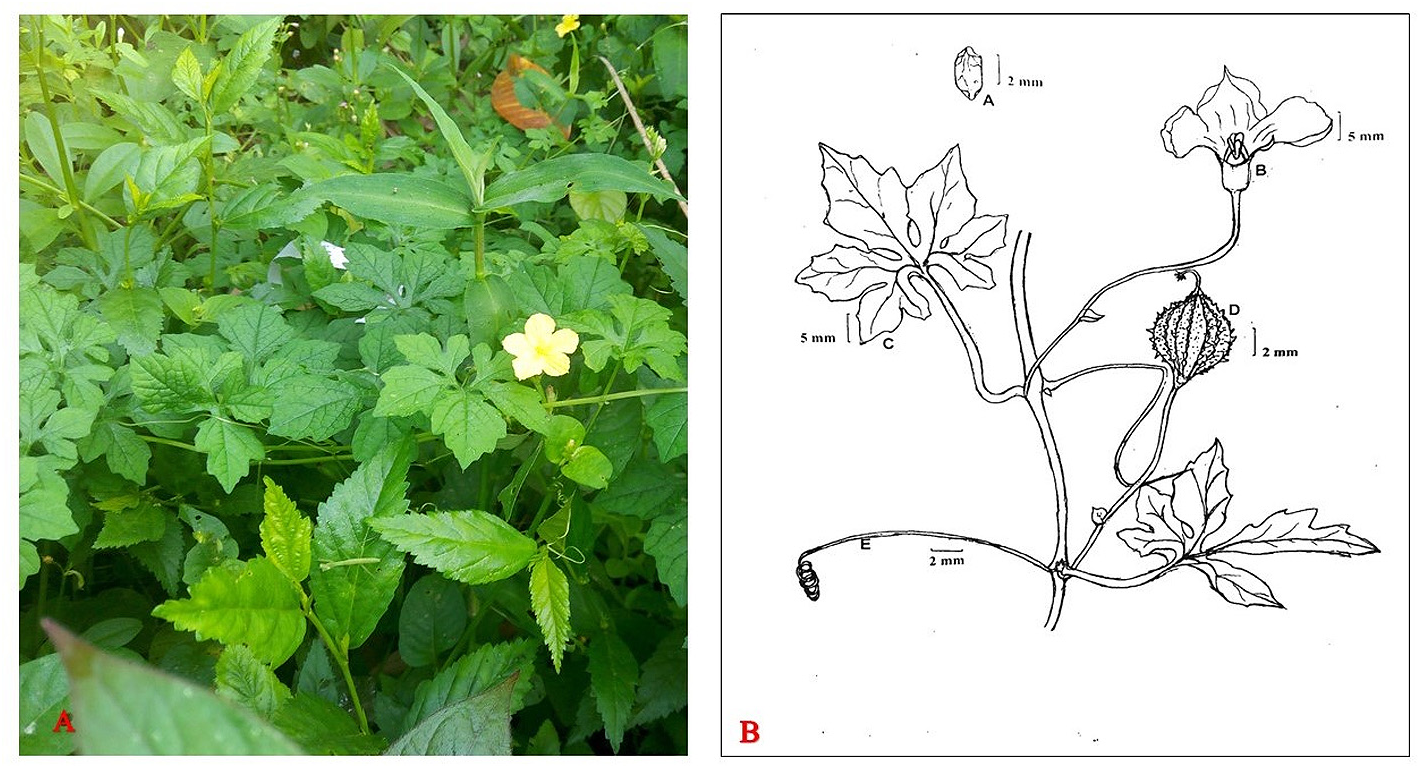
Foto: Umoh, Omodot Timothy;Bassey, Margaret Emmanuel
Otoritas penamaan: L.
Status taksonomi: ACCEPTED
Status konservasi (IUCN): NE Belum Dievaluasi
Dipublikasikan dalam: Sp. Pl.: 1009 (1753)
Total Catatan di Indonesia
0
Provinsi Ditemukan
0
dari 38 provinsi
Catatan Pertama
0
tahun pertama tercatat
Tren Tahunan
-0%
-9.3% vs 2025
Pare (Momordica charantia) termasuk dalam famili Cucurbitaceae, ordo Cucurbitales, kelas Magnoliopsida. Berdasarkan data yang terhimpun, spesies ini telah tercatat sebanyak 302 kali di Indonesia, tersebar di 22 provinsi. Catatan pertama tercatat pada tahun 1802.
Bali merupakan provinsi dengan catatan observasi terbanyak untuk spesies ini, dengan 35 catatan (11.6% dari total). Data distribusi ini mencerminkan akumulasi dari berbagai kegiatan survei, penelitian, dan kontribusi citizen science. Pola distribusi yang tercatat mungkin tidak sepenuhnya menggambarkan persebaran alami spesies, karena dipengaruhi oleh intensitas pengamatan di masing-masing wilayah.
Tren observasi tahunan Momordica charantia menunjukkan penurunan (-9%) pada periode terakhir dibanding tahun sebelumnya, dengan catatan pertama pada tahun 1802.
Nama-nama ilmiah lain yang pernah digunakan untuk Momordica charantia dalam literatur taksonomi.
| Nama Sinonim | Otoritas | Status |
|---|---|---|
| Melothria pendula | Sieber | HOMOTYPIC_SYNONYM |
| Momordica charantia muricata | Griseb., 1860 | SYNONYM |
| Momordica muricata | DC. | SYNONYM |
| Momordica sinensis | Spreng. | SYNONYM |
| # | Provinsi | Catatan | % |
|---|---|---|---|
| 1 | Bali | 35 | 11.6% |
| 2 | Jawa Barat | 25 | 8.3% |
| 3 | Jawa Timur | 23 | 7.6% |
| 4 | DI Yogyakarta | 17 | 5.6% |
| 5 | Sulawesi Tengah | 17 | 5.6% |
| 6 | Jawa Tengah | 9 | 3.0% |
| 7 | Nusa Tenggara Barat | 9 | 3.0% |
| 8 | Sulawesi Utara | 8 | 2.6% |
| 9 | Aceh | 5 | 1.7% |
| 10 | Lampung | 3 | 1.0% |
| 11 | Nusa Tenggara Timur | 3 | 1.0% |
| 12 | Papua | 3 | 1.0% |
| 13 | Banten | 2 | 0.7% |
| 14 | Maluku | 2 | 0.7% |
| 15 | Sumatera Utara | 1 | 0.3% |
| 16 | Riau | 1 | 0.3% |
| 17 | Jambi | 1 | 0.3% |
| 18 | Sumatera Selatan | 1 | 0.3% |
| 19 | DKI Jakarta | 1 | 0.3% |
| 20 | Kalimantan Timur | 1 | 0.3% |
| 21 | Sulawesi Selatan | 1 | 0.3% |
| 22 | Papua Barat | 1 | 0.3% |
Jumlah catatan observasi Momordica charantia di Indonesia per tahun
Momordica charantia
Foto: Umoh, Omodot Timothy;Bassey, Margaret Emmanuel
| Nama | Bahasa | Sumber |
|---|---|---|
| Ampalaya | tgl | Catalogue of Life |
| Atmagoson Hålom Tåno' | cha | Catalogue of Life |
| Balsam Pear | Inggris | Catalogue of Life |
| Balsam-pear | Inggris | Catalogue of Life |
| Balsambirne | Jerman | GRIN Taxonomy |
| Balsamina | Spanyol | Catalogue of Life |
| Balsampear | Inggris | Global Register of Introduced and Invasive Species - Hawaii, United States (ver.2.0, 2022) |
| Balzsamkörte | hun | Catalogue of Life |
| Batata di Djuku | - | Catalogue of Life |
| Batata di Zumbi | - | Catalogue of Life |
| Bitter Cucumber | Inggris | Catalogue of Life |
| Bitter Gourd | Inggris | Catalogue of Life |
| Bitter Melon | Inggris | Catalogue of Life |
| Bitter gourd, Bitter melon, Bitter balsam apple, Balsam apple, Wild balsam-apple, Bitter apple, Bitter squash, Bitter cucumber, Bitter gourd, Carilla gourd, Carilla bush, Balsam Pear, Jumbee pumpkin, Maiden apple | Inggris | TAXREF |
| Bitter squash | Inggris | Catalogue of Life |
| Bittergurke | Jerman | Catalogue of Life |
| Bittermelone | Jerman | Catalogue of Life |
| Cerasee | - | Catalogue of Life |
| Cundeamor. | Spanyol | Catalogue of Life |
| Karella-kibekurk | est | Catalogue of Life |
Berdasarkan data 302 observasi, Bali adalah provinsi dengan catatan Pare (Momordica charantia) terbanyak — 35 observasi (11.6% dari total catatan di Indonesia). Spesies ini tersebar di 22 provinsi.
Catatan pertama Pare (Momordica charantia) di Indonesia tercatat pada tahun 1802. Hingga kini terdapat 302 catatan dari 22 provinsi, yang dihimpun dari survei lapangan, koleksi museum, dan platform citizen science.
Di Indonesia dan Malaysia, Momordica charantia dikenal dengan beberapa nama lokal: Pare, paria. Penamaan dapat berbeda antardaerah dan bahasa.
Ya, Momordica charantia memiliki 4 nama sinonim ilmiah, di antaranya: Melothria pendula, Momordica charantia muricata, Momordica muricata. Nama sinonim adalah nama-nama lain yang pernah digunakan untuk spesies yang sama dalam literatur taksonomi.
Momordica charantia diklasifikasikan sebagai berikut: Kingdom Plantae, Phylum Tracheophyta, Class Magnoliopsida, Order Cucurbitales, Family Cucurbitaceae, Genus Momordica. Spesies ini dideskripsikan oleh L..
150 titik observasi Momordica charantia di Indonesia
Memuat peta...
Setiap titik merepresentasikan satu lokasi observasi yang tercatat. Klik titik untuk melihat detail.