
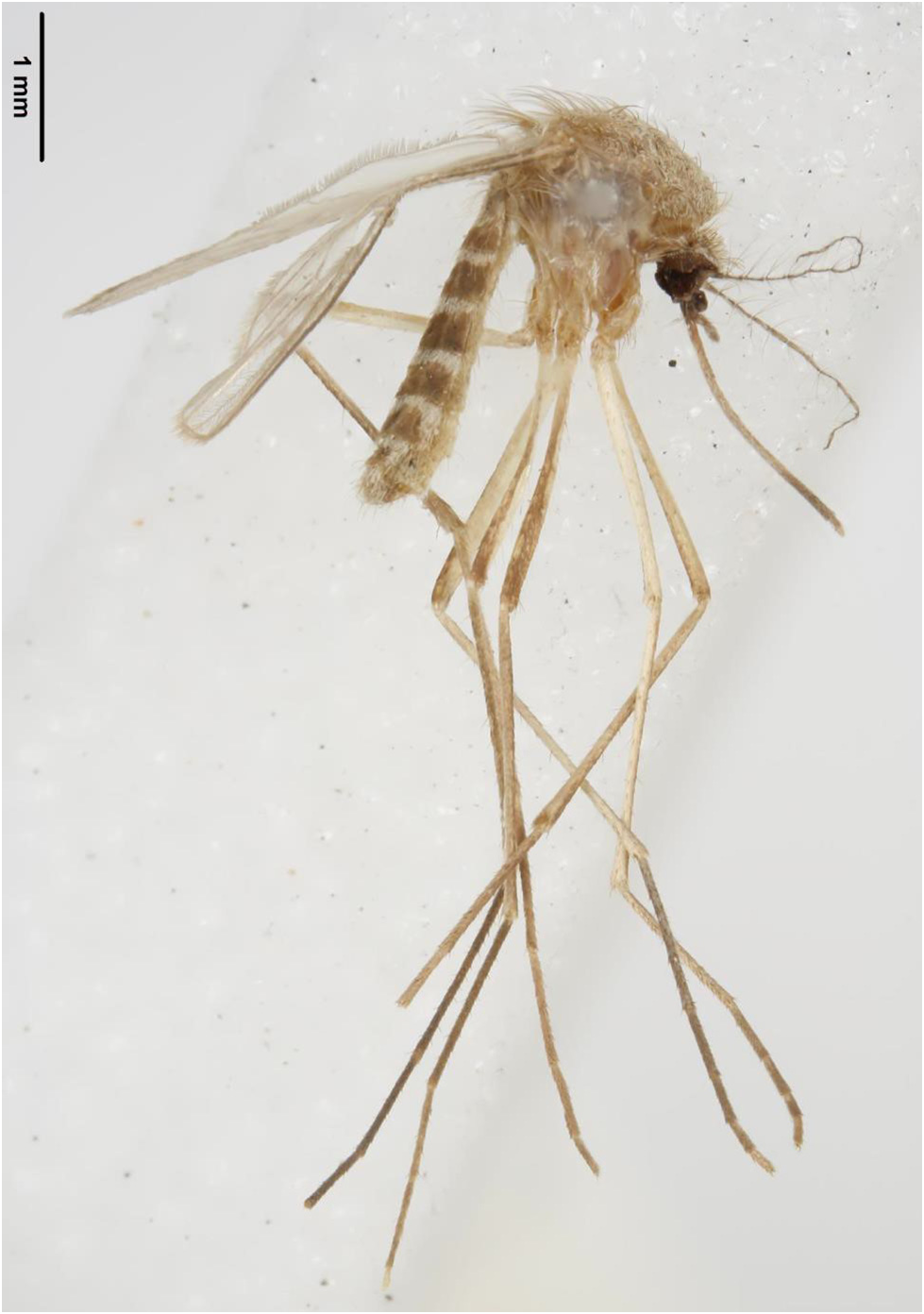
Biologi & Ekologieng
Habitat dependence. Transient — Adults only. Larvae usually occur in various types of aquatic habitats with fresh, brackish, turbid, fowl and drainage water, and artificial containers. Females are strongly anthropophilic and vector filarial nematodes over wide areas of the world.
Sumber: Mosquitoes in crabholes: A hidden realm of culicid diversity in India
Distribusieng
Distribution. Kerala: Wayanad District — Periya; Maharashtra: Vikhroli. Mangrove and non-mangrove.
Sumber: Mosquitoes in crabholes: A hidden realm of culicid diversity in India
Distribusieng
Distribution. This species is cosmotropical (Azari-Hamidian et al. 2019). In the Middle East, it occurs in Bahrain, Iran, Iraq, Kuwait, Oman, Qatar, Saudi Arabia, Syria, Turkey, United Arab Emirates and Yemen (Edwards 1914; Knight 1953 b; Lewis 1956; Mattingly & Knight 1956; Abdel-Malek 1960; White 1980; Harbach 1985, 1988; Wills et al. 1985; Minář 1991; Salit et al. 1994; Al-Houty 1997; Al-Ali et al. 2008; Rueda et al. 2008; Alahmed et al. 2009; Kheir et al. 2010; Al Ahmad et al. 2011; Alahmed 2012; Al Ahmed et al. 2013; Kardousha 2015, 2016; Mahyoub et al. 2015; Hassan et al. 2016; Irish et al. 2016; Tantely et al. 2016; Gunathilaka 2018; Azari-Hamadian et al. 2019; Camp et al. 2019; Alkhayat et al. 2020; Farag et al. 2021; Maquart et al. 2021; Simsaa et al. 2021; Wilkerson et al. 2021; Khalefa et al. 2022). It was recorded for the first time in Saudi Arabia by Harbach (1985).
Sumber: An overview of the mosquitoes of Saudi Arabia (Diptera: Culicidae), with updated keys to the adult females
Deskripsieng
Culex quinquefasciatus is strongly associated with urbanization, as it prefers artificial containers and polluted groundwater as larval habitats (Belkin et al., 1970). The species had been already introduced into the New World from Africa before 1800 (Belkin, 1962). As expected, Cx. quinquefasciatus was present in urban habitats on all three islands. Because of the complexity of the Cx. pipiens complex, of which Cx. quinquefasciatus is a member, we did not delve deeper into the identification of this species on the Dutch Leeward Islands. All (sub) tropical populations from the New World have been considered to be Cx. quinquefasciatus although Culex pipiens s. s. was also introduced to the Americas (Harbach, 2012). The two lack clear morphological differences and interbreed within their non-native range (Cornel et al., 2012). Only a genetic study of the Caribbean populations can reveal their identity.
Sumber: Taxonomy, ecology and distribution of the mosquitoes (Diptera: Culicidae) of the Dutch Leeward Islands, with a key to the adults and fourth instar larvae
Distribusieng
Distribution. Introduced. Cosmotropical; Galápagos: Baltra, Floreana, Isabela, San Cristóbal, Santa Cruz (see Eastwood et al. 2019).
Sumber: An annotated checklist of the Diptera of the Galápagos Archipelago (Ecuador)